
Vandaag of morgen in huis

Kwaliteit gegarandeerd

Welkomstaanbiedingen ontgrendelen: GRATIS bezorging | Tot 80% korting | Gratis 30 dagen JoyPlus-proefperiode
Download de app
A water flosser can be useful for rinsing away food trapped between your teeth, along the gum line or around braces. However, many models look alike. A low price may seem appealing, but a small water tank or unclear charging options can make a flosser less practical for everyday use.
Look out for these three common pitfalls:
Pressure is often measured in PSI. An adjustable range is more practical than a single, powerful setting. Beginners and people with sensitive gums can start with a gentle mode. If you want to clean around braces or implants every day, a model with an orthodontic or targeted nozzle option may be more suitable.
A water flosser with multiple settings generally gives you more control. Pay attention to how the manufacturer describes them. “Strong”, “soft” and “pulse” are product settings, not a guarantee of a particular result. According to the Philips Sonicare product description, the Cordless Power Flosser 3000 combines two modes with three intensity levels. This makes the settings easy to understand, but the same specifications state that the model’s battery lasts up to 14 days.
A small tank keeps the device compact, but you may need to refill it during use. For a water flosser for home use, 250 to 350 ml is often a practical range. For a water flosser for travelling, weight, foldability and the shape of the tank matter more.
If possible, choose a removable water tank with a wide opening. This makes it easier to rinse and dry the inside. An integrated storage compartment for the nozzles can stop loose parts from getting lost in your wash bag, but check that the compartment itself is easy to clean too.
A cordless water flosser is more flexible in the bathroom and on the go. Look for:
A model with long battery life is handy on holiday, but a larger battery can make the device heavier. Also check whether the manufacturer recommends a standard USB-C cable or a proprietary charging dock.
The selection below is based on verifiable product information, such as tank capacity, settings, weight, battery details and included nozzles. Brand claims about cleaning results are not presented as established facts.
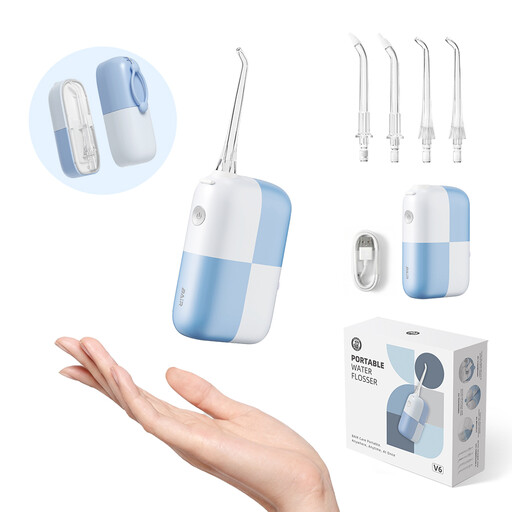
Why it suits this profile: According to the product information, this compact model weighs 145 grams and folds down to around 10 cm. It uses a push-button control for a pulsed water stream, making it practical for beginners and short trips.
The magnetically detachable tank is designed to make refilling and cleaning easier. Its stated pressure is around 75–80 PSI, rather than a wide pressure range that can be difficult to assess.
USB-C charging, IPX7 according to the product information, around 30 days of battery life, and nozzles for standard, orthodontic and periodontal care.
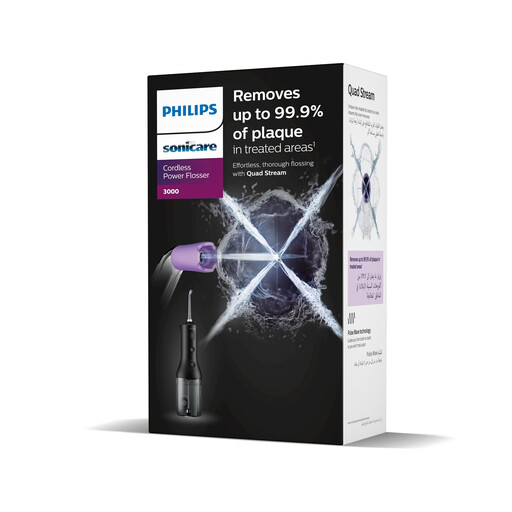
Why it suits this profile: If you value familiar controls and a clear choice of intensity, this model offers two modes, three intensity levels and a 250 ml tank.
The product information lists specific modes and intensity levels rather than making only a general claim about powerful cleaning. The tank is also large enough for a session according to the stated specifications.
250 ml reservoir, three intensity levels, two cleaning modes and a stated two-year warranty.
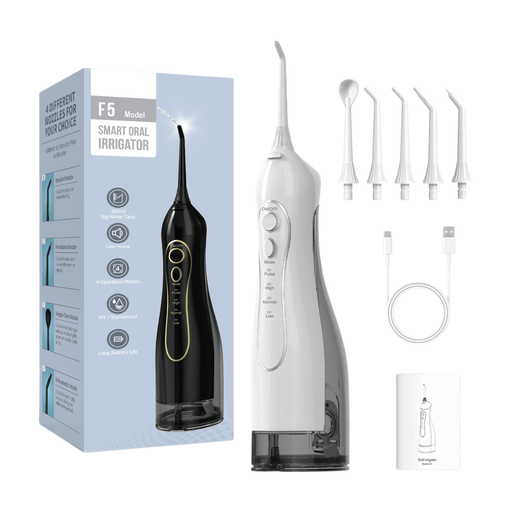
Why it suits this profile: This model is designed for users who want a choice of settings and nozzles for everyday use, travelling or cleaning around braces.
The pressure is adjustable from 40–140 PSI, with five settings to choose from. That means you don’t have to rely on a single, powerful setting.
300 ml removable tank, USB charging, stated battery life of up to 40 days, IPX7 rating and four types of nozzle according to the product description.

Why it suits this profile: The relatively large 350 ml tank and stated battery life of up to 90 days make it a good fit for regular use without frequent refilling or charging.
The specifications list five separate settings, including soft, medium, strong and pulse. You can start at a lower setting instead of going straight to the highest pressure.
350 ml tank, 1500 mAh battery, USB-C charging, five settings and IPX7 water resistance according to the product information.
Fill your water flosser with clean, lukewarm water and follow the manual if mouthwash is permitted. Don’t point the jet at your eyes, ears or nose. When using a new device, start on the lowest setting and guide the nozzle gently along the gum line and between your teeth.
After each use, empty the tank, rinse the tank and nozzles, and leave them to dry completely. Check regularly for limescale, damage and a charging port that doesn’t close properly. If bleeding persists or you experience severe irritation, stop using the device and consult a dentist. A water flosser also doesn’t automatically replace brushing or professional dental advice.
We’ve put together a complete, up-to-date list of products that meet these strict selection criteria and the applicable European safety regulations.
A model with an orthodontic nozzle can be useful for rinsing around brackets and wires. Always check which nozzles are included and start with low pressure. If you’ve just had braces fitted or have specific oral health concerns, follow your orthodontist’s instructions.
It depends on the battery, how often you charge it, water quality and storage. The stated battery life in this selection ranges from around 14 to 90 days, but these figures depend on the usage scenario. The device’s overall lifespan is also affected by emptying and cleaning it regularly, and charging it correctly.
As well as the purchase price, your main costs are electricity, water and any replacement nozzles. A USB-C model can be convenient if you already have a suitable adapter. Check in advance whether replacement nozzles are available and how often the manufacturer recommends replacing them.
