
Vandaag of morgen in huis

Kwaliteit gegarandeerd

Welkomstaanbiedingen ontgrendelen: GRATIS bezorging | Tot 80% korting | Gratis 30 dagen JoyPlus-proefperiode
Download de app
A water flosser, also known as an oral irrigator, can be a useful addition to your daily oral care routine. A focused jet of water flushes food particles from between your teeth and along the gumline. This makes water flossers an interesting option for adults who find traditional flossing awkward, wear braces or are often on the go.
However, not every cordless water flosser will suit your needs. Marketing often focuses on high pressure, long battery life or a large number of attachments. In practice, comfort, hygiene and the right settings are what determine whether you keep using the device regularly.
A water flosser with a maximum pressure of, for example, 140 PSI may sound powerful, but the highest setting won’t feel comfortable for everyone. If you have sensitive gums, look for a low starting setting and several pressure levels. An electric oral irrigator without a gentle setting may therefore be less practical than a model with a lower maximum pressure.
A stated battery life of 30, 40 or 50 days depends on how often you use the flosser, which setting you choose and how long each session lasts. So also check the charging time, the type of connector and whether the charging port needs to be dry before you connect the cable. Long battery life is particularly useful for travel, but it doesn’t replace a reservoir that’s easy to clean.
Extra nozzles are only useful if you can store them cleanly and keep them organised. Check which attachments are actually included: standard, orthodontic, tongue-cleaning or gumline options. Also check whether replacement nozzles are available and how often the product information recommends replacing them.
A water flosser with several settings is practical for everyday use. A gentle mode can help you start gradually, while a normal or more intensive setting may suit users who want more control. If you’re choosing a water flosser for sensitive gums, low pressure, a gradual increase and a pause function are particularly important.
A water flosser for braces should ideally include an orthodontic attachment. This lets you clean more precisely around brackets and wires. This doesn’t mean the device replaces treatment; if irritation or bleeding persists, it’s a good idea to speak to a dentist.
The capacity determines how often you’ll need to refill the flosser during a session. Compact models with around 150 to 180 ml are easy to carry, but may need refilling more often. A 250 to 300 ml reservoir generally offers more capacity for a full cleaning session. Larger reservoirs are often less convenient in a small wash bag.
A removable reservoir with a wide opening is handy for filling, rinsing and drying. Don’t leave water sitting in the device for long after use. This helps limit limescale build-up and unpleasant smells.
For a travel water flosser, weight, foldability, USB-C charging and a protected charging port are all worth considering. An IPX rating indicates water resistance, but always follow the instructions for use. Don’t use the device while it’s charging, and make sure the connection is dry.
Fill the reservoir with clean, lukewarm water. Only add mouthwash if the manufacturer allows it. Some models explicitly state that additives aren’t suitable. Don’t direct the jet towards your eyes, ears or nose, and start on a low setting when using a water flosser for the first time.
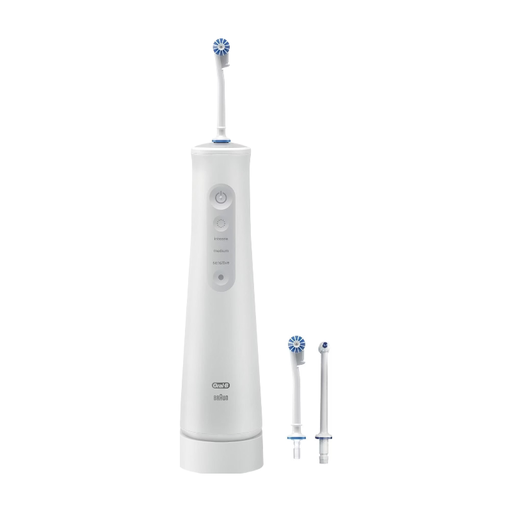
Why it suits this profile: The straightforward controls and three speeds make this a good option if you want to get started with a cordless water flosser for everyday use.
The three speeds mean you don’t have to choose between only a very gentle and a very powerful setting. The 150 ml reservoir keeps the device compact.
Cordless design, 150 ml reservoir, three speeds and two included attachments.
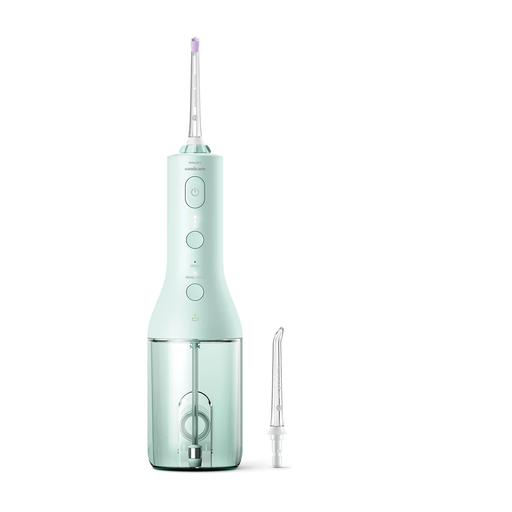
Why it suits this profile: This model combines a 250 ml reservoir with two modes and three intensity levels, giving you more precise control over the settings.
The three intensity levels give you more choice than a single powerful jet. Philips says its QuadStream and PulseWave technologies are used for the stated cleaning method.
250 ml reservoir, two modes, three intensity levels and a rechargeable battery.
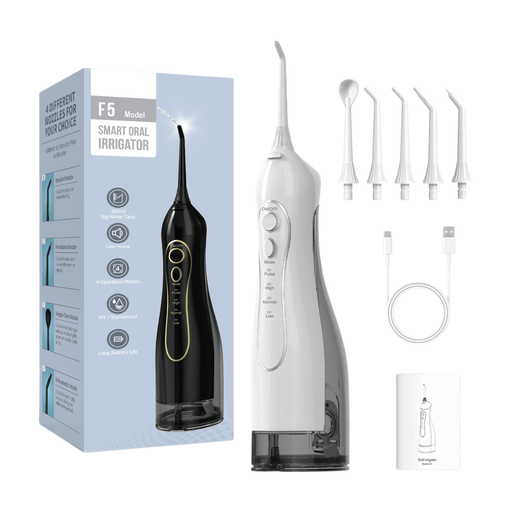
Why it suits this profile: Five settings, an orthodontic attachment and a 300 ml reservoir make this a good fit for users who want plenty of options.
The gentle and powerful settings mean you don’t have to start at the highest pressure by default. The wide reservoir opening makes regular cleaning easier.
40–140 PSI according to the product information, five modes, a 300 ml reservoir and five included attachments.
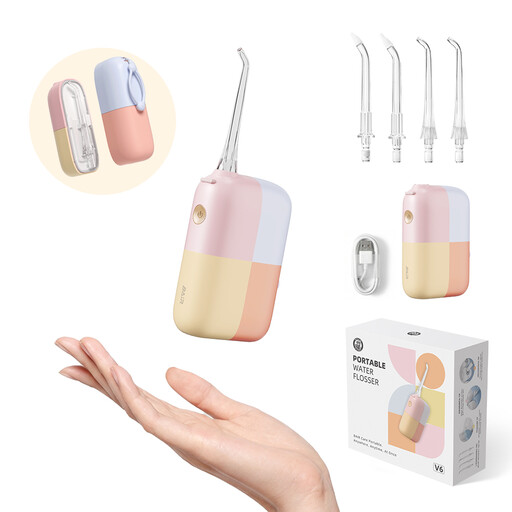
Why it suits this profile: Its foldable design, measuring around 10 cm, and stated weight of 145 grams make this model suitable for a wash bag or hand luggage.
The removable magnetic tank is designed to make filling and cleaning easier. The press-and-spray mode limits the continuous water flow when you start.
IPX7 water resistance according to the product information, USB-C charging, around 30 days of stated battery life and storage for attachments.
We’ve put together a complete, up-to-date list of products that meet these strict selection criteria and the applicable European safety requirements.
A water flosser supports your oral care routine, but it doesn’t automatically replace brushing your teeth or personalised advice from a dentist. If you have persistent sensitivity, pain or bleeding, it’s wise to seek professional advice.
It can be, as long as you follow the instructions for use and choose a comfortable pressure setting. Take it slowly when using the device for the first time. A gentle setting is useful for beginners and anyone who is sensitive to water pressure.
Its lifespan depends on the battery, seals, charging habits and maintenance. Empty the reservoir after every session, keep the charging port dry and use only suitable liquids. Battery life stated in the product information is an indication of usage, not a guarantee of a set period of use.
As well as the purchase price, you’ll need to factor in the electricity used for charging and any replacement attachments. The power consumption of a compact, battery-powered water flosser is generally low; ongoing costs depend mainly on the brand, the number of nozzles and the replacement advice.
