
Vandaag of morgen in huis

Kwaliteit gegarandeerd

Welkomstaanbiedingen ontgrendelen: GRATIS bezorging | Tot 80% korting | Gratis 30 dagen JoyPlus-proefperiode
Download de app
A water flosser can be a practical addition to brushing and traditional flossing. The pulsating water jet rinses away food debris from between teeth and along the gum line. This is especially useful if you have braces, implants, or find floss difficult to use.
However, not every model is equally practical. Marketing copy often emphasises high pressure, long battery life, or a waterproof design. But everyday usability also depends on the reservoir, the controls, the included nozzles, and how easy it is to clean after use.
A specification like 140 PSI sounds impressive, but a high maximum pressure isn't automatically comfortable for every user. For sensitive gums, a gentle starting setting is more important than just the highest pressure level. So check whether a model offers multiple intensities or a soft mode.
A cordless water flosser is handy in the bathroom and when travelling, but a small reservoir may mean you have to refill mid-session. So don't just look at how many days the battery lasts. A reservoir of 250 to 300 ml is more practical for most users for a full cleaning session.
Also pay attention to how the reservoir is filled. A removable tank with a wide opening is generally easier to rinse out than a fixed tank that's hard to reach.
IPX6, IPX7 and IPX8 refer to different levels of water protection. The exact application varies by product and manufacturer. An IPX7 water flosser can withstand temporary immersion according to the product specification, but the USB port must be completely dry before charging. Never use a charging station or cable in contact with water, and always follow the instruction manual.
A water flosser with multiple settings gives you more control. For daily use, a normal setting may be fine; for sensitive gums, a gentle setting is a practical starting point. A pulsating or press-to-spray function can also help you control the water jet more precisely.
Note the difference between modes and intensity levels. Four modes don't always mean four separate pressure strengths. The Philips Sonicare HX3826/33, for example, has two modes — Clean and Deep Clean — and three intensity levels according to the product specifications.
For home use, larger reservoirs are often more comfortable. The Philips Sonicare Cordless Power Flosser 3000 has a 250 ml reservoir. The Sunluxy F5 features a removable 300 ml tank according to the product information. Compact models with around 180 ml are easier to take with you, but may need refilling more often.
If you're looking for a water flosser for braces, it's worth checking whether an orthodontic nozzle is included or available separately. For a daily routine, a standard nozzle may be sufficient. A tongue cleaner or periodontal nozzle can be useful if you want to combine different applications in one device.
A water flosser doesn't automatically replace every form of oral care. Use the device according to the instruction manual and do not direct the jet at eyes, ears, nose or other sensitive areas. If bleeding or discomfort persists, stop using it and consult your dentist.
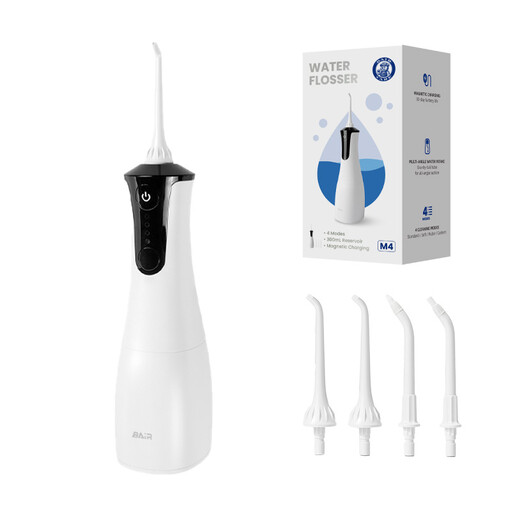
Why this fits the profile: This compact model is designed for users who want to start interdental cleaning simply, without a large device on the countertop.
The product specification mentions four cleaning modes, USB charging and IPX7 water resistance. So you don't have to rely solely on a high pressure value.
Four settings, cordless use, USB rechargeable and a compact design for daily use and travel.
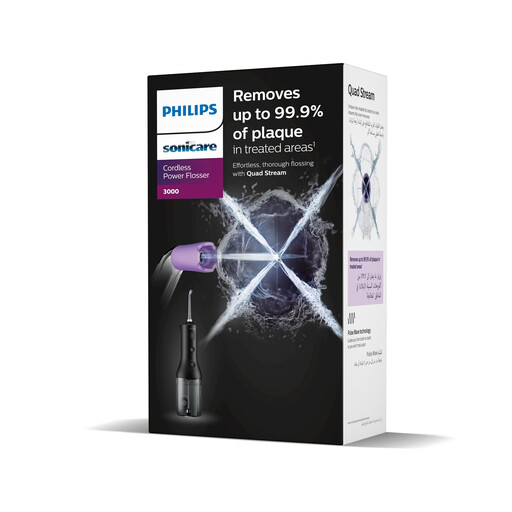
Why this fits the profile: Ideal for those who value a clear control concept, a 250 ml reservoir and a model from a well-known brand.
The three intensity levels offer more choice than a device with just one powerful jet. The product specification also states a battery life of up to 14 days with typical use.
Two modes, three intensities, 250 ml reservoir and Quad Stream nozzle according to the product description.
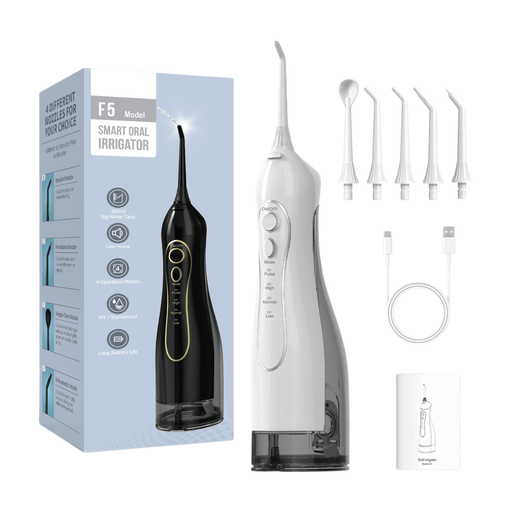
Why this fits the profile: This model suits users who want different nozzles, a large reservoir and multiple pressure settings for home use, braces or regular travel.
The five settings allow for a gentle start. The IPX7 rating and removable tank also address two practical concerns: use in a wet bathroom and cleaning.
300 ml tank, five settings, 360° rotating nozzle and nozzles for orthodontic care and tongue cleaning, among others.
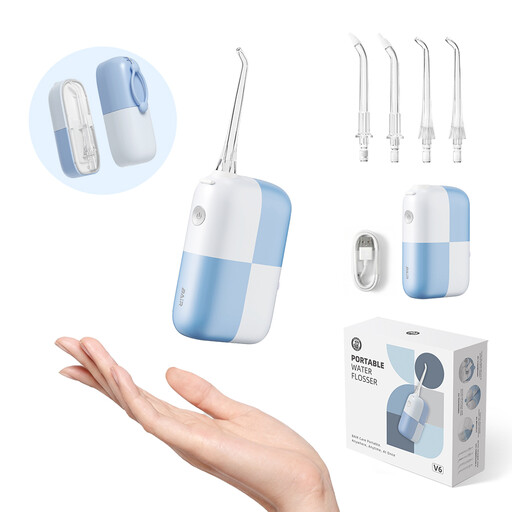
Why this fits the profile: The foldable design is aimed at people who want a portable water flosser to take in a wash bag, handbag or small suitcase.
The press-and-spray function gives you more control over the water jet according to the product information. The reservoir is removable and the IPX7 rating is suitable for wet conditions.
145 g, folds to around 10 cm, USB-C charging, approximately 30 days battery life and standard, orthodontic and periodontal nozzles.
We've put together a full, up-to-date list of products that fully meet these strict selection criteria and current European safety regulations.
Fill the reservoir with clean, lukewarm water and start at a low intensity. Lean over the sink and close your lips slightly to reduce splashing. Move the nozzle gently along the gum line and between the teeth. If you have braces, pay extra attention to the spaces around brackets and wires.
After use, empty the tank, rinse the reservoir and nozzle, and let all parts dry completely. Do not use hot water, essential oils or cleaning agents unless the manufacturer expressly allows it. Also check that a USB rechargeable water flosser is not used while it is plugged in.
A water flosser and floss work in different ways. An oral irrigator can be practical for food debris, braces and hard-to-reach areas. Floss makes direct contact with the tooth surface. Which option suits your routine depends on your teeth, your preference and your dentist's advice.
Many users incorporate the water flosser into their oral care routine once a day. Start gently on a low setting and follow the instructions for use. If sensitivity, irritation or bleeding persists, stop using it and ask your dentist for advice.
Besides the purchase price, the main costs are replacement nozzles, electricity and possibly a new charging accessory. The electricity costs of a rechargeable oral irrigator are generally low. Check in advance which nozzles are available and how often the manufacturer recommends replacing them.
