
Vandaag of morgen in huis

Kwaliteit gegarandeerd

Welkomstaanbiedingen ontgrendelen: GRATIS bezorging | Tot 80% korting | Gratis 30 dagen JoyPlus-proefperiode
Download de app
A water flosser can be a practical addition to traditional flossing. Its targeted stream of water removes food particles from between your teeth and along the gumline. That sounds simple, but models vary considerably in terms of reservoir capacity, pressure settings, battery life and included tips.
If you only look at terms such as “powerful stream” or “long battery life”, you could end up buying a device that proves impractical in everyday use. Below, we cover the main pitfalls, technical points and some popular options for different user profiles.
A water flosser with a high maximum pressure may seem appealing, but a powerful stream is not comfortable for everyone. If you have sensitive gums or are just starting out, a low setting is more important than simply choosing the highest PSI rating.
So check:
Brand specifications about cleaning results should be viewed as product information, not as a guaranteed result for every user. According to Philips’ own research, for example, the Philips Sonicare Power Flosser can remove up to 99.9% of plaque from treated areas. This is a brand claim under specific conditions, not a general guarantee.
A reservoir of 300 ml or more means you need to refill it less often, but it can also make the device larger and heavier. This may be practical for home use. For a travel water flosser, dimensions and weight are often more important.
Pay attention to the combination of:
A small tank is not necessarily a problem. A reservoir of 150 to 250 ml may be sufficient for a short daily session, while a larger model gives you more freedom of movement.
A standard nozzle is suitable for general use, but a water flosser for braces requires a suitable orthodontic tip. Some models also come with a tongue cleaner or a tip for targeted cleaning.
Check before buying:
A water flosser does not automatically replace all other oral care. If you have braces, an implant, a recent procedure or persistent irritation, follow your dentist’s or dental hygienist’s advice.
A water flosser with multiple settings gives you more control than a device with one fixed speed. For everyday use, a normal or gentle mode is often practical. A more intensive setting may suit users who are already accustomed to an oral irrigator, but always start gently.
Pay attention to the difference between modes and intensity levels. For example, two modes with three intensity levels provide six practical settings, while some manufacturers highlight only the number of main programmes.
A cordless water flosser is convenient in a bathroom without a dedicated place for a mains cable. Do not look only at claims such as “up to 30 or 50 days of battery life”. These figures are usually based on a particular usage pattern specified by the manufacturer.
Also check:
An IPX6 or IPX7 rating indicates protection against water under certain test conditions. It does not mean that every component can be stored underwater or that you can submerge the charger.
After each use, it is sensible to discard any remaining water, rinse the tank and allow the nozzle to dry. This helps limit limescale and unpleasant odours. Use lukewarm water unless the manual specifies otherwise. Do not add essential oils or cleaning products without the manufacturer’s clear approval.
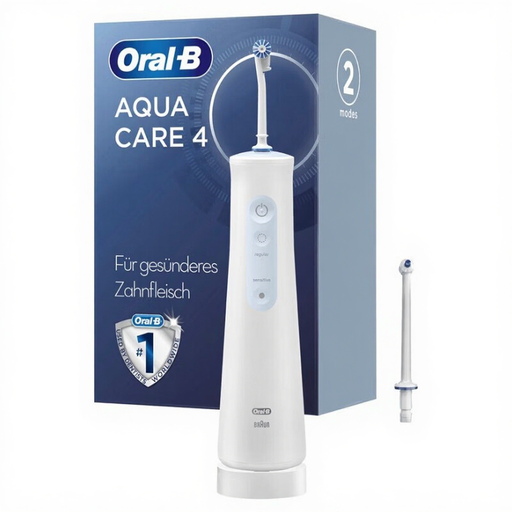
Why it suits this profile: This cordless model has a compact design, two water-intensity settings and an on-demand function that activates the water stream only when needed. This makes it straightforward to operate if you are using an electric flosser for the first time.
The two intensity settings help prevent you from starting with a stream that is too strong. The controls are simpler than those on models with numerous programmes.
Cordless design, two water-intensity settings, on-demand water stream and a statutory EU warranty of at least two years according to the product information.
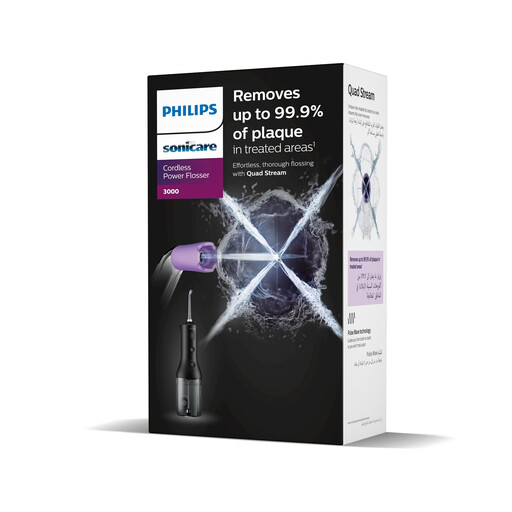
Why it suits this profile: The HX3826/33 combines two modes, three intensity levels, a 250 ml reservoir and a Quad Stream tip. This gives you several adjustment options without taking up too much space in the bathroom.
The three intensity levels give you more control than a single pressure level. The 250 ml tank also means you are less likely to need a refill during a normal session.
Two modes, three intensity levels, Quad Stream tip, 250 ml reservoir and a stated battery life of up to 14 days with typical use.
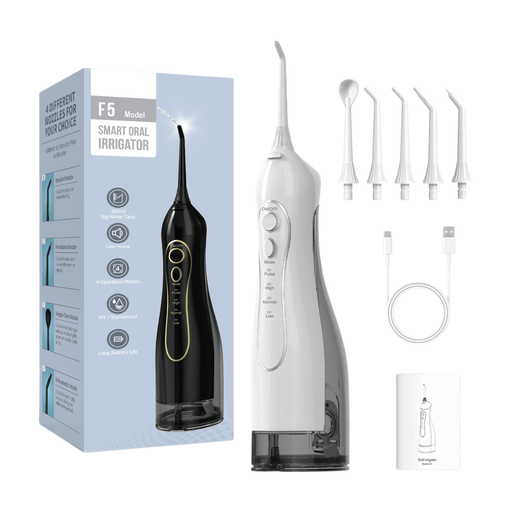
Why it suits this profile: This model is aimed at users who want plenty of control. It has five pressure modes, a 300 ml tank, five included tips and a 360° rotating nozzle.
Adjustable pressure means you do not have to choose between a stream that is too gentle and one that is too strong. The larger tank reduces interruptions during use.
Five pressure modes, 300 ml detachable tank, 2000mAh battery, orthodontic tip and IPX7 water resistance according to the product specifications.
We have put together a complete, up-to-date list of products that fully meet these strict selection criteria and the applicable European safety regulations.
That depends on the model and the intensity selected. Many devices have a mode for everyday use. Start on a low setting and follow the instructions. If irritation, pain or bleeding persists, it is advisable to stop using the device and seek advice from a dentist.
The operating time per charge varies depending on the battery, pressure setting and frequency of use. Manufacturers often state a maximum or typical battery life. So also check the charging time, the type of charging cable and whether the battery cannot be replaced by the user.
In addition to the purchase price, you may need to pay for replacement nozzles and the energy used to recharge the device. Costs are generally manageable, but check before buying whether suitable tips are available separately. A model with several included tips can be useful if you have different needs, such as braces or travelling.
