
Vandaag of morgen in huis

Kwaliteit gegarandeerd

Welkomstaanbiedingen ontgrendelen: GRATIS bezorging | Tot 80% korting | Gratis 30 dagen JoyPlus-proefperiode
Download de app
A water flosser can be useful if you want to rinse away food debris from between your teeth, along the gumline or around braces. However, many models look similar, despite clear differences in tank capacity, pressure settings, battery life and maintenance.
Choosing the right one isn’t just about finding the highest pressure rating. A compact cordless water flosser with a small tank may be convenient for travel, but less practical for everyday use. A larger reservoir is more comfortable to use, but takes up more space. Consider how easy the device is to clean, too: leftover water and hard-to-reach corners can make an oral irrigator unnecessarily difficult to use.
A high PSI rating may sound appealing, but more pressure isn’t automatically more comfortable or suitable. Beginners and people with sensitive gums will usually benefit more from a gentle setting and gradually increasing the intensity. So always check whether the water flosser has multiple settings and adjustable pressure.
“Up to 30, 40 or 50 days” is a guide based on the product information. Actual battery life depends on the setting you choose, how often you use it and its charge level. Check the type of charging connection, too. A USB-C water flosser is often convenient if you already have a compatible cable, but don’t use the device while it’s charging.
A water tank that doesn’t open properly or is difficult to rinse can quickly become a daily nuisance. If possible, choose a removable tank with a wide opening. Empty the tank after each use, rinse the nozzle and leave the parts to air-dry. An IPX rating indicates water resistance, but it doesn’t remove the need for regular cleaning.
For everyday use, multiple settings are more useful than a single powerful one. A water flosser with multiple settings lets you start gently and choose a different intensity later. If you wear braces, an orthodontic nozzle may be useful. A model with a special tip for gums or periodontal pockets may be worth considering for specific needs, but if you have existing oral health concerns, follow your dentist’s advice.
Check the controls, too. A pulsing water jet or a button that temporarily stops the flow can help reduce splashing. This can be especially useful for first-time users.
A tank of around 150 to 200 ml is often compact, but may need refilling during a cleaning session. Models with a capacity of 260 to 350 ml offer more room without being as bulky as a countertop model. A portable water flosser for hand luggage should also be lightweight and compact.
Check not only the size of the device, but also how much space the nozzles, charging cable and any storage case will take up. A foldable model is practical if you’re looking for a water flosser for travel.
According to its rating, an IPX7 water flosser is suitable for temporary immersion under certain test conditions. IPX6 protects against powerful jets of water, but it isn’t the same as IPX7. Always follow the instructions and make sure the charging port is dry before connecting the cable.
Long battery life is useful on holiday, but check the charging time as well. A device that takes a few hours to charge and then lasts for weeks may suit travellers. At home, tank capacity, grip and easy cleaning are often more important than maximum battery capacity.
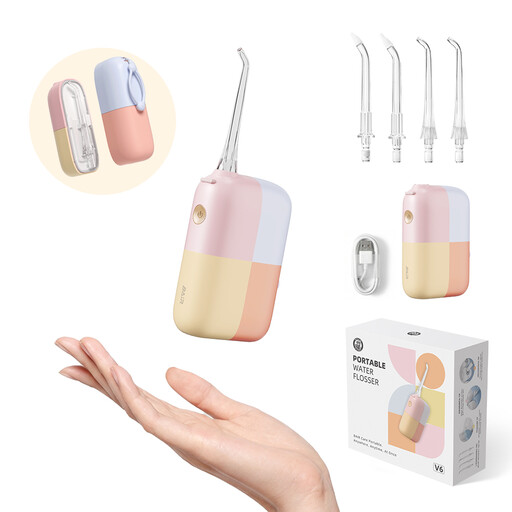
Why it suits this user: According to the product information, this compact model weighs 145 grams, folds down to around 10 cm and has a push-button control for a more controlled pulse. That makes it easier to get started with an oral irrigator.
The removable magnetic tank is designed to make filling and rinsing easier, according to the product description. Pressure is 75–80 PSI rather than one fixed, uncontrolled high setting.
USB-C charging, IPX7 rating, up to around 30 days of battery life according to the manufacturer, and storage for three nozzles.
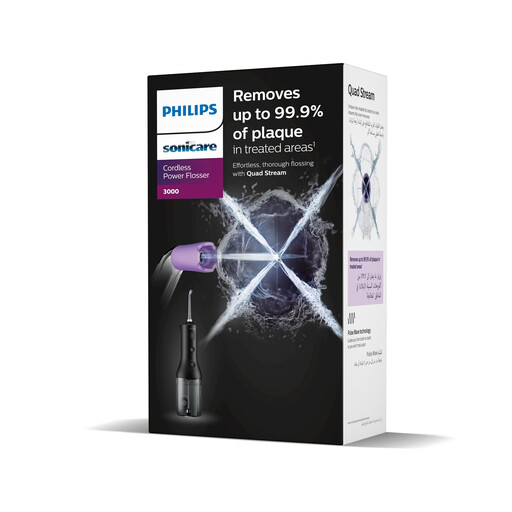
Why it suits this user: The product specifications list a 250 ml reservoir, two cleaning modes and three intensity levels. Its controls are therefore geared towards everyday use, with adjustable intensity.
Rather than focusing solely on maximum pressure, this model offers different intensity levels. The included Quad Stream tip is one specific accessory to check when buying.
250 ml reservoir, Clean and Deep Clean modes, three intensity settings and up to 14 days of battery life according to the manufacturer.
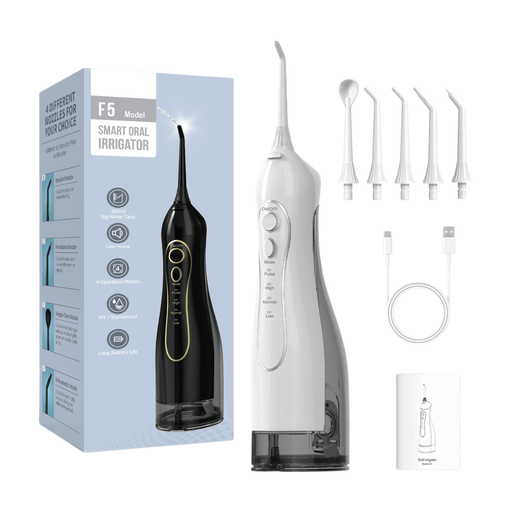
Why it suits this user: According to the product information, the F5 has five settings, a 300 ml tank and four types of nozzle, including an orthodontic tip. This suits users who want to cover a range of different needs.
Adjustable pressure from 40–140 PSI means you don’t have to rely on a single fixed high setting. The wide tank opening is designed to make filling and cleaning easier.
300 ml tank, five settings, 360° rotating nozzle, IPX7 rating and up to 40 days of battery life according to the manufacturer.
We’ve put together a complete, up-to-date list of products that meet these strict selection criteria and current European safety regulations.
A water flosser is an addition to your oral care routine, not a replacement for brushing. If you have persistent bleeding or pain, or have recently had dental treatment, it’s best to speak to a dentist.
A water flosser for braces can help rinse food debris from around brackets and wires. Check whether an orthodontic nozzle is included and start with low pressure. Ask your orthodontist for advice if you experience irritation or ongoing discomfort.
It varies by model and how you use it. The models mentioned have a stated battery life of around 14 to 50 days, but these figures come from the product information. More frequent use or a higher setting may drain the battery faster.
In addition to the purchase price, your main costs are electricity and any replacement nozzles. The electricity cost per charge is usually low. Before buying, check the price and availability of compatible tips, as these also affect the long-term cost.
