
Vandaag of morgen in huis

Kwaliteit gegarandeerd

Welkomstaanbiedingen ontgrendelen: GRATIS bezorging | Tot 80% korting | Gratis 30 dagen JoyPlus-proefperiode
Download de app
A water flosser can be a handy alternative to traditional flossing. With a targeted stream of water, you can remove food debris from between your teeth and along the gum line. This is especially useful if you have braces, implants, bridges, or find flossing difficult to manage.
However, not every electric flosser is equally suited to daily use. Marketing often focuses on high pressure, long battery life, or a large number of settings. These figures only become meaningful when you also consider the reservoir, the nozzles, the maintenance, and how you actually use the device.
A specification like 140 PSI sounds impressive, but a high maximum pressure isn’t practical for everyone. If you have sensitive gums or are using a water flosser for the first time, a gentle start setting is more important than a high maximum.
Therefore, check:
Always start on the lowest setting with a water flosser for sensitive gums. Persistent irritation or bleeding is a reason to stop using it and consult your dentist.
A portable water flosser with a battery life of 30, 40, or even 95 days sounds convenient. In practice, the charging method, charging time, and tank capacity are also important. A small tank might mean you have to refill it during a single session.
Pay attention to the difference between:
For travel, a compact device with a decent tank is often more practical than just a long battery life.
An IPX6, IPX7, or IPX8 rating provides information about water resistance under specific test conditions. It doesn’t automatically mean you can connect the charging station or charging port when wet. Always follow the manual, dry the connection, and empty the tank after use.
A removable reservoir and an easily accessible nozzle holder are also important for hygienic maintenance. Rinse the nozzle regularly and let all parts dry completely.
A reservoir of 250 ml is, according to the product specification, sufficient for a cleaning session of around 60 seconds with the Philips Sonicare Cordless Power Flosser 3000. A compact model like the Oral-B Aquacare 6 has 150 ml and is therefore lighter, but may require more frequent refilling.
For home use, a tank of 300 ml or more can be comfortable. For a travel water flosser, a foldable design, low weight, and easy filling usually matter more.
A water flosser with multiple settings gives you more control, but only if the settings are clearly different from each other. Also look at the nozzles included:
A water flosser for braces needs to be particularly precise to aim. A special tip is useful, but it doesn’t replace careful cleaning around the brace components.
A cordless water flosser is handy in a bathroom without a socket near the mirror and when travelling. Check whether the charger is suitable for your usage situation and whether the device can be used while charging.
The IP rating is a technical indication, not a general guarantee for every component. For devices with USB-C, the connection must be dry before you plug in the cable.
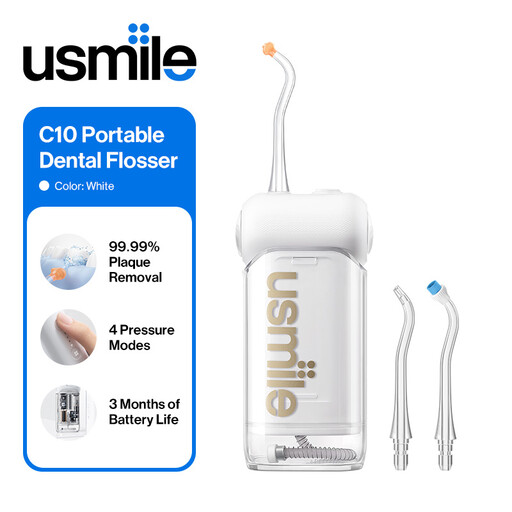
Why this fits the profile: This portable model combines four settings with a 180 ml tank, 360° nozzle, and IPX7 water resistance. That makes it straightforward for daily use and short trips.
The four settings give you more control than a device with just one fixed intensity. The battery claim of up to 95 days comes from the brand’s product information; the actual duration depends on usage.
180 ml reservoir, four settings, 360° nozzle, and IPX7 rating.
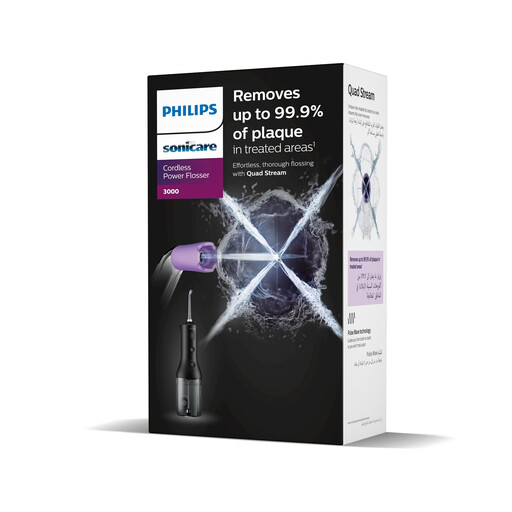
Why this fits the profile: The combination of two cleaning modes, three intensity levels, and a 250 ml reservoir suits users who value daily comfort and a consistent routine.
The adjustable intensity means you’re not forced to rely on a single high fixed pressure. According to Philips’ own product information, the Quad Stream tip can remove up to 99.9% of plaque from treated areas; this is a brand claim and not an independently verified result.
250 ml tank, two modes, three intensities, rechargeable battery, and two-year warranty according to the product information.
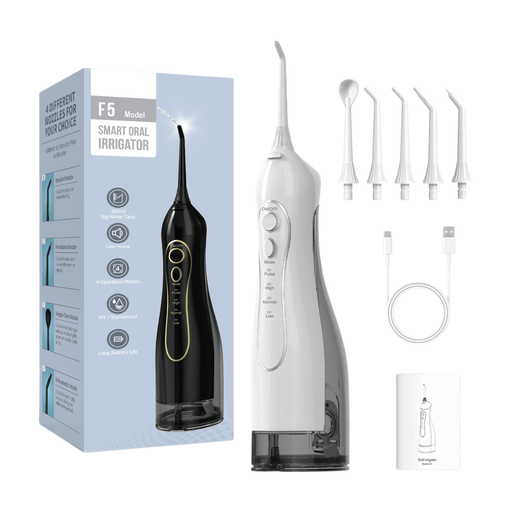
Why this fits the profile: The five settings, 300 ml tank, and included orthodontic tip are practical for users who want to clean thoroughly around braces or multiple areas.
The pressure is adjustable from 40 to 140 PSI according to the product specification, so you don’t always have to work at the maximum. The large tank reduces the need for mid-session refills.
Five settings, 300 ml removable tank, five nozzles, 360° nozzle, and IPX7 water resistance.
We’ve put together a full, up-to-date list of products that fully meet these strict selection criteria and comply with current European safety regulations.
Fill the reservoir with clean, lukewarm water and attach the correct nozzle. Lean over the sink, place the tip in your mouth before switching the device on, and keep your lips slightly closed to reduce splashing. Move systematically along the gum line and between the teeth.
Do not use hot water. Only add mouthwash if the manufacturer explicitly allows it. Empty and rinse the reservoir after every session and let the device dry. A water flosser supports your oral care routine, but it does not replace a toothbrush, check-ups, or personal advice from your dentist.
It can be practical, because a water stream can reach around brackets and wires. Choose a model with a low intensity and, ideally, an orthodontic nozzle. If you’re unsure about your specific brace or treatment, ask your orthodontist or dentist for advice.
That depends on the battery, charging habits, water resistance, and maintenance. Manufacturers often state a usage duration of several weeks to several months. These are stated values under typical or limited use, not a fixed lifespan. Regular rinsing, drying, and correct charging can help keep the device usable.
Besides the purchase price, replacement nozzles and electricity are the main costs. A rechargeable electric flosser uses very little power per session. Therefore, check whether replacement tips are available and whether they are suitable for your model. This prevents a cheap device from becoming awkward or expensive to use later on.
