
Vandaag of morgen in huis

Kwaliteit gegarandeerd

Welkomstaanbiedingen ontgrendelen: GRATIS bezorging | Tot 80% korting | Gratis 30 dagen JoyPlus-proefperiode
Download de app
A water flosser can be useful when traditional flossing is difficult. Its pulsing stream of water flushes away food debris from between your teeth and along the gumline. This makes a water flosser worth considering if you’re an adult with braces, implants, sensitive gums or limited space in your wash bag.
However, an expensive model isn’t automatically the right choice for you. Pay particular attention to these three common pitfalls:
A water flosser with multiple settings gives you more control than a device with just one intensity. A gentle setting is useful for beginners or anyone who wants to start carefully. A normal or stronger setting may be suitable for removing stubborn food debris, but increase the intensity gradually.
Pressure is often listed in PSI. A range such as 40–140 PSI indicates that you can choose between a low and a high setting. Pulse frequency, measured in pulses per minute, describes how often the water stream is interrupted. It isn’t the same as cleaning power. So, look at the combination of pressure range, settings and controls.
A water flosser with a water reservoir of around 150 to 200 ml is compact, but you may need to refill it during a full session. Models with a capacity of 250 to 360 ml offer more room for use at home. A larger reservoir usually also makes the device less compact for travel.
Empty the reservoir after use, rinse the tank and leave the parts to dry. Also check whether the tank is removable and whether you can easily reach inside it. This helps prevent a stylish design from being difficult to keep clean in practice.
A cordless water flosser is handy in a small bathroom or when you’re out and about. USB-C charging works with many modern chargers and power banks, but always check which cable is included and read the manufacturer’s instructions. Never connect a device while its charging port is wet.
An IPX6 or IPX7 rating refers to protection against water under the relevant test method. It doesn’t mean that every part can be submerged indefinitely in all circumstances. Always follow the instructions. A dedicated charger or charging station may have different limitations from the handle.
Also check which nozzles are included. For example, a water flosser for braces is more useful with an orthodontic tip than with only a standard nozzle. For sensitive gums, a gentle setting is just as relevant as the number of accessories.
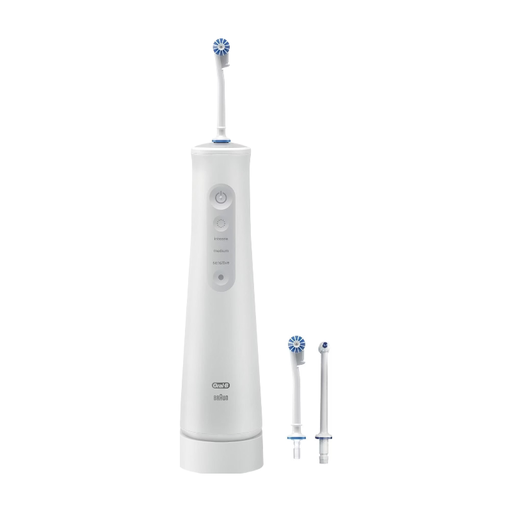
Why it suits this profile: This model has a 150 ml reservoir, three speeds and two nozzles. Its straightforward controls make it a good choice if you’re trying an electric water flosser for the first time.
The three speeds mean you aren’t limited to a single intensity. The tank is smaller, though, so you may need to refill it.
150 ml reservoir, three speeds, two nozzles and on-demand control, according to the product information.
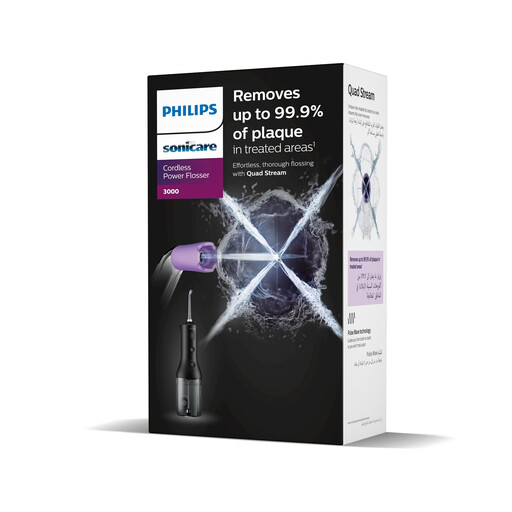
Why it suits this profile: You get two modes, three intensity levels and a 250 ml reservoir. It’s well suited to everyday use at home, with room to adjust the intensity to your needs.
The three intensity settings give you more control than a marketing claim about strong water pressure alone. Do check which type of charger is included.
250 ml reservoir, two modes, three intensity levels and one Quad Stream nozzle, according to the product description.
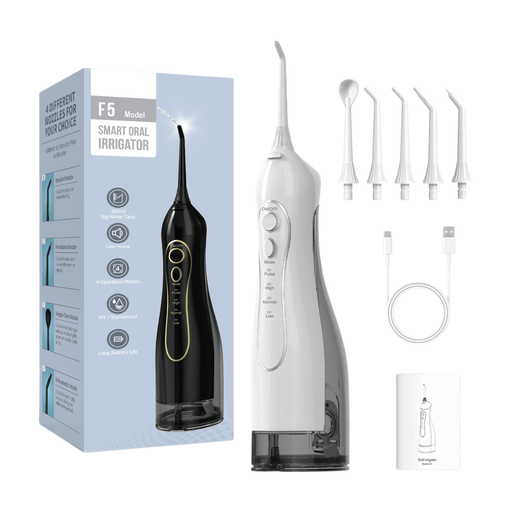
Why it suits this profile: Its five settings, 300 ml removable tank and four types of nozzle are handy if you need a flosser for different situations, including orthodontic care.
The low and high settings let you adjust the pressure to suit you. The larger tank means fewer interruptions, but takes up more space than a mini model.
40–140 PSI, five settings, 300 ml reservoir, 2,000 mAh battery and IPX7 water resistance, according to the product information.
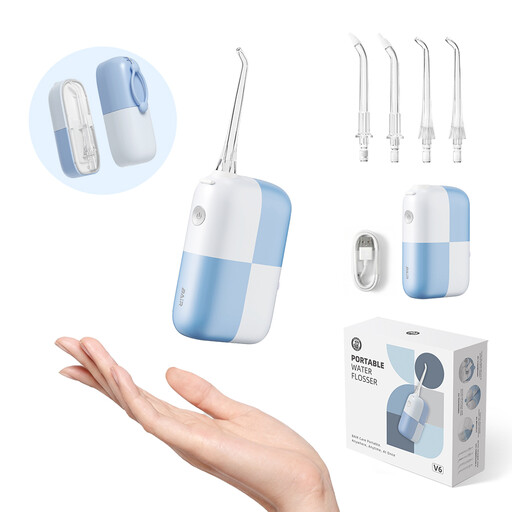
Why it suits this profile: According to the product description, this model folds down to around 10 cm and the main unit weighs 145 grams. That makes it a good option for travel, work or a small bathroom.
Its compact design and storage space for the nozzles help keep loose parts together in your luggage. The tank is smaller than those on many models designed for home use.
USB-C charging, a claimed battery life of around 30 days, 75–80 PSI and an IPX7 rating, according to the product details.
We’ve put together a complete, up-to-date list of products that meet these strict selection criteria and current European safety regulations.
Fill the reservoir with lukewarm water and attach the right nozzle. Start on the lowest setting. Place the tip in your mouth before switching the device on, then move it slowly along the gumline and between your teeth. Empty and rinse the reservoir after use. Don’t use hot water, and only add mouthwash if the manufacturer explicitly allows it.
It varies by model and how you use it. The product information for the models mentioned gives claimed battery life ranging from around 14 to 95 days. These are manufacturer estimates. Higher intensity, longer sessions and more frequent use will reduce the actual battery life.
As well as the purchase price, you’ll need to consider replacement nozzles, electricity and possibly a new battery in the long term. Water is usually the main consumable. Before buying, check whether replacement nozzles are available and follow the replacement intervals in the manual. If you have persistent sensitivity or bleeding, stop using the flosser and ask a dentist for advice.
