
Vandaag of morgen in huis

Kwaliteit gegarandeerd

Welkomstaanbiedingen ontgrendelen: GRATIS bezorging | Tot 80% korting | Gratis 30 dagen JoyPlus-proefperiode
Download de app
A water flosser can be handy when you want to remove food debris from between your teeth, along the gum line, or around braces. Yet the choice is vast and many models look alike. A high pressure, long battery life, or a large number of tips doesn’t automatically mean a device will suit your routine.
The key question, therefore, isn’t which water flosser has the most features, but which model you’ll actually enjoy using and stick with consistently. Below you’ll find the most important points to consider, common pitfalls, and a few practical recommendations.
A pressure rating like 140 PSI sounds impressive, but a high setting isn’t comfortable for everyone. For beginners or people with sensitive gums, multiple intensity levels are more important than just the maximum pressure. Also check whether a gentle mode or adjustable pressure is available.
A manufacturer may quote a battery life of 30, 40, or 50 days. According to the manufacturer’s own information, this is typically based on standard usage. How often and how long you use the device will affect the actual battery life. So also look at the charging time, the type of connection, and whether a charging cable or charging stand is included.
A water flosser with lots of nozzles may seem appealing, but check what the tips are for and whether replacement tips are available. A small reservoir can be practical on the go, but may need refilling mid-session. A larger reservoir is more comfortable at home, but takes up more space.
For daily use, at least two or three settings are practical. A gentle setting can help you start slowly; a higher setting may be suitable when you want to clean around braces or larger gaps. An electric flosser with a pause button or pressure control gives you more control than a device with only one fixed setting.
Bear in mind that pressure values aren’t always presented the same way across brands. So use the PSI value as a technical indicator, not as a standalone measure of quality.
A reservoir of around 250 to 300 ml is intended for one cleaning session on many portable models, depending on the setting chosen and how long you use it. A portable water flosser or cordless water flosser is handy for travel, work, or a small bathroom. Check:
An IPX7 or IPX6 rating in the product information indicates protection against water under specified conditions. Always follow the instructions and only charge a wet device once the connection is dry.
A standard nozzle is intended for daily use. An orthodontic nozzle can be practical around brackets and wires, while a tongue cleaner or periodontal nozzle has a different purpose. Use tips according to the manufacturer’s instructions and do not share them without thorough cleaning.
A water flosser does not automatically replace every other form of interdental cleaning. Depending on the space between your teeth, dental floss, interdental brushes, or wooden toothpicks may be more suitable. Choose a tool that fits between your teeth without force. Stop if you experience persistent pain or discomfort and seek advice from a dentist or dental hygienist.
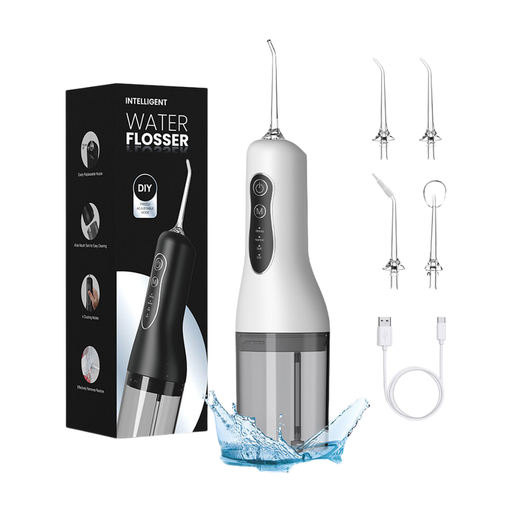
Why this fits the profile: Four settings, a removable 260 ml tank, and a cordless design make this model straightforward for anyone trying a water flosser for the first time and wanting to use it on the go.
The pressure isn’t limited to one setting: the product information lists four modes, including Soft and DIY. This means you can start at a lower level than with a model that has no adjustable pressure.
260 ml tank, USB-C charging, four settings, and according to the manufacturer up to 50 days of battery life with typical use.
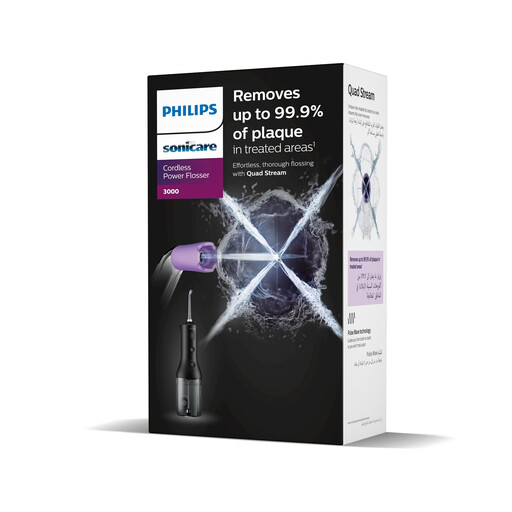
Why this fits the profile: This model offers clear controls with two modes, three intensity levels, and a 250 ml reservoir for daily use.
The product description lists both Clean and Deep Clean modes plus three intensities. According to Philips’ own information, the Quad Stream tip is X-shaped; check the included tip and manual for your use.
250 ml reservoir, three intensities, two modes, cordless use, and a two-year warranty stated in the product information.
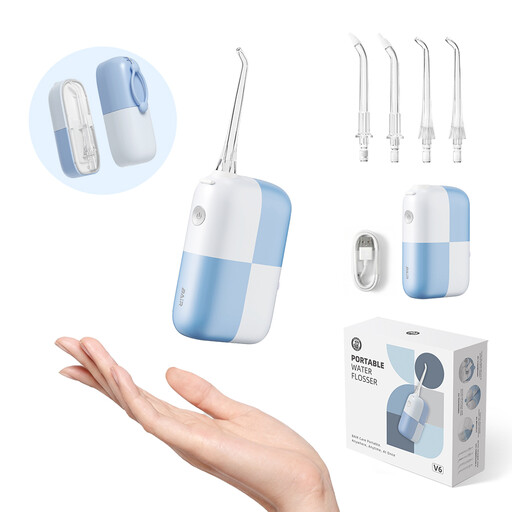
Why this fits the profile: This compact model is designed for travellers, brace wearers, and users who want different nozzles to hand without carrying a large device.
The press-and-spray control gives you command over the water flow, according to the product description. The set includes standard, orthodontic, and periodontal tips.
Approximately 10 cm when folded, weight around 145 g, IPX7 water resistance, USB-C charging, and according to the manufacturer up to 30 days of battery life.
We’ve put together a full, up-to-date list of products that fully meet these strict selection criteria and comply with current European safety regulations.
Fill the reservoir with lukewarm water and start on the lowest setting. Place the tip in your mouth before turning the device on, and lean over the sink to minimise splashing. Move slowly along the gum line and between your teeth. Empty and rinse the tank after use and let the parts dry thoroughly.
If you have braces, an orthodontic nozzle can be useful, but follow your orthodontist’s advice. A water flosser is also not a replacement for brushing with a toothbrush. For very tight spaces, dental floss may be more suitable; for wider gaps, interdental brushes can be more practical.
That depends on your teeth, your preference, and ease of use. A water flosser works with a pulsating water jet and can be comfortable around braces. Dental floss is compact and doesn’t need a battery or reservoir. Choose the method you’ll use carefully and regularly.
The lifespan depends on build quality, the battery, maintenance, and the availability of replacement nozzles. Empty the tank after use, rinse the tip, and keep the charging port dry. Also check the warranty terms and replace tips according to the product manual.
In addition to the purchase price, you need to factor in electricity, water, and replacement tips. Some models include several tips. A simple water flosser with few accessories can be more economical, while a model with specific tips offers more flexibility for daily use, travel, or braces.
