
Vandaag of morgen in huis

Kwaliteit gegarandeerd

Welkomstaanbiedingen ontgrendelen: GRATIS bezorging | Tot 80% korting | Gratis 30 dagen JoyPlus-proefperiode
Download de app
A water flosser can be useful when you want to rinse away food particles from between your teeth, along the gumline or around braces. However, not every model is equally practical. For example, a high pressure rating on the packaging means little if the reservoir runs empty after a few seconds or the attachments are difficult to clean.
As a Joybuy Product Recommendation Officer, I mainly filter products based on verifiable specifications and everyday use. This helps you avoid paying solely for marketing terms.
A water flosser with 140 PSI sounds powerful, but higher pressure is not automatically more comfortable or more suitable. For beginners and people with sensitive gums, a gentle setting is more important than the maximum rating. Always check:
PSI stands for pounds per square inch and indicates water pressure. However, manufacturers do not always use the same measurement method. Compare the rating alongside the number of settings and the mouthpieces supplied.
Long battery life is useful for a cordless water flosser or a water flosser for travelling. However, charging time is just as important. A model that lasts a long time but takes several hours to charge can be impractical if you travel frequently.
Also pay attention to the type of connection. A USB-C cable is easy to use with existing adapters in many households, but check whether a charger is included. A replacement cable may also be a separate product, such as the Charging Cable for C10, designed for the usmile C10.
IPX6 and IPX7 are not identical ratings. IPX6 refers to protection against powerful water jets. IPX7 relates to temporary immersion under specific testing conditions. The manufacturer’s precise usage instructions should always take priority.
Even with a waterproof oral irrigator, never connect the charging port while it is wet. Empty the device after use, rinse the reservoir and allow the components to dry thoroughly. This helps reduce limescale and stagnant water.
A 150 to 180 ml reservoir can be compact, but you may need to refill it during a full cleaning session. A 250 or 260 ml tank provides more capacity for one session and is worth considering if you use a water flosser at home.
A larger reservoir does take up more space when travelling. For a portable water flosser, dimensions, weight and how easily the tank can be removed are therefore more important than capacity alone.
Check which attachments are included. A standard mouthpiece is suitable for general use in accordance with the product instructions. An orthodontic mouthpiece can be useful around brackets and wires. A pocket or periodontal mouthpiece is intended for specific applications; always follow the instructions and ask a dentist for advice if you are unsure.
A water flosser for braces should have not only multiple mouthpieces, but also a low setting. Direct the jet gently and stop if bleeding or discomfort persists.
A removable reservoir with a wide opening is easier to fill and clean. Pay attention to components that remain wet after use, such as the tank, mouthpiece and connection point. With a compact electric flosser, integrated storage for mouthpieces is a practical advantage, as loose accessories are less likely to go missing.
The same basic principles apply when using the device around implants or with sensitive gums: start on a low setting, use lukewarm water and follow the manufacturer’s instructions. A water flosser does not replace a dental check-up.
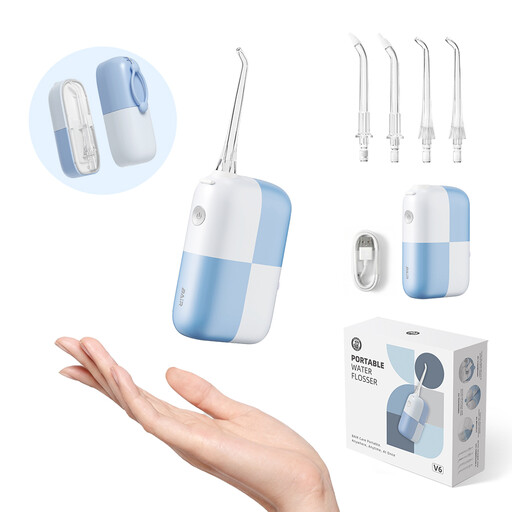
Why it suits this profile: According to the product information, the compact V6 weighs 145 grams and folds down to approximately 10 cm. The press-button mode gives beginners more control over individual water pulses.
The specifications state a pressure range of 75–80 PSI and a press-spray mode, rather than only a high maximum pressure.
IPX7 water resistance, USB-C charging, approximately 30 days of battery life and storage for multiple mouthpieces.
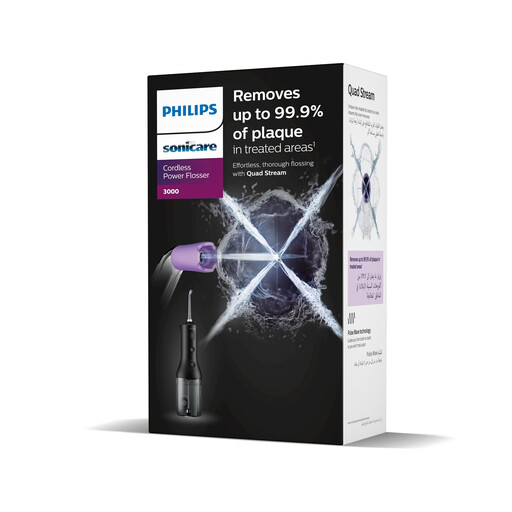
Why it suits this profile: This model offers two modes, three intensity levels and a 250 ml reservoir. That makes it straightforward to operate for everyday use.
The intensity is adjustable and the tank capacity is clearly stated. According to Philips’ own research, the model removes up to 99.9% of plaque from treated areas; this is a brand claim, not a universal guarantee.
250 ml reservoir, three intensity levels, Clean and Deep Clean modes, and a stated two-year warranty.
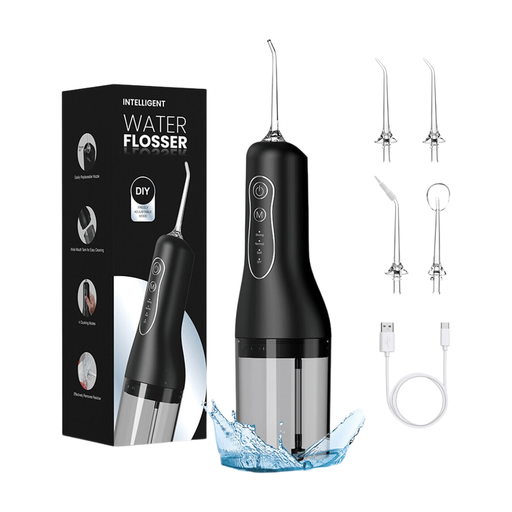
Why it suits this profile: The L5 has four settings, a removable 260 ml tank and multiple mouthpieces. This suits users who want to use different settings at home and while travelling.
As well as a maximum pressure of 140 PSI, the product information also states a gentle setting and a range of 60–140 PSI. This means you can start at a lower level.
260 ml tank, four settings, Type-C charging, stated battery life of up to 50 days and IPX6 water resistance.
We have put together a complete, up-to-date list of products that fully meet these strict selection criteria and the applicable European safety regulations.
A water flosser uses a pulsing water jet and can be particularly practical around orthodontic appliances, bridges or hard-to-reach areas. Dental floss and floss picks are smaller and quiet, and do not require a battery or reservoir. A floss pick, such as Sence Floss Picks Bamboo Fresh 2 in 1, combines dental floss with a toothpick according to the product description.
The best choice depends on your routine. If you travel frequently, you can combine a portable water flosser with floss picks as a backup. Always use products according to the packaging instructions and stop if you experience irritation or persistent bleeding.
Fill the reservoir with lukewarm water, attach the mouthpiece and start on the lowest setting. Lean over the sink, partially close your lips and slowly move the mouthpiece along the gumline and between your teeth. Empty and rinse the tank after use.
This depends on the battery, seals, mouthpieces and maintenance. Stated battery life varies by model: some portable models specify approximately 30 days, others up to 50 days or 14 days with typical use. Replace mouthpieces according to the instructions and store the device in a dry place.
In addition to the purchase price, you may need to pay for replacement mouthpieces, electricity and maintenance. A rechargeable electric flosser uses relatively little electricity, but check the price and availability of compatible attachments in advance. This makes the total cost of ownership easier to predict.
