
Vandaag of morgen in huis

Kwaliteit gegarandeerd

Welkomstaanbiedingen ontgrendelen: GRATIS bezorging | Tot 80% korting | Gratis 30 dagen JoyPlus-proefperiode
Download de app
A water flosser can be a handy alternative when traditional floss is tricky to use – for example, with braces, implants, or limited space between your teeth. However, models vary significantly in reservoir size, water pressure, battery life, and the nozzles included. A low price or long battery life doesn’t automatically mean it’s easy to use every day.
The main pitfalls often lie in details that only become apparent after purchase: a reservoir that’s too small, a pressure setting that doesn’t feel comfortable, or a tank that’s difficult to clean. With the points below, you can compare a cordless water flosser, oral irrigator, or dental water jet on verifiable specifications.
Manufacturers sometimes claim dozens of days of use per charge. This is usually based on a specific usage pattern. So also check the charging time, the type of connection, and whether a charger is included. USB-C is practical for travel, but a rechargeable water flosser should not be used while it’s plugged in.
A high PSI rating might seem appealing, but more pressure isn’t comfortable for everyone. If you’re looking for a water flosser for sensitive gums, you mainly need a low starting setting and multiple intensity levels. Always start gently and only increase the pressure if it remains comfortable.
A portable water flosser with a 150 to 180 ml reservoir can be compact, but may need refilling mid-session. A larger tank is more convenient at home, but takes up more space. Empty the reservoir after use, rinse the nozzle, and let parts dry thoroughly. This helps prevent residual water and limescale build-up.
Don’t just look at the maximum pressure – focus on the range. The Sunluxy F5, for example, states 40–140 PSI with five settings. The BAIR CARE V6 offers a pressure range of 75–80 PSI and uses a button to control the water stream. Philips offers two modes and three intensity levels on the Cordless Power Flosser 3000.
A gentle setting is important for beginners and people with sensitive gums. For a water flosser for braces, suitable orthodontic nozzles are also useful. With implants or recent dental treatment, it’s wise to consult your dentist first. A water flosser does not replace professional advice.
Enough water is essential for a full cleaning session. Pay attention to these stated capacities:
A removable tank with a wide opening is easier to clean. Also check whether the reservoir is dishwasher-safe; this varies by model.
IPX6, IPX7, and IPX8 are technical ratings for protection against water under specific test conditions. They don’t mean every part can be safely submerged in all circumstances. The charging port must be dry before you connect a cable.
For a water flosser for travel, weight, foldability, tank shape, and battery life are at least as important as maximum pressure. Only take the accessories you actually use, and check whether replacement nozzles are available.
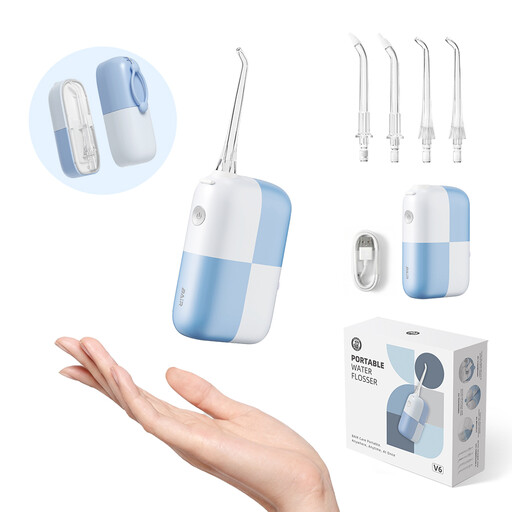
Why this fits the profile: The foldable design is around 10 cm long and weighs 145 grams according to the product specifications. This makes it suitable for use at the office, in a small bathroom, or while travelling.
The magnetically removable tank is designed, according to the product information, to make filling and cleaning easier. The button gives you control over the water stream.
IPX7 rating, USB-C charging, approximately 30 days of battery life according to the product specification, and an orthodontic nozzle.
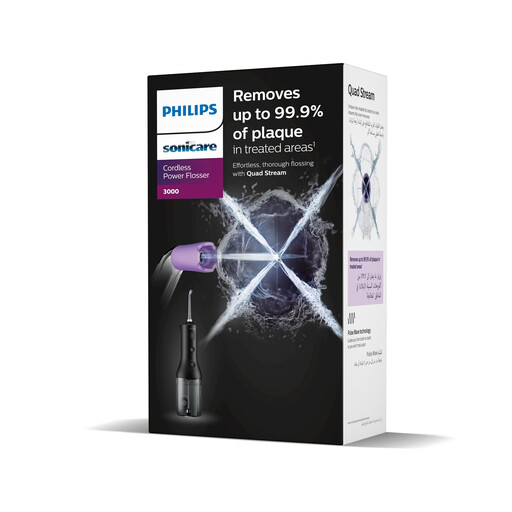
Why this fits the profile: This model combines a 250 ml reservoir with two modes, three intensity levels, and a rechargeable battery. It’s therefore designed for regular use at home.
The three intensity levels mean you’re not forced to choose between very gentle and very powerful. According to Philips, the reservoir is designed for a 60-second session.
Quad Stream nozzle, Pulse Wave technology in Deep Clean mode, approximately 14 days of battery life with typical use, and a two-year warranty according to the product information.
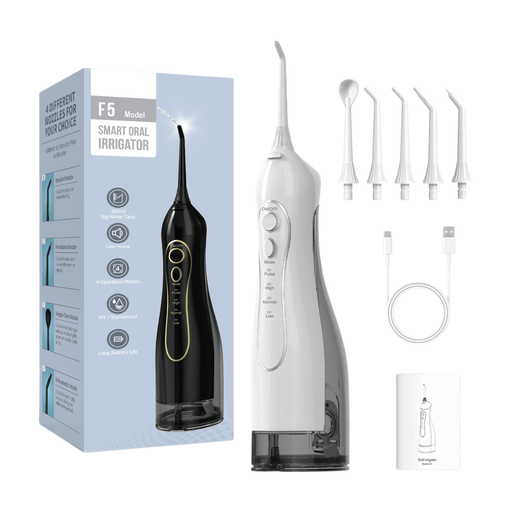
Why this fits the profile: The combination of a 300 ml tank, five settings, and multiple nozzles suits users who want to try different options at home.
The pressure is adjustable from 40 to 140 PSI, and a separate gum care and orthodontic nozzle are included. This means the maximum pressure isn’t the only setting available.
360° rotating nozzle, IPX7 rating, removable 300 ml tank, and a stated battery life of up to 40 days.
We’ve put together a full, up-to-date list of products that fully meet these strict selection criteria and comply with current European safety regulations.
Fill the tank with lukewarm water and start on the lowest setting. Place the nozzle in your mouth before turning the device on, and direct the stream along the gum line and between your teeth. Work systematically around each section of your mouth. Do not use essential oils or cleaning agents unless the manual explicitly allows it.
If you experience persistent bleeding, pain, or irritation, stop using it and contact your dentist. This is especially important after a procedure or if you have existing oral health issues. A water flosser is a tool for daily care and is not a replacement for brushing your teeth or dental check-ups.
Some models come with an orthodontic nozzle and are described as suitable for braces in the product description. The right approach around implants varies from person to person. If in doubt, ask your dentist for advice and use a low setting until you know what feels comfortable.
The lifespan depends on usage, charging, water quality, and maintenance. Empty the tank after each session, rinse the nozzle, and keep the charging port dry. Also check whether replacement nozzles are available and what warranty the seller offers.
Beyond the purchase price, you mainly pay for electricity and any replacement nozzles. A model with a larger tank may need less frequent refilling, while a compact model is easier to take with you. So don’t just compare the price – also compare accessories, warranty, and maintenance.
