
Vandaag of morgen in huis

Kwaliteit gegarandeerd

Welkomstaanbiedingen ontgrendelen: GRATIS bezorging | Tot 80% korting | Gratis 30 dagen JoyPlus-proefperiode
Download de app
Would you like to filter tap water for a milder taste, less limescale build-up or fewer plastic bottles? Choosing a water filter might seem straightforward. However, there are clear differences between a water filter jug, a tap filter and a reverse osmosis water filter.
Look out for these three common pitfalls:
Compare water filter cartridges based on their stated capacity. According to the product information, some MAXTRA PRO cartridges can filter up to 150 litres or last four weeks, whichever comes first. Another system may specify a usage period of around 35 days.
A household with several coffee drinkers will use considerably more filtered water than a single person. Work out how many litres you’ll need each week in advance. A larger-capacity model, such as a water filter dispenser, may be more practical for families.
Don’t use a cartridge for longer than recommended. A saturated filter may become less effective and, if not maintained properly, could retain or release unwanted substances. Always follow the manufacturer’s instructions.
A traditional water filter jug often uses a combination of activated carbon and ion exchange. According to BRITA’s product information, this combination can reduce water hardness, chlorine and certain substances that affect taste and smell. Some cartridges also list metals such as lead and copper. These are claims made in the brand’s product information; the precise results depend on your tap water and how well the filter is maintained.
A limescale filter is particularly useful if you want to reduce limescale build-up in a kettle, coffee machine or tea glass. Check that the cartridge you choose is specifically designed to reduce water hardness.
A reverse osmosis water filter offers more extensive filtration. According to the manufacturer, the Waterdrop system in this selection uses a five-stage process that includes an RO membrane, activated carbon and PP cotton. The manufacturer states that it reduces TDS, fluoride, chlorine and certain heavy metals, among other substances. Always consider these performance claims in relation to the specified model, filter status and water source.
A tap water filter should suit your kitchen and daily routine. Look out for:
A water purifier that needs to be plugged in also requires space near a socket. Check the clean water tank capacity, the amount of wastewater produced by RO systems and the price of replacement cartridges.

Why it suits this profile: This tap filter is designed to fit most standard taps and, according to the product description, uses activated carbon and PP cotton. It’s a compact way to try filtering tap water without keeping a separate jug in the fridge.
The stated lifespan is up to three months. Check that it’s compatible with your tap before buying, and replace the filter according to the instructions.
Compact design, compatibility with standard taps according to the description, and filter material made from activated carbon and PP cotton.

Why it suits this profile: The water filter jug has a total capacity of 2.4 litres, including 1.4 litres of filtered water. The six cartridges included provide enough for several replacements.
According to the product information, the Memo reminder indicates when the cartridge should be replaced, after around four weeks. The actual capacity depends on usage and water hardness.
Fridge-friendly size, filling flap and six MAXTRA PRO cartridges included. According to the product information, the jug is dishwasher-safe, except for the lid.
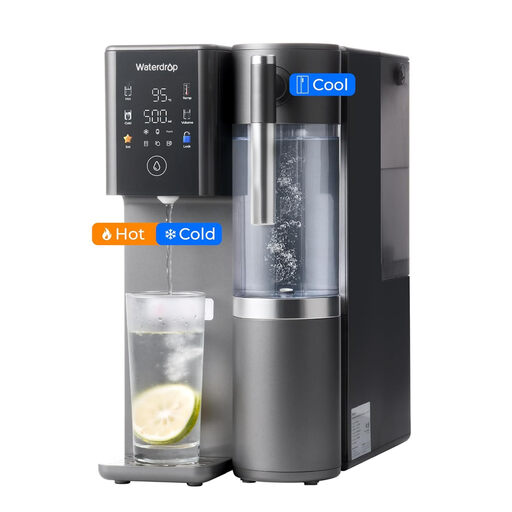
Why it suits this profile: This countertop model is designed for people looking for a more extensive system for the kitchen, office or caravan. According to the product description, it offers six temperature settings from 15 to 95 °C.
The filter status is shown on the display, making it easier to see when maintenance is needed than with a system without an indicator. Bear in mind the electricity use, tank cleaning and wastewater.
Five-stage RO filtration according to the manufacturer, real-time TDS display, self-cleaning function and a removable 1.1-litre clean water jug.
We’ve put together a full, up-to-date list of products that meet these strict selection criteria and the applicable European safety regulations.
It varies by brand, cartridge and water consumption. Many cartridges have a limit of around four weeks or a set number of litres, such as 150 litres. Always follow whichever limit is reached first. A filter indicator is useful, but it doesn’t replace the instructions on the packaging.
Usually not. Water filter jugs, tap filters and many cartridges are designed for cold tap water. Hot water can damage the filter material or plastic parts. For tea and coffee, filter cold water first, then heat it in a suitable appliance.
That depends on the purchase price, filter capacity and how much you use. Calculate the cost per litre by dividing the price of a cartridge by its stated capacity in litres. Include any purchase costs for the jug or dispenser too. A water filter can also reduce the number of single-use bottles you buy, but the savings will vary from household to household.
