
Vandaag of morgen in huis

Kwaliteit gegarandeerd

Welkomstaanbiedingen ontgrendelen: GRATIS bezorging | Tot 80% korting | Gratis 30 dagen JoyPlus-proefperiode
Download de app
A water filter can improve the taste of tap water and help reduce limescale build-up in a jug or coffee machine. However, not every filter cartridge fits every system. If you focus only on a low price, a large number of cartridges or terms such as “extra pure”, you could end up with leaks, disappointing water flow or a cartridge that is not compatible with your appliance.
The main pitfalls when choosing water filter cartridges are:
First, check the brand, model and connection type of your appliance. This applies to water filter jugs, water filtration stations, drinking water systems and fully automatic coffee machines.
Examples:
If you are unsure, check the manual or search for the existing filter by model number. The term “universal” is only useful if the manufacturer clearly lists the compatible systems.
Capacity is usually stated in litres and sometimes in weeks or months. Always follow whichever limit is reached first.
Some examples from the product specifications:
A higher figure does not automatically mean lower running costs. Calculate the price per litre and take the number of filters in the pack into account. A six-pack may be convenient for a family, while a two- or three-pack may be more suitable if you use the system less frequently.
Many water filter cartridges combine activated carbon, ion exchange resin, filter mesh and, in some cases, an ultrafiltration membrane.
Pay attention to the precise wording. According to Waterdrop’s product information, the WD-PF-01A Plus is NSF 42 certified for reducing chlorine, taste and odour, and NSF 372 certified for lead-free materials. This tells you something about the relevant standard and the materials used, but it does not mean that the filter removes every type of contaminant.
Brand claims should also be read in context. According to BRITA’s own research, certain MAXTRA PRO Pure Performance cartridges can reduce traces of certain substances when they are present in tap water. Always check the technical information for the specific model.
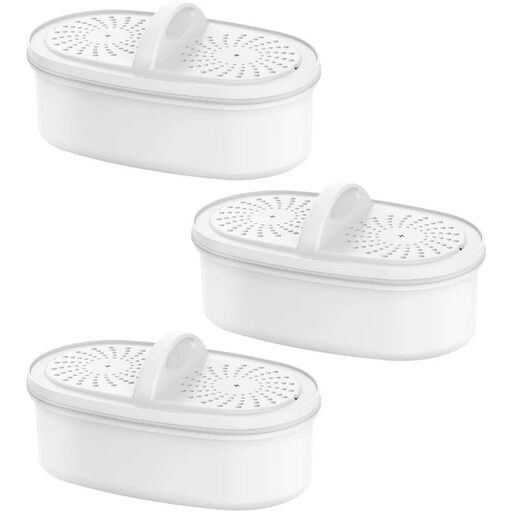
Why it suits this profile: The three-pack is practical for households using a compatible Waterdrop jug or tank and wanting to keep several replacement filters in reserve.
The model number and compatibility are clearly stated. This helps you avoid buying a similarly shaped but unsuitable cartridge.
3 cartridges; up to 757 litres per filter according to the product information; NSF 42 and NSF 372 references.
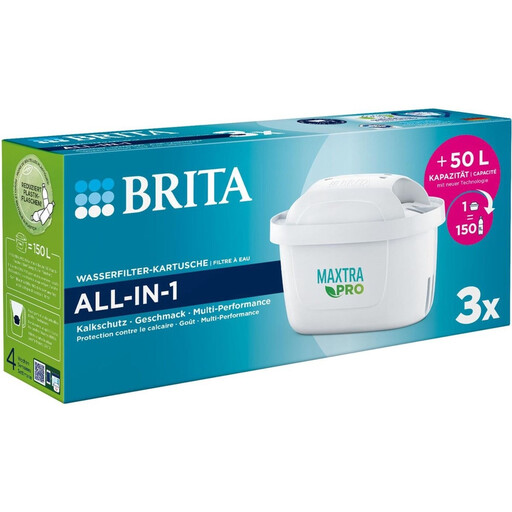
Why it suits this profile: Suitable for users of current BRITA water filter jugs who want a clear replacement schedule and a three-pack.
The product specification states compatibility with current BRITA table-top water filters and a limit of 150 litres or four weeks.
3 cartridges; designed for soft to moderately hard water; capacity of up to 150 litres per cartridge.
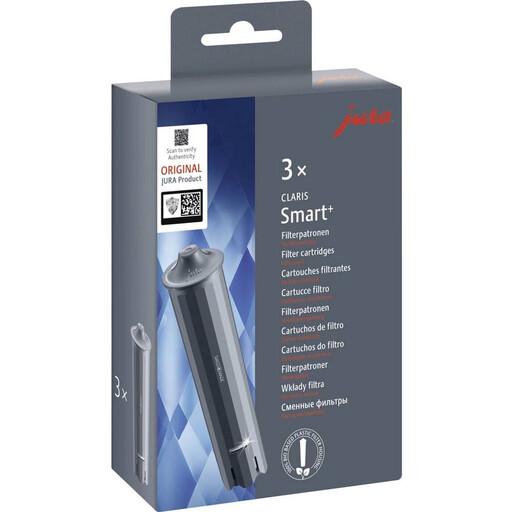
Why it suits this profile: For owners of a compatible fully automatic JURA coffee machine who want to use an integrated filter and notification system.
The compatible JURA models are listed. Check the list before ordering, as RFID functionality is not relevant for every coffee machine.
3 cartridges; RFID recognition according to the product description; automatic replacement notification on compatible machines.
We have put together a complete, up-to-date list of products that fully meet these strict selection criteria and the applicable European safety regulations.
A water filter does not automatically reduce all contaminants or disinfect tap water, unless this is explicitly stated for the system in question. If you are unsure about the quality of a water source, a filter jug is not a substitute for official water quality information.
This depends on the brand, model, water consumption and water hardness. Many cartridges for BRITA water filter jugs are replaced after four weeks or 150 litres. A filter for a coffee machine may have its own replacement interval. Always use the shorter limit stated in the instructions.
No. Check the connection, shape, dimensions and official compatibility list. BRITA MAXTRA PRO filters, BRITA Classic cartridges, Waterdrop replacement filters and JURA CLARIS filters are different product families.
Calculate the monthly cost by dividing the price of the pack by the number of cartridges, then multiplying it by the number of filters you use per month. Also compare the capacity in litres. A cheaper filter with a shorter replacement interval may ultimately cost the same or more.
