
Vandaag of morgen in huis

Kwaliteit gegarandeerd

Welkomstaanbiedingen ontgrendelen: GRATIS bezorging | Tot 80% korting | Gratis 30 dagen JoyPlus-proefperiode
Download de app
A water dispenser for home can be handy for tea, coffee, baby food, cold drinking water or a large family. However, not every model suits the same kitchen. A compact hot water dispenser works differently from a glass drinks dispenser, while an oil dispenser is intended solely for oil, vinegar or sauces.
If you only look at a low price or a striking number of features, you may run into practical problems later. So pay particular attention to capacity, temperature control, cleaning and safety.
A 5-litre water dispenser isn't automatically more convenient than a 2.5 or 3-litre model. A larger tank takes up more space and holds water that sits still for longer if you don't use much. For a household with multiple users, a roomy tank can actually reduce the number of refills.
So consider your daily use:
An instant hot water dispenser often heats water per portion. That can be quicker than waiting for a full kettle, but the actual temperature, volume and heating time vary by model. So check the official specifications rather than just relying on the term "instant hot water".
Some appliances offer a fixed selection, such as 45, 55, 75, 85 and 95 °C. Other models work in 1 °C increments. A setting of 40 °C can be practical for certain uses, but that doesn't mean the appliance is suitable for every preparation.
A smart water dispenser with app control or a digital display can be convenient, but these features don't replace regular maintenance. Limescale, water residue and a poorly cleaned drip tray affect daily use.
Check before you buy:
First, measure the space on your worktop. Pay attention not only to height and width, but also to room for opening and removing the tank. A model may look compact, yet still be awkward to place under a kitchen cupboard.
According to the product description, the Xiaomi Smart Hot & Cold Water Dispenser has a 3-litre tank and dimensions of 345 × 340 × 130 mm. The Nedis KAWD310FBK has a removable tank of 2.7 litres and measures approximately 205 × 355 × 320 mm. These figures give a clearer picture than general terms like "space-saving".
For an electric water dispenser, three details matter:
According to the product specification for the Nedis KAWD310FBK, the appliance features seven temperature settings, five volume selections and a separate button for 40 °C. The manufacturer also mentions dry-boil protection, overheat protection and a child lock. Treat this information as the brand's product specification and always follow the instruction manual.
For appliances with hot water, a stable surface, an easily accessible plug and protection against dry boiling are important. Be aware of the risk of burns, especially in a household with children.
A water dispenser for home should in practice:
Also note the EU statutory guarantee of at least two years, which is mentioned for various products in the range. Additional terms may vary by seller and product.
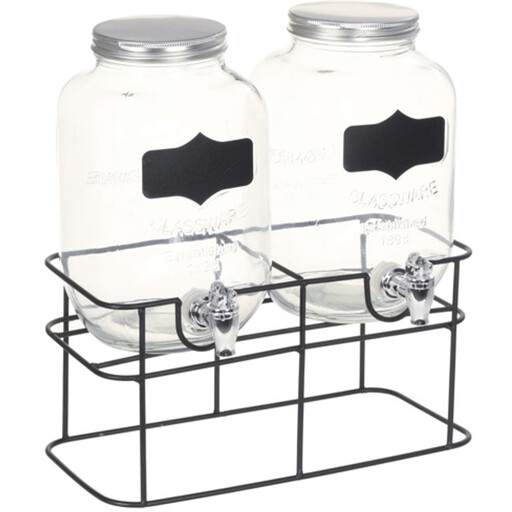
Why this fits the profile: For those who mainly want to serve chilled drinks, cordial or water without electrical features. The set includes two glass dispensers and a stand.
The contents are visible through the transparent glass and the wide opening makes refilling easier. Bear in mind that this is not a hot water dispenser.
Two dispensers, glass housing, screw cap and integrated tap according to the product description.
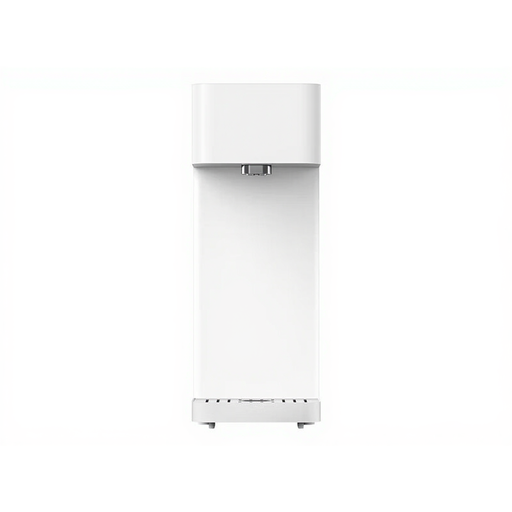
Why this fits the profile: Suitable for households that want both hot and cold water and need to set temperature or volume precisely.
The product description mentions separate modes for hot and cold water, plus temperature control in 1 °C increments. Check the actual settings before purchase.
3-litre tank, app control according to the product description and multiple temperature and volume options.
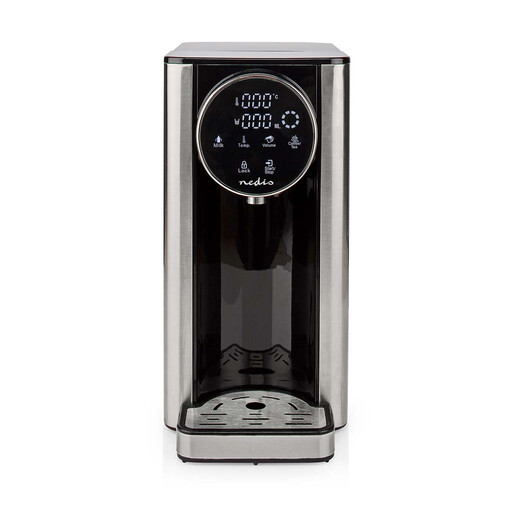
Why this fits the profile: For home workers and families who regularly need small amounts of hot water without heating a full kettle.
The specifications mention a removable tank, volume selections from 100 ml to 2.7 litres and a descaling reminder. This makes maintenance and portioning clearer.
2600 W, seven temperature settings, five volume options, child lock and dry-boil protection according to the product specification.
A kitchen dispenser can also refer to accessories for oil and vinegar. Those products are not suitable for drinking water or hot water, but they do help keep your kitchen more organised.
An oil dispenser from Maxcook, for example, is intended for oil, vinegar and sauces. The 1000 ml version has a housing made of 304 stainless steel and a wooden handle, according to the product description. The 500 ml version also uses 304 stainless steel and features a pour spout with anti-drip and anti-return design.
For oil and vinegar bottles, glass sets are also available, such as the 5five set with two bottles of approximately 0.48 litres and a bamboo stand. Glass models are transparent and refillable, but they require careful use and hand washing according to the product information.
We've put together a full, up-to-date list of products that fully meet these strict selection criteria and comply with current European safety regulations.
That depends on usage. A dispenser with a portion choice heats only the selected amount, according to the product specification. If you often need just one cup, you can therefore heat less water each time. Electricity consumption still depends on power, heating time, standby use and frequency.
The required frequency depends on water hardness and usage. Follow the notification on the appliance and the instruction manual. Some models mention a descaling interval of one to three months. Only use a suitable descaling agent and unplug the appliance before maintenance.
For the hot water dispensers mentioned, the tank is intended for clean, cold water. Do not add milk, coffee, tea or cleaning agents unless the instruction manual expressly allows it. This prevents residue, odour problems and potential damage to the heating system.
