Start by considering the available width and depth, how many towels you usually wash, and where you can dry them. A top-loading washing machine may work if width is the main constraint; a shallow front-loader is an option if you have around 60 cm of width. If drying space is limited, a washer-dryer could be the answer, but check the washing and drying capacities separately, as well as energy consumption.
Who should consider this choice?
For buyers with a narrow laundry space
First, work out whether width, depth or the clearance needed for a door or lid is the main constraint. A top-loader and a shallow front-loader solve different space problems. Remember to leave room for hoses and connections too, as recommended by Consumentenbond.
For buyers without a good place to dry clothes
You’ll also need a practical way to dry your towels after washing. With a washer-dryer, compare the drying capacity separately with the amount of laundry you want to dry.
For buyers with varying towel loads
Choose a drum size to suit the amount of cotton laundry you usually wash. Consumentenbond recommends weighing a typical load so you don’t automatically choose a larger capacity than you need.
What should you look for when choosing?
Shallow front-loader
Choose this option if: you have around 60 cm of width but limited depth.
Bear in mind: hoses and the door also take up space, and you’ll still need a separate place to dry your laundry.
Top-loader
Choose this option if: width is the main constraint and there’s enough clearance above the lid.
Bear in mind: Consumentenbond gives around 40 cm as the typical width and points out that the top cannot be used as a permanent storage surface.
Washer-dryer
Choose this option if: there’s little room for a clothes airer or a separate appliance, and you need to dry towels using the machine.
Bear in mind: Milieu Centraal reports that a washer-dryer uses more energy than washing and drying separately.
Measure the entire space where the machine will go and weigh a typical towel load before comparing models. If you’re drying with a washer-dryer, check the washing and drying capacities separately.
| Concern |
What to check before buying |
Who is this important to? |
| Will the machine fit? |
Compare its width and depth with the space available, allowing room for hoses and for the door or lid to open. |
If space is limited, I want to know which dimensions are the real constraint before choosing a model. Around 36% of consumers prioritise the space available for installation. |
| Is there somewhere to dry the laundry? |
Check whether there’s room to dry your laundry. With a washer-dryer, compare the washing and drying capacities separately. |
If I can’t hang my towels up properly after washing, I need a practical drying solution. Around 29% of consumers prioritise drying options. |
| Is the drum right for the load? |
Weigh a typical cotton load and compare it with the maximum capacity and the cotton programme requirements. |
If my towel loads vary, I want a drum that suits what I usually wash. Around 21% of consumers prioritise the amount of laundry they wash. |
| What will it cost to run? |
Compare the energy label and kWh per 100 cycles for the same type of cycle. With a washer-dryer, also check the figures for washing and drying. |
If the machine runs frequently, I want to compare the energy use for the way I plan to use it. Around 14% of consumers prioritise running costs. |
Avoiding common buying mistakes
-
Measuring only the space in the cabinet
The space you need is greater than the machine’s dimensions alone: hoses, connections and room to open the door or lid all need to be taken into account.
Measure the width, height and depth at several points, and check the installation requirements for the exact model.
-
Assuming the washing capacity is the drying capacity
With a washer-dryer, a cotton load that fits in the wash may be too large to dry in the same cycle.
Compare the washing and drying capacities separately with your weighed towel load before relying on a continuous wash-and-dry programme.
-
Choosing a large drum without weighing your load
A higher maximum capacity won’t necessarily suit small or varying towel loads.
Weigh a typical cotton load and compare it with the stated capacity.
-
Planning to store things on top of a top-loader
The lid needs to open freely. Consumentenbond points out that the top cannot be used as a permanent storage surface.
Before buying, check that there’s enough clear space above the lid.
Brands worth comparing
AEG
The AEG LTR7573A is a 7 kg top-loader that may be worth considering if width is the main constraint.
- AEG lists a maximum spin speed of 1300 rpm for the LTR7573A.
- Consumentenbond notes that top-loaders generally have a more limited choice and a maximum capacity of 6 to 7 kg. Check that the towel load fits and that there’s enough clearance above the lid.
Beko
The BM3WFU3741W is a 7 kg front-loader with a stated depth of 49,6 cm, making it relevant if depth is limited.
- Beko lists energy class A and a maximum spin speed of 1400 rpm for this model.
- The stated width is 60 cm. Also allow space for connections and for the door to open: the cabinet depth alone won’t tell you whether the machine will fit.
Bosch
The Bosch WGE02404NL is a 7 kg front-loader for a space where standard width and depth are available.
- Bosch gives the dimensions for this model as 848 × 598 × 588 mm and its maximum spin speed as 1400 rpm.
- A cabinet depth of 588 mm doesn’t automatically mean the machine will fit in a shallow recess. Allow for connections and the door opening when measuring.
Washing machines and washer-dryers on Joybuy
These products are suited to spaces with limited depth and, in the case of washer-dryers, washing and electrically drying your laundry in one appliance.
 No image available
TCL FF1006WB0, 6 kg, 45 cm deep
May suit you if depth is limited and a typical load of up to 6 kg works for your needs. Remember to measure the space for hoses and the door too.
Stated capacity: 6 kg. Stated depth: 45 cm. Energy class B.
View on Joybuy
 No image available
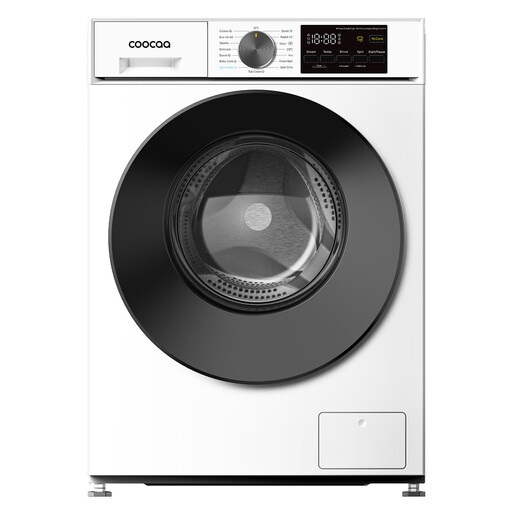
Coocaa Galaxy A3 Series F702A3AВC0, 7 kg
May suit a space with limited depth if a 7 kg capacity works for your towel load. Check the full installation space.
Stated capacity: 7 kg. Stated depth: 440 mm. Maximum 1200 rpm. The product information lists cotton programmes.
View on Joybuy
 No image available
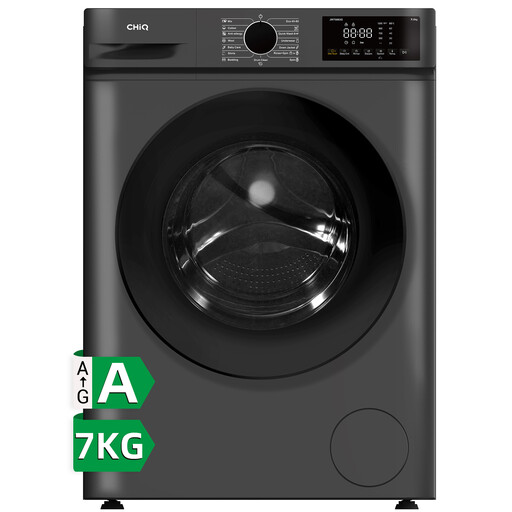
CHiQ JW75883G, 7 kg, 47 cm deep
One to compare if its stated depth and capacity suit the space available and the load you usually wash.
Stated capacity: 7 kg. Stated depth: 47 cm. Maximum 1200 rpm. Energy class A.
View on Joybuy
 No image available
Haier HWD90-BP14929A-S, 9/5 kg
May suit you if you need one appliance for washing and drying. For a wash-and-dry cycle, bear in mind the lower drying capacity.
Stated capacity: 9 kg washing and 5 kg drying. Maximum 1400 rpm.
View on Joybuy
 No image available
Midea MF205D80WB/W-NL, 8/6 kg
A washer-dryer to consider if one appliance needs to wash and dry your laundry. Compare its drying capacity with the towel load you want to dry in one cycle.
Stated capacity: 8 kg washing and 6 kg drying. Maximum 1400 rpm.
View on Joybuy
Frequently asked questions
Is a higher maximum spin speed always better for towels?
No. Don’t choose based on maximum spin speed alone. Compare the stated spin performance and think about what you’ll do with the towels after washing.
Can I dry all my washed towels at once in a washer-dryer?
Only if the load is within the stated drying capacity. The maximum washing capacity doesn’t automatically tell you how much you can dry at once.
What should I consider when installing and maintaining the machine?
Measure the installation space, including room for hoses and for the door or lid to open. If there’s a musty smell, dirt or standing water may be to blame. Check and maintain the machine and drain according to the manual. Consumentenbond lists water left in the drum, pump or hose as a possible cause.
What are my rights if a washing machine I bought online develops a fault?
If a product is faulty, you can hold the seller responsible under your statutory rights. According to the Dutch Government, there is no fixed statutory warranty period in the Netherlands. For online purchases from a business, you’ll often also have a 14-day cooling-off period, subject to applicable exceptions.
Does a washing machine need an energy label?
Yes. The Dutch Government lists washing machines among the appliances that must have an energy label. The European Commission describes an A to G label scale for household washing machines and washer-dryers, in place since 1 March 2021. For a washer-dryer, compare the figures for washing and for washing and drying separately.


