If you can hang your tea towels out to dry, choose a suitable washing machine and compare its spin performance: a higher maximum spin speed doesn’t guarantee that laundry will come out of the drum drier, according to the Dutch Consumers’ Association. If you don’t have a usable place to dry them, a washer-dryer could be a good fit, provided its smaller drying capacity suits your load and you’re happy to allow for longer programmes and the energy used for drying. For used tea towels, also check whether there’s a suitable 60 °C programme. The Netherlands Nutrition Centre recommends washing them at this temperature, while EnergyLabel.nl says that eco 40-60 doesn’t necessarily reach 60 °C.
Which solution is right for you?
If you don’t have a suitable place to dry them
You want to be able to dry your tea towels in the same appliance after washing. Compare the drying capacity and programme duration. The Dutch Consumers’ Association explains that a washer-dryer’s drying capacity differs from its washing capacity.
If you have a small drying rack
You can hang your tea towels out, but want to reduce how much you need to dry on the rack. Compare spin results rather than just the maximum spin speed, as recommended by the Dutch Consumers’ Association.
If you use lots of tea towels in the kitchen
You’re looking for a suitable capacity and a suitable 60 °C programme. The Netherlands Nutrition Centre recommends washing used tea towels at 60 °C.
What should you look for when buying?
First, think about how you want to dry your tea towels. Then compare the washing capacity, spin results and programmes that suit the way you use them.
| What to consider |
What to look for |
Who should consider this most? |
| Drying without a rack |
Compare the drying capacity with your load, and check the duration and energy use of a combined programme. |
If you can’t hang your tea towels out, you’ll want to dry a load in one go. Around 36% of consumers have this need in particular. |
| Washing at 60 °C |
Check whether the machine has a suitable 60 °C programme, and follow the care label on your tea towels. |
If you want to wash used tea towels in line with the Netherlands Nutrition Centre’s advice, check the programme temperature. Around 29% of consumers prioritise this washing requirement. |
| Spinning with limited drying space |
Compare test results or residual moisture figures; don’t just look at the maximum spin speed. |
If you have a small but usable drying rack, you’ll want to know how much moisture remains after spinning. Around 21% of consumers prioritise reducing the amount they need to dry on the rack. |
| Suitable capacity and energy use |
Choose a washing capacity that suits your usual load. For a washer-dryer, compare the figures for washing and for washing and drying separately. |
If you’re mainly looking for a drum size and energy use that suit your usual laundry, don’t choose a capacity based only on the drying weight. Around 14% of consumers prioritise this consideration. |
Common buying mistakes
-
Confusing washing capacity with drying capacity
A washer-dryer may have a lower drying capacity than washing capacity. This means a full washing load might not fit into a single drying cycle.
Compare both capacities with the amount you want to dry straight after washing.
You may need to run an extra drying cycle for some of the load, or hang it out to dry after all.
-
Assuming eco 40-60 is the same as a 60 °C wash
According to EnergyLabel.nl, the eco 40-60 cycle doesn’t go above 40 °C, while the Netherlands Nutrition Centre recommends washing used tea towels at 60 °C.
Check the separate 60 °C programme and the care label on your tea towels.
-
Assuming a higher spin speed means drier laundry
According to the Dutch Consumers’ Association, a machine spinning at 1400 rpm can spin laundry just as dry as one spinning at 1600 rpm. A higher spin speed can also leave more creases.
Compare spin test results or residual moisture figures, and check which machine and programme were used.
-
Looking only at a washer-dryer’s energy use for washing
Energy use for washing alone isn’t the same as energy use for washing and drying. The Dutch Consumers’ Association says that drying with standard washer-dryers uses more energy.
Compare the figures for both cycles, and weigh the space-saving benefit against energy use if you often use the machine to dry laundry.
Regular machine drying can also use more water and energy.
Brands to consider
Bosch
Bosch offers both standalone washing machines and washer-dryers, so you can take the space available for hanging tea towels into account.
- Bosch lists an 8 kg washing capacity and 5 kg drying capacity for the WNA13400EU. The Wash & Dry 60' programme is designed for small loads.
- According to Bosch, the standalone WGJ23400NL has an 8 kg washing capacity and a maximum spin speed of 1400 rpm.
- The WGJ23400NL doesn’t have a built-in dryer. The stated capacities and programmes apply to the models listed.
AEG
The AEG LWR73842 is a washer-dryer with separate stated washing and drying capacities.
- AEG lists an 8 kg washing capacity, 5 kg drying capacity and 1400 rpm for this model.
- For the stated energy label context, AEG gives a weighted residual moisture content of 53,9%.
- The capacity and residual moisture figures are specific to this model. A steam function isn’t a substitute for washing used tea towels at the recommended 60 °C.
LG
According to LG, the LG GD3R509S0 combines a 9 kg washing capacity with a 6 kg drying capacity.
- This model’s stated drying capacity may be useful if your load is larger than the 5 kg drying capacity of some washer-dryers.
- A higher stated drying capacity doesn’t in itself tell you anything about drying performance or energy use. LG’s statements about AI DD and fabric protection are manufacturer claims.
Joybuy products
This selection includes standalone washing machines for anyone who can hang tea towels out to dry, and washer-dryers for anyone without a suitable place to dry them.
 No image available
Bosch WGB2440BFG Serie 8, 9 kg
A standalone washing machine for anyone who can dry their tea towels elsewhere after washing.
9 kg washing capacity, maximum spin speed of 1400 rpm, energy rating A and NL/FR control panel.
Joybuy
 No image available
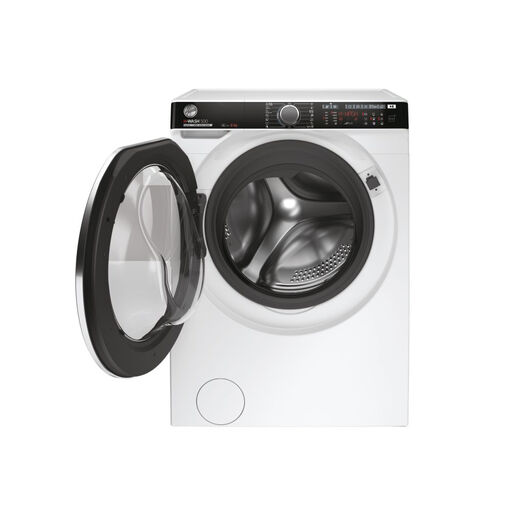
HWP 48AMBC7/1-S front-loading washing machine, 8 kg
A standalone front-loading washing machine for anyone who can hang their tea towels out after washing.
8 kg washing capacity, 1400 rpm and energy rating A. The product description lists a hygiene programme that maintains 60 °C for more than 20 minutes.
Joybuy
 No image available
Bosch WNA13400EU, 8 kg washing and 5 kg drying capacity
A washer-dryer for anyone who wants to use one appliance and can match their load to the stated drying capacity.
8 kg washing capacity and 5 kg drying capacity; the drying capacity is lower than the washing capacity.
Joybuy
 No image available
Samsung WD90DB7B85GWU3, 9 kg washing and 6 kg drying capacity
A washer-dryer for anyone who wants to match their drying load to the stated capacity of 6 kg.
9 kg washing capacity and 6 kg drying capacity. The product description lists a quick programme for 5 kg in 39 minutes.
Joybuy
 No image available
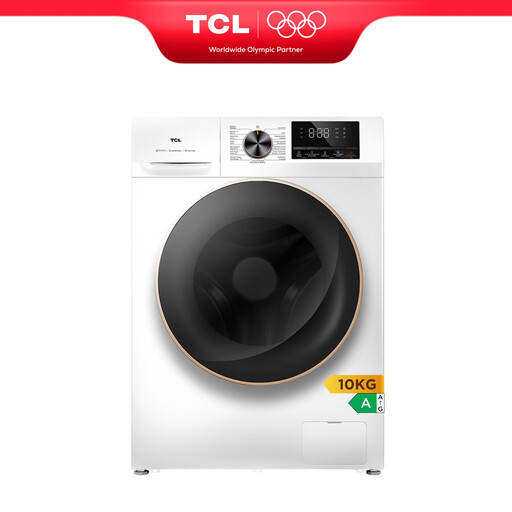
TCL FP1210WA0, 10 kg
A standalone washing machine for anyone with a suitable place to dry their tea towels after washing.
10 kg washing capacity, 1400 rpm and energy rating A. The product description lists a hygiene cycle that maintains 60 °C for more than 20 minutes.
Joybuy
Frequently asked questions
Can I use eco 40-60 instead of a 60 °C wash for used tea towels?
Don’t rely on the programme name alone. The Netherlands Nutrition Centre recommends washing used tea towels at 60 °C; according to EnergyLabel.nl, eco 40-60 doesn’t go above 40 °C. Check the care label and, if necessary, choose a suitable programme that actually washes at 60 °C.
Does a 9 kg washing capacity mean a washer-dryer can also dry 9 kg?
No. Check the washing and drying capacities separately. LG lists a washing capacity of 9 kg and a drying capacity of 6 kg for the GD3R509S0; the Dutch Consumers’ Association also points out that the maximum load capacity usually refers to washing.
Is a higher spin speed always better if I have limited drying space?
Not necessarily. According to the Dutch Consumers’ Association, a machine spinning at 1400 rpm can spin laundry just as dry as one spinning at 1600 rpm. Where possible, compare spin test results or residual moisture figures for the specific machine and programme.
How can I keep used tea towels and my machine fresh when I have limited drying space?
Hang wet tea towels out to dry, as recommended by the Netherlands Nutrition Centre, until you can wash them. Milieu Centraal also recommends running a 60 °C machine wash about once a month to help prevent residue and unpleasant smells building up in the machine. This is usage advice, not a buying requirement.


