What should you look for when buying?
First, decide what matters most for your laundry load. Then check that the machine and the programme you choose are suitable.
| What to consider |
What should you check? |
Who should prioritise this? |
| Stains and wash treatment |
Check the care label and compare the permitted temperature with the prewash or stain-removal programmes. A programme on the machine doesn’t guarantee that a particular stain will disappear. |
If my aprons have visible work stains, I want to choose a programme that suits the care label and the level of soiling. Around 28% of consumers put stain treatment first. |
| Suitable load capacity |
Compare your usual dry load with the maximum load for the programme you want to use, not just the machine’s maximum capacity. Milieu Centraal stresses that a large drum needs to be filled properly. |
I want to be able to wash my usual number of aprons, perhaps with other laundry, without choosing an unnecessarily large drum. Around 22% of consumers give suitable load capacity their highest priority. |
| Washing and drying in time |
Check the programme duration and load capacity, the spin performance and the drying method permitted by the apron’s care label. The EU energy label includes information about spin performance. |
If the aprons need to be dry again before the working week, I also need to allow time after the wash. Around 22% of consumers put washing and drying in time first. |
| Consumption with frequent washing |
Compare energy and water figures on the EU energy label on a like-for-like basis. Figures for the eco programme won’t necessarily match the consumption of a stain-removal or quick programme. |
If I wash regularly, I want to focus on energy and water consumption. Around 17% of consumers make running costs for frequent washing their top priority. |
| Space and connections |
Measure the available space and check the dimensions, water supply, drain, power socket and installation instructions for the exact model. |
If space is tight, I want to know in advance whether the machine will fit and can be connected to the available fittings. Around 11% of consumers put placement and connections first. |
Washing machines at Joybuy
These models are included to help you compare washing machines for apron loads, choose a wash programme and plan your washing and drying.
 No image available
Samsung WW90DG6U25LE, 9 kg, 1400 rpm
An option to compare if you want to wash a larger overall load and check the programme information in advance.
The stated capacity is 9 kg and the maximum spin speed is 1400 rpm. Super Speed is listed for 5 kg in 39 minutes and for lightly soiled laundry; it isn’t proven to be a solution for heavily soiled aprons. The product also lists prewash, cotton, AI Ecobubble™, Wi-Fi and SmartThings.
View at Joybuy
 No image available
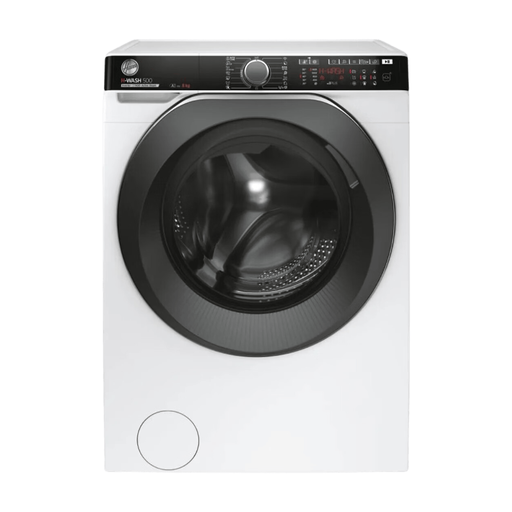
HWP 48AMBC7/1-S, 8 kg, 1400 rpm
An option to compare if you’re considering a freestanding machine with a stated hygiene cycle; check that the cycle suits your aprons and usage requirements.
The description lists an 8 kg capacity, 1400 rpm, energy class A and a hygiene cycle that maintains 60 °C for more than 20 minutes. The cycle description alone doesn’t confirm that an apron meets a specific hygiene requirement.
View at Joybuy
 No image available
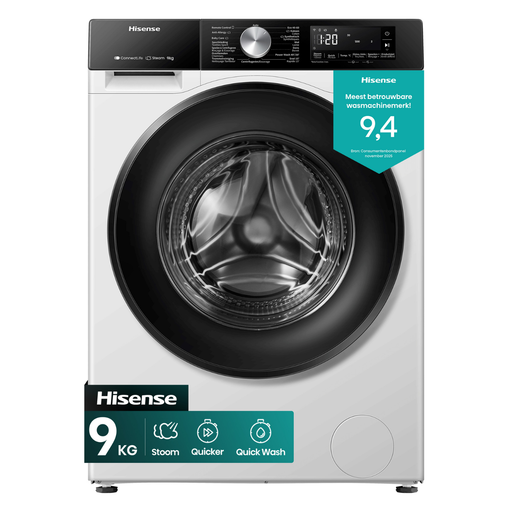
Hisense WF3S9043BW3, 9 kg, 1400 rpm
A model to compare if you want to wash a larger load and look at different programmes to suit the time available.
The stated capacity is 9 kg and the spin speed is 1400 rpm. The description lists Power Wash 49’, Quick 15’, Quicker Wash, delayed start and Pause & Add. Check the permitted load and whether a short cycle is suitable for how soiled your aprons are.
View at Joybuy
 No image available
Beko BM3WFU38412CW, 8 kg, 1400 rpm
An option to compare if stain-removal programmes and prewash matter to you; always check your aprons’ care labels first.
The stated capacity is 8 kg and the maximum spin speed is 1400 rpm. The programme list includes StainExpert and cotton with prewash. According to the product description, the 14-minute Daily Xpress programme is designed for lightly soiled laundry, not as proof of the same results on heavily soiled aprons.
View at Joybuy
 No image available
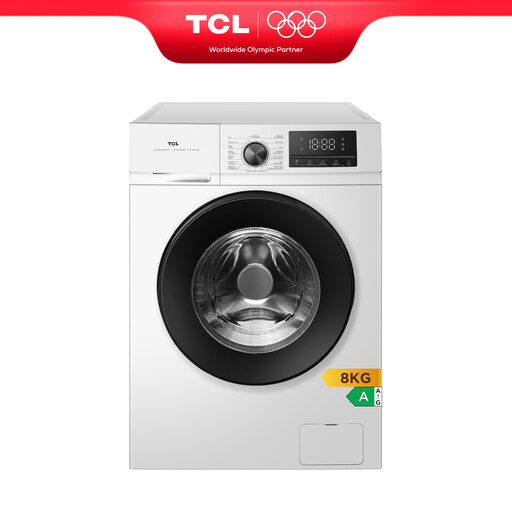
TCL FF2408WA2, 8 kg, 1400 rpm
An option to compare if an 8 kg drum and the option of a short cycle suit your usual laundry load.
The description lists an 8 kg capacity, a maximum of 1400 rpm, energy class A, drum cleaning and a 15-minute Quick Wash. Check whether the load and level of soiling are suitable for the short cycle.
View at Joybuy
Frequently asked questions
Do all work aprons need to be washed at 60 °C?
No. Follow the care label on the individual apron; one temperature won’t necessarily suit every fabric. Some suppliers state that their own aprons can be washed at 60 °C. When preparing food, businesses must follow the relevant HACCP food safety plan or hygiene code. The Netherlands Food and Consumer Product Safety Authority (NVWA) checklist mentions clean clothing, not a universal washing temperature for aprons.
Is eco 40–60 the same as a regular 60 °C wash?
No. Eco 40–60 is a specific programme, not a regular 60 °C wash. The European Commission explains the information on washing machine energy labels; the Dutch Consumers' Association (Consumentenbond) advises against using eco 40–60 as a substitute for a regular 60°C programme for occasional hot maintenance washes.
What should you check when installing and maintaining a washing machine?
Before use, check the installation instructions for the exact model and remove the transit bolts. Bosch also recommends a stable surface, suitable water inlet and drainage connections, and an earthed socket. Clean parts such as the door seal and filter according to the maintenance instructions.
Who should you contact about a fault, and can the old machine be taken away?
For a consumer purchase, the seller is your point of contact if a product is faulty; an additional motor warranty is separate from your statutory rights. According to the Government of the Netherlands, the free like-for-like old-appliance collection scheme applies to consumers, not businesses. For a business purchase, arrange separately who will take away the old machine and what service is included.


