What should you look for when buying?
The Consumers’ Association advises taking the care label, laundry load and features of your chosen programme into account. Milieu Centraal recommends choosing a drum size to suit your usual laundry.
| What to consider |
What should you look for? |
Who is this most important for? |
| Cleaning aprons without damaging the fabric |
Check that the temperature and programme are suitable for the care label. Treat a stain-removal programme as a model-specific feature, not a guarantee that every stain will come out. |
When I wash stained aprons, I want them clean without treating the fabric incorrectly. Around 36% of consumers prioritise getting clothes clean while preserving the fabric. |
| Getting the wash finished on time |
Check the instructions for the programme duration, permitted load and suitable fabrics. Allow time for the aprons to dry too. |
When I need the aprons before guests arrive, I want to know in advance whether the cycle fits my schedule. Around 29% of consumers prioritise the time available. |
| Choosing the right drum size |
Compare the load capacity with your usual laundry load and measure the space where the machine will go. |
For my weekly wash, I want a drum that suits my regular loads, not just the aprons. Around 21% of consumers prioritise capacity for everyday laundry. |
| Consumption with frequent use |
Compare energy and water consumption on the same basis. The Eco 40-60 energy label doesn’t tell you how much other programmes use. |
If I use the machine often, I want to be able to compare consumption figures for the loads I run regularly. Around 14% of consumers prioritise consumption with frequent use. |
Washing machines to compare
These Joybuy products are aimed at anyone comparing washing machines with a quick cycle for aprons, while also taking everyday household laundry into account. For each model, check that the programme conditions are suitable for the fabric, level of soiling and amount of laundry.
 No image available
Samsung WW90DG6U25LE, 9 kg
An option to compare if you’re looking for a quick cycle, provided it’s suitable for the fabric and load of your aprons.
Samsung lists a 9 kg capacity, 1400 rpm, an A energy rating, Wi-Fi and SuperSpeed.
View at Joybuy
 No image available
Midea MF110W80BA10/W-NL, 8 kg
An option to compare if you’re looking for a washing machine for aprons and your usual household laundry.
The product name lists an 8 kg capacity, 1400 rpm and 16 wash programmes.
View at Joybuy
 No image available
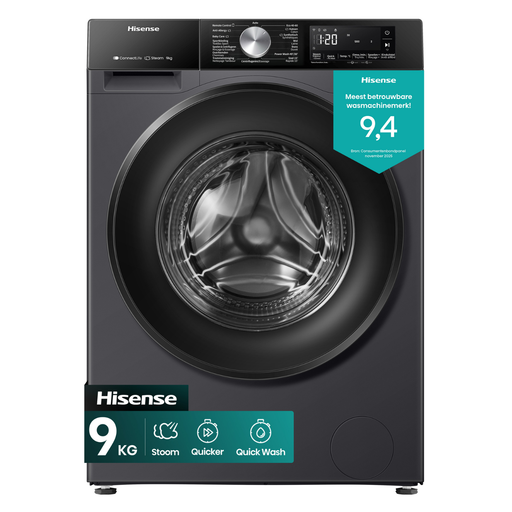
Hisense WF3S9043BB3, 9 kg
An option to compare if you’re looking for a quick cycle; check whether the permitted load is suitable for your aprons.
The product name lists a 9 kg capacity. According to the product information, the Quick 15’ cycle is for small loads; Power Wash 49’ is a separate programme.
View at Joybuy
 No image available
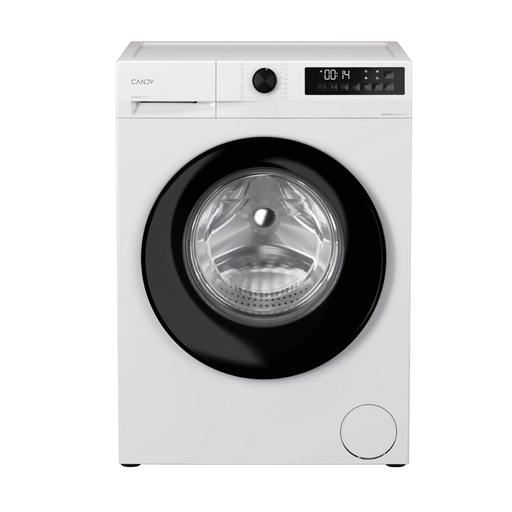
Candy GD 49B8-S, 9 kg
An option to compare if you’re looking for a quick cycle that might fit your schedule; check that it’s suitable for your aprons.
The product name lists a 9 kg capacity, 1351 rpm, an A energy rating and 16 wash programmes.
View at Joybuy
 No image available
Candy GD 48B9-S, 8 kg
An option to compare if you’re looking for a quick cycle for aprons and also need a machine for your everyday laundry.
The product name lists an 8 kg capacity, 1351 rpm, an A energy rating and a steam function.
View at Joybuy
Frequently asked questions
What temperature can I wash the aprons at?
Follow the care label on each apron: it specifies the maximum temperature and the gentleness of the programme required. Don’t choose a higher temperature simply because the washing machine offers one.
Is Eco 40-60 a suitable choice if the aprons need to be clean quickly?
Not necessarily: Eco 40-60 can take a long time and is only suitable for laundry that can be washed on this programme. The Consumers’ Association says it isn’t suitable when hygienic cleaning at a higher temperature is required.
How do you choose the right drum size for aprons and everyday laundry?
Choose a load capacity to suit your usual laundry, not just the aprons for one occasion. Milieu Centraal advises against buying a washing machine that’s larger than you need; measure the available installation space too.
What should you check before the washing machine is connected?
Measure the installation space and check the water supply, drainage and installation instructions for the exact model. Ask in advance whether delivery, installation and removal of your old machine are included.
What does the energy label tell you about the consumption of other programmes?
The energy label’s consumption figure is based on Eco 40-60 and doesn’t automatically reflect the consumption of quick, cotton or synthetic programmes. The Dutch Government says washing machine labels also include information about water use; compare figures on the same basis.


