What should you look for when buying?
Start with the load you usually wash. Then check whether the programme you want fits your schedule, and how much time you’ll have left to dry the towels.
| What to consider |
What to look for when buying |
Who should prioritise this? |
| Having your towels ready on time |
Check the duration, maximum load and spin setting for the programme you plan to use. |
If I do the washing on Sunday, I want to know whether my towels will be washed and dry on time. Around 33% of consumers put programme duration and deadlines first. |
| A drum capacity that suits your load |
Compare your usual load with the machine’s capacity and any restrictions for your chosen programme. |
If you usually wash small or medium loads, you’ll want a drum that suits them rather than an unnecessarily large capacity. Around 27% of consumers prioritise a suitable load size. |
| Energy and water use |
Compare the energy rating, kWh per 100 cycles and water consumption on the same label basis, and consider your own laundry habits too. |
If I can plan my washing, I want to weigh up ongoing energy and water use alongside the time required. Around 20% of consumers put consumption at the top of their list. |
| Positioning and installation |
Check the dimensions of the exact model, the space available and the installation instructions. |
If you have a fixed space or awkward connections, you’ll want to make sure in advance that the machine can be installed there. Around 13% of consumers prioritise positioning and installation. |
| Temperature for hygiene needs |
Follow the care label and check whether you need a hot cotton or suitable hygiene programme; eco 40-60 is not the same as a 60 °C cotton wash. |
If there’s a particular hygiene need at home, I want to choose a programme that meets it and is suitable for the fabric. Around 7% of consumers put this need first. |
Washing machines with shorter programmes
These washing machines are options to compare if you’re considering a shorter programme. Check the details for the exact model to see whether the quantity and type of towels you want to wash are suitable for that programme.
 No image available
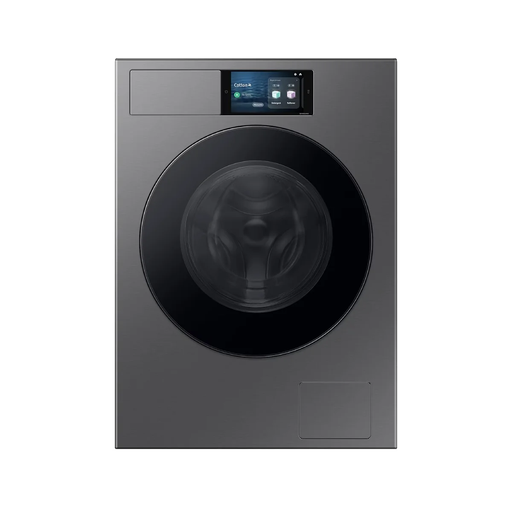
Samsung WF90F09C4SU3, 9 kg, 1400 rpm
An option to compare if you want to plan a larger towel load; check the maximum load for the programme you choose.
Joybuy lists an 9 kg capacity and a maximum spin speed of 1400 rpm.
Joybuy
 No image available
Samsung WW90DG6U25LE, 9 kg, 1400 rpm
Compare this model if you want to plan your towel wash; check the manual to see what load is allowed on the short programme you want.
Joybuy lists a 9 kg capacity and a maximum spin speed of 1400 rpm.
Joybuy
 No image available
Bosch WGB2440BFG Serie 8, 9 kg, 1400 rpm, NL/FR panel
A model to include in your comparison if you’re considering a shorter programme; check the maximum towel load for each programme.
Joybuy lists a 9 kg capacity and a maximum spin speed of 1400 rpm.
Joybuy
 No image available
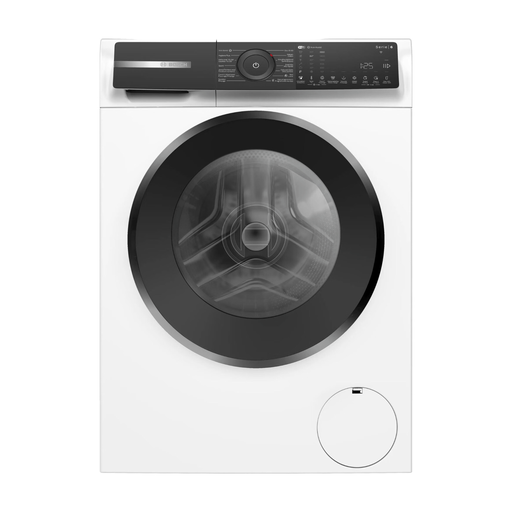
Bosch WGH25605FG Serie 6, 10 kg, 1600 rpm, NL/FR panel
The larger stated capacity may be useful for bigger loads; compare it with what you usually wash and check the maximum load for each programme.
Joybuy lists a 10 kg capacity and a maximum spin speed of 1600 rpm.
Joybuy
 No image available
Midea MF110W80BA10/W-NL, 8 kg, 1400 rpm
Compare this model with your usual towel load and check whether the shorter programme you want is suitable for it.
Joybuy lists an 8 kg capacity, a maximum spin speed of 1400 rpm and 16 wash programmes.
Joybuy
Frequently asked questions
Do towels always need to be washed at 60 °C?
No. According to Milieu Centraal, this is unnecessary for towels in most cases. A hot wash may be appropriate in certain circumstances, such as a relevant allergy or an infectious illness in the household; always follow the care label too.
Is eco 40-60 the same as a 60 °C cotton wash?
No. The European Commission describes eco 40-60 as a programme for normally soiled cotton that can be washed at 40 or 60 °C according to its care label. For laundry that needs a hot wash for hygiene reasons, the Consumentenbond recommends a standard 60 °C cotton programme or a suitable hygiene or allergy programme.
What should you check before the first wash?
Check the model manual for set-up and connections, and remove the transit protection. Bosch warns that transit bolts left in place can stop the drum during the first programme.
Are you always entitled to only two years’ legal guarantee in the Netherlands?
No. According to the Rijksoverheid, the Netherlands has no fixed legal guarantee period: you’re entitled to a product that meets the standards you could reasonably expect. A separate manufacturer’s or motor guarantee doesn’t replace that right.
Is an energy label compulsory for washing machines?
Yes. The Rijksoverheid says that an energy label is compulsory for household appliances. According to the European Commission, EU labels for household washing machines have used the A to G scale since 1 March 2021.


