
People who wear delicate, washable dresses
You want to follow your dress’s care instructions and find a suitable programme and spin speed. The Consumentenbond emphasises the importance of following the washing instructions on the textile care label.


Start with your dress’s care label, then choose a washing machine with a programme and settings to match. A quick programme can be useful for a small load, but check the permitted load and garment types. The energy label is based on Eco 40-60 and won’t predict the energy use of a delicates programme or a short cycle.
You want to follow your dress’s care instructions and find a suitable programme and spin speed. The Consumentenbond emphasises the importance of following the washing instructions on the textile care label.
After a rainy trip, you want to wash a dress or a small load without waiting until you have enough for a full household load. Check that the programme duration, load size and care instructions are all compatible.
As well as dresses, you wash regular loads and want to choose a drum capacity that suits your household. Milieu Centraal recommends choosing a machine that matches the amount of washing you usually do.
First, check what the care label allows and compare it with the programme instructions. Then look at quick-wash options, drum capacity and the energy label for your regular laundry.
| What to consider | What to look for when buying | Who might prioritise this |
|---|---|---|
| Dress care | Compare the care label with the model’s delicates programme, temperature settings and spin-speed options. | When I wash a dress made from delicate fabric, I want to know first that the care label and programme are a good match. Around 40% of consumers prioritise suitable fabric care. |
| Fitting in a small wash | Check the programme duration, permitted load and suitable garment types in the manual. | After a rainy trip, I want to be able to run a suitable small load without waiting for a full drum. Around 30% of consumers prioritise being able to do a small wash at a convenient time. |
| Capacity and energy use | Choose a drum capacity to suit your regular loads and use the energy label to compare machines on the Eco 40-60 programme. | If I’m buying the machine for the rest of the household too, I want its capacity and energy use to suit the laundry I usually do. Around 20% of consumers prioritise this balance. |
| Installation and maintenance | Check the model’s dimensions, installation requirements and maintenance instructions. | When choosing, I want to be sure the machine will fit in the available space and that I can follow its maintenance instructions. Around 10% of consumers prioritise installation and aftercare. |
A short programme isn’t automatically suitable for every dress; the fabric and finish determine what the care label allows.
First compare the care label with the programme’s intended use and the machine’s permitted settings. Only then consider how long it takes.
The label comparison is based on Eco 40-60 and doesn’t show the energy use of other programmes.
Use the label to compare Eco 40-60 performance, and consult the manual for information about programmes you use often.
A refresh may be suitable when a garment doesn’t need washing, but steam programmes vary from machine to machine. They won’t replace a wash when one is needed.
Check that the garment and programme are suitable for a steam refresh. Choose a wash cycle when the care label and circumstances call for washing.
According to Bosch, the WUU28T20 combines a delicates programme with adjustable temperature and spin settings. It also has a short programme for small loads.
AEG describes ProSteam on its 7000, 8000 and 9000 series as a way to refresh clothes when a full wash isn’t needed.
The GC3R709S1 is a 9kg model for buyers who wash larger household loads as well as dresses.
According to Miele, the WEC395 WPS combines an 8 kg drum capacity with SteamCare and QuickPowerWash.
These washing machines are options to compare for caring for washable dresses and doing your regular household laundry. For each model, check that the programme instructions match the care label on your clothes.
 No image available
Compare the drum capacity with the size of your usual load, and check in the manual whether a programme suits your dress’s care label.
8 kg; 16 wash programmes; 1400 rpm.
 No image available
The capacity may be worth considering if you also want to use the machine for regular household laundry; check separately whether a programme suits the dress’s care label.
8 kg; 1400 RPM; inverter motor.
 No image available
Compare the capacity with your regular laundry and check the programme instructions before choosing a cycle for a delicate dress.
8 kg; 1351 RPM; steam function.
 No image available
Check in the manual that the programmes suit the care label, and choose a capacity to match the amount of laundry you usually do.
8 kg; 1400 rpm; energy class A.
 No image available
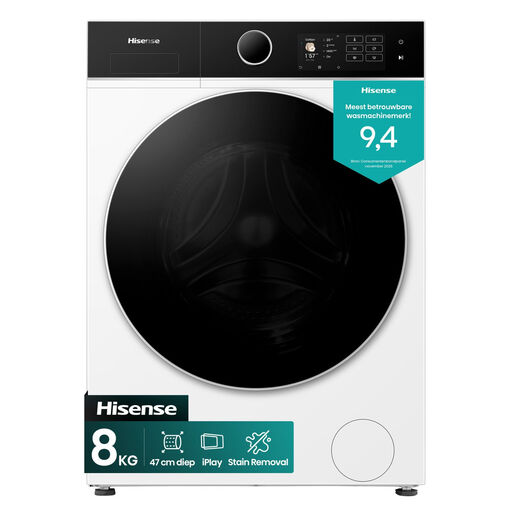
The listed depth may be useful to know if space is limited; also check that the programme instructions suit the care label.
6 kg; 45 cm deep; 15-minute Quick Wash; energy class B.
No, not automatically. First follow the care label and compare it with the temperature, spin settings and garment types the chosen machine’s short programme is designed for.
No, not simply because the dress is wet. Consider whether it needs washing and follow the care label. Milieu Centraal suggests airing it or treating a local stain as possible alternatives when a full wash isn’t necessary.
The label is based on Eco 40-60 and doesn’t show the energy use of other programmes. For a short or delicates wash, consult the manual for the model in question.
You have a legal guarantee from the seller and are entitled to expect a product that works properly. According to the Rijksoverheid, there is no fixed legal guarantee period of two years; what you can expect depends, among other things, on the product and the circumstances.