What should you look for?
Compare spin-cycle noise on a like-for-like basis, match the capacity to your usual load, and check energy and water consumption on the EU energy label. Milieu Centraal and the Consumers’ Association also highlight programmes and care labels as important considerations.
| What to consider |
What should you check? |
Who is this important for? |
| Noise and sharing the machine |
Compare the stated noise level for the same cycle stage and check where the machine will be installed; agree on when to use it. |
If I share the utility room, I want to be able to agree on noise and when to use the machine with the others. Around 36% of consumers prioritise peace and shared use. |
| Suitable for small loads of socks |
Check the cotton programmes, adjustable temperature and capacity for your usual load. |
For small loads of socks, I want a programme that suits the care label and don’t need an unnecessarily large drum. Around 29% of consumers want to wash small cotton loads appropriately. |
| Capacity for shared laundry |
Compare the capacity with the load you actually combine, and measure the space you need with the door open. |
If we regularly combine suitable items of laundry, I want the drum to fit our usual load. Around 21% of consumers prioritise larger shared loads. |
| Consumption and aftercare |
Compare kWh per 100 cycles and water consumption on the stated label basis; check what’s included with delivery and installation. |
When choosing, I want to consider both running costs and practical arrangements after purchase. Around 14% of consumers prioritise consumption and aftercare. |
Washing machines and small-load options at Joybuy
This selection includes full-size washing machines for combined loads and compact models for small loads of socks. Check that each model’s capacity, features and dimensions suit your needs and the shared space.
 No image available
Candy BWR 495BL8-S washer-dryer
A cotton programme and 9 kg washing capacity make this a good fit for cotton items you wash with other suitable clothes.
Washing capacity: 9 kg; drying capacity: 5 kg; 16 wash programmes; spin-cycle noise: 72 dB; maximum spin speed: 1400 rpm.
View at Joybuy
 No image available
Samsung WW90DG6U25LE
The capacity and cotton programme are worth considering if you wash socks with other suitable items; check that the spin-cycle noise is right for your shared space.
Capacity: 9 kg; maximum spin speed: 1400 rpm; cotton programme; stated spin-cycle noise: 72 dB; Wi-Fi control via SmartThings.
View at Joybuy
 No image available
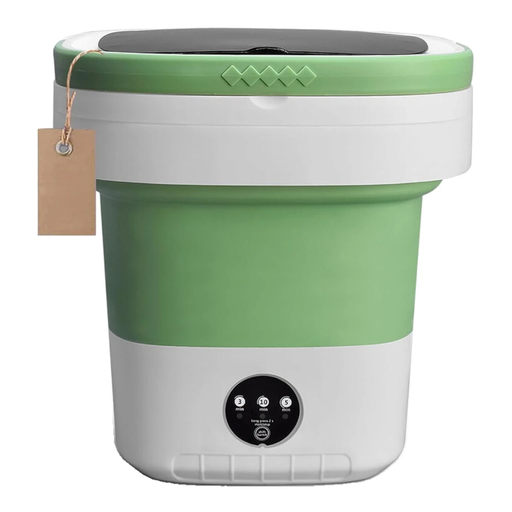
Foldable mini washing machine, 12 litres
The product information lists socks as suitable laundry. This model is designed for small loads, not for washing a regular shared load.
Capacity: 12 litres; stated maximum load: 1.5 kg; separate spin basket; foldable design.
View at Joybuy
 No image available
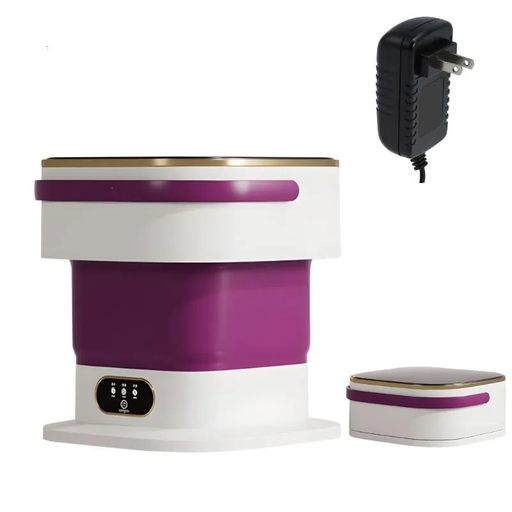
Foldable mini washing machine, 15 litres
The product information lists socks as suitable laundry. Its limited maximum load makes it an option for small washes.
Capacity: 15 litres; stated maximum load: 1.9 kg; separate spin basket; foldable design.
View at Joybuy
 No image available
Midea MF110W80BA10/W-NL
The cotton programme and capacity are worth considering if you wash socks with other suitable items. Measure the installation space and check the noise level for your shared room.
Capacity: 8 kg; 16 wash programmes; maximum spin speed: 1400 rpm; stated spin-cycle noise: 72 dB; end-time delay up to 24 hours.
View at Joybuy
Frequently asked questions
Which programme should you use for cotton socks?
Check the care label first: it gives the maximum temperature and washing instructions. Choose a cotton programme that suits those instructions and the load. A lower temperature may be suitable for lightly soiled socks, but don’t wash above the limit on the label.
What should you check before installing a washing machine in a shared utility room?
Measure the space and doorway, check the water supply and drainage, and agree on when to use the machine with the other users. Follow the installation instructions for your model. Bosch, for example, points out that the transit bolts must be removed before use.
How can you keep the machine clean if you usually wash at low temperatures?
Milieu Centraal recommends running a wash at 60 °C about once a month to help prevent residue and odours building up in the machine. Only use laundry whose care labels allow washing at 60 °C.
What warranty applies in the Netherlands if a washing machine breaks down too soon?
According to ACM ConsuWijzer, if the product doesn’t meet what you could reasonably expect, the seller must provide an appropriate solution free of charge when the product has been used normally. Your statutory rights don’t simply depend on a fixed two-year period; a manufacturer’s warranty is separate.


