
Shopping for a narrow laundry space
If width or access is your main constraint, compare a top-loader with a front-loader that fits the full available space. According to the Consumentenbond, top-loaders are narrower than front-loaders.


The right choice depends on what limits your available space: the width, the depth or the room you have to dry clothes separately. A top-loader needs less width but requires clear space above the lid; a slimline front-loader is usually still about 60 cm wide, while a washer-dryer has a lower drying capacity than washing capacity. Measure the space, including hoses and room to open the machine, then compare its capacity with your usual load of cotton sheets.
If width or access is your main constraint, compare a top-loader with a front-loader that fits the full available space. According to the Consumentenbond, top-loaders are narrower than front-loaders.
You want to wash cotton sheets in a regular load, but have limited depth to work with. A slimline front-loader may fit if you have enough width; remember to allow for the hoses and door too. The Consumentenbond recommends measuring this extra space as well.
If you have no room for a second appliance, compare the washing and drying capacities of a washer-dryer. Its stated washing capacity does not mean it can dry the same amount in one go.
First, measure the full space available; then check that the load of sheets and any drying needs suit the type you choose.
A good fit if: width is the main constraint and the lid can open fully. AEG lists the LTR6ECO as 397 mm wide, with a capacity of 7 kg.
The trade-off: you’ll need to keep the space above the lid clear, so you can’t use the top as a work surface or somewhere to stack things.
A good fit if: you have about 60 cm of width available, but depth is limited. Haier lists the HW70-BP14357TU1 at 595 × 468 × 850 mm (width × depth × height), with a capacity of 7 kg.
The trade-off: the cabinet depth isn’t the full installation depth required; allow space for the hoses and door too.
A good fit if: standard dimensions work for your space and you often wash several sheets at once. Bosch lists the WAN2809XNL with an 8 kg capacity and dimensions of 845 × 598 × 590 mm (height × width × depth).
The trade-off: a larger drum doesn’t automatically take up less space or make the machine a better match for smaller loads.
A good fit if: you don’t have room for a separate dryer and electric drying is important to you. LG lists the W4X1085NWB with an 8 kg washing capacity and a 5 kg drying capacity.
The trade-off: the stated drying capacity is lower than the washing capacity. Milieu Centraal recommends separate appliances if you have room, as their combined energy consumption is lower.
| Concern | What to look for when buying | Who is this important to? |
|---|---|---|
| Will the machine fit? | Measure the width and depth, including hoses and the space needed for the door or lid. | If the recess or access route limits my choice, I want to know in advance whether the machine will really fit. Around 36% of consumers put available space first. |
| Will it fit my load of sheets? | Weigh a normal load and check the cotton-wash capacity, loading aperture and drum space. | I want to wash my usual cotton sheets without cramming them into the drum. Around 29% of consumers put their load first. |
| Do I need a separate dryer? | Compare the washing and drying capacities, and consider where you can dry any remaining laundry. | Without space for a second appliance, I want to know how much of my laundry will fit in one drying cycle. Around 21% of consumers put the lack of separate drying space first. |
| Does its energy use suit my laundry routine? | Compare label information on the same programme basis and choose a capacity that suits your loads. | I want to compare energy use with a drum capacity that suits my laundry routine. Around 14% of consumers put energy use first when comparing machines. |
A top-loader mainly saves width; a slimline front-loader can still be about 60 cm wide. Without allowing for the hoses and space to open the machine, it may not fit.
Measure the width and depth, the access route and the space needed to open the machine. Then compare the full dimensions of the exact model. A non-standard size may also require extra coordination for delivery and installation.
For the LG W4X1085NWB, the manufacturer lists a maximum washing capacity of 8 kg and a drying capacity of 5 kg. This means the maximum washing load won’t all fit in one drying cycle.
Compare both capacities with your usual load of sheets and consider where you could dry some of the laundry.
The Joybuy listing for the Beko BM3WFU3741S differs from Beko’s model information on colour and energy label.
Before buying, check that the colour, energy label and product information sheet match the version you want to order.
The LTR6ECO is a top-loader for anyone mainly looking to save width. AEG lists it as 397 mm wide, with a washing capacity of 7 kg.
The HW70-BP14357TU1 is a front-loader for a space where depth is the main constraint. Haier lists it at 595 × 468 × 850 mm (width × depth × height), with a washing capacity of 7 kg.
The BM3WFU3741S is a front-loader for which Beko lists a capacity of 7 kg and a depth of 49.6 cm.
The W4X1085NWB is a washer-dryer for which LG lists an 8 kg washing capacity and a 5 kg drying capacity.
The WAN2809XNL is a front-loader with a stated capacity of 8 kg. Bosch lists its dimensions as 845 × 598 × 590 mm (height × width × depth).
This selection includes washing machines with a stated capacity of 7 kg and a washer-dryer with a washing capacity of 10 kg and a drying capacity of 6 kg. Check the full installation dimensions and the capacity of each model against your usual load.
 Image unavailable
An option to compare with a usual cotton laundry load of up to 7 kg.
The product listing states 1400 rpm and 15 wash programmes. Check the colour and energy label of the version on offer.
 Image unavailable
The stated capacity gives you a starting point for comparison with your usual cotton laundry load.
The product information lists a design depth of 400 mm and 16 programmes.
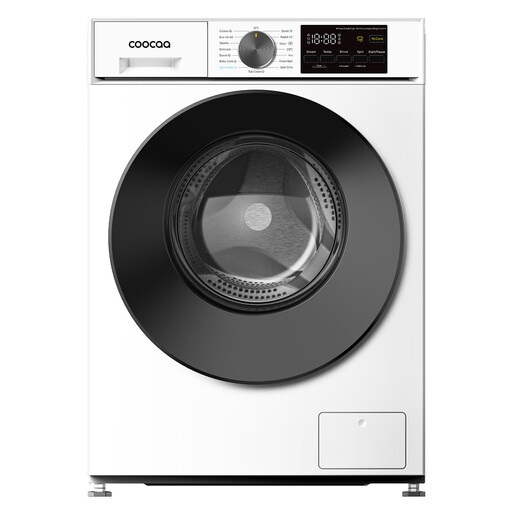 Image unavailable
Compare the stated 7 kg capacity with the weight of your usual cotton laundry load.
The product information lists dimensions of 595 × 440 × 850 mm and 15 programmes.
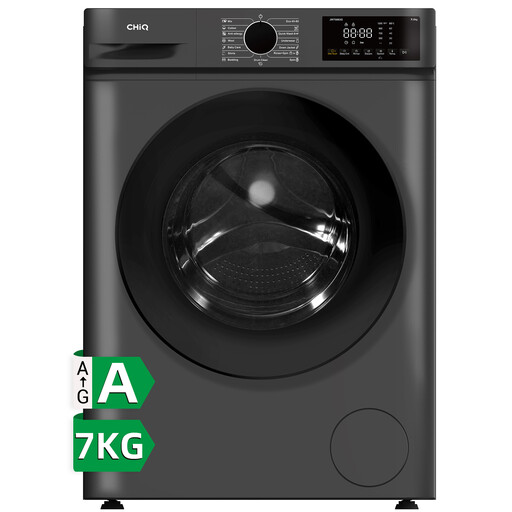 Image unavailable
The stated capacity gives you a useful comparison point for a regular cotton laundry load.
The product information lists a depth of 47 cm, 1200 rpm and 16 programmes.
 Image unavailable
An all-in-one option to compare if you don’t have room for a separate dryer.
The product information lists a washing capacity of 10 kg, a drying capacity of 6 kg and dimensions of 595 × 628 × 850 mm. A maximum washing load won’t all fit in one drying cycle.
Weigh the sorted load you usually wash in one go and compare it with the stated cotton capacity. The Consumentenbond points out that the stated load weight applies to a cotton wash. Check the loading aperture and drum space too; don’t cram large sheets into the machine just because their weight is below the maximum.
No, that isn’t a general rule. Milieu Centraal recommends using the eco programme for normally soiled laundry and explains when a 60 °C wash may be advisable. Always follow the care label on your sheets too.
Measure the width and depth of the space, leaving room for the hoses and for the door or lid to open. Check the route to the space, the water supply and drainage, and that there’s an earthed socket. Follow the chosen model’s instructions when connecting it.
There’s no fixed statutory guarantee period of exactly two years. According to ACM ConsuWijzer, the retailer is responsible for providing an appropriate remedy free of charge if an appliance develops a fault too soon under normal use and doesn’t meet what you could reasonably expect. What’s appropriate depends on the circumstances.
In the Netherlands, when you buy a new, similar appliance, the old-for-new scheme applies. The Dutch government states that the retailer must take back the old appliance. Ask in advance how to arrange collection.