A foldable mini washing machine suits small, occasional loads if you can fill, drain and rinse it yourself. A slim top-loader is a better choice if you have a permanent spot for it and enough clearance above the lid; a front-loader is an option if there’s enough room in front of the door and its capacity suits your usual loads. For wool or mixed-fibre socks, follow the care label and choose a programme accordingly, rather than relying on the programme name alone.
Which machine is right for you?
Walker without a permanent laundry spot
You wash small loads and want to put the machine away after use. Filling, draining and rinsing it by hand is only practical if you’re happy to take those extra steps and have a suitable place to handle the water; Mestic’s instructions for the MW-100 describe this process.
Walker with a narrow laundry nook
You want an automatic machine for socks and other laundry, but you’re short on width. Check the dimensions of the exact model and leave enough clearance above a top-loader to open its lid.
Walker with delicate socks
You want to remove mud without treating wool or mixed-fibre socks incorrectly. Check the care label first, then see whether the model’s programmes match the recommended care instructions.
What should you look for when choosing?
Start by deciding whether you need to put the machine away after use or give it a permanent home. Then consider how many steps you’re willing to do by hand and which programmes are suitable for your socks.
Foldable mini washing machine
Choose this when: you mainly wash small loads, don’t have a permanent spot for a machine and can fill and drain it yourself.
Bear in mind: filling, emptying and rinsing again may involve manual work; a short wash time doesn’t prove that mud will be removed effectively.
Slim automatic top-loader
Choose this when: you have a permanent connection, limited width and enough clearance above the machine for its lid.
Bear in mind: the top needs to remain clear, and programmes vary by model; the machine’s design alone says nothing about the washing results.
Front-loader
Choose this when: the machine fits with enough room in front of the door and you regularly wash standard household loads as well as socks.
Bear in mind: check the width, overall depth, door clearance and whether the capacity suits your usual laundry load.
For each shopper, one main buying priority guides the choice of a machine for muddy walking socks when storage space is limited.
| Consideration |
What should you check? |
Who is this important for? |
| Placement and storage |
Measure the space, access route and clearance above a top-loader. The Consumentenbond says top-loaders are generally narrower than standard front-loaders. |
I want to put the machine away after a small wash and don’t have a permanent spot for it. Around 28% of shoppers give space their top priority. |
| Looking after sock fabrics |
Read the sock care label and compare its recommended temperature and care instructions with the programmes on the exact model. AEG lists a Wool/Silk programme for the LTR6363A. |
If my socks contain wool, I want the care label and programme to match. Around 22% of shoppers prioritise protecting the fabric. |
| Muddy laundry |
Check which settings are suitable for the sock fabric; a programme name doesn’t prove how well a machine removes mud. |
When my socks are visibly muddy, I want to know which treatment suits the fabric, without taking a programme title as proof of a clean result. Around 22% of shoppers prioritise how to deal with heavily soiled socks. |
| Connections and operation |
Check the water supply, drainage and instructions for your intended location. Mestic’s MW-100 instructions describe separate filling, draining and rinsing steps. |
I don’t want to change the water by hand or rinse again every time I do a wash. Around 17% of shoppers prioritise easy connection and operation. |
| Capacity and consumption |
Compare the capacity with your usual laundry load. Only compare energy and water label figures on the same programme basis, such as eco 40-60. |
If I usually wash small loads of socks, I don’t want to choose based only on the maximum capacity. Around 11% of shoppers prioritise a suitable capacity and consumption. |
Common buying mistakes
-
Trying to fit a slim top-loader under a shelf
The lid opens upwards. The Consumentenbond points out that you therefore need clearance above the machine; you can’t necessarily use that space for ordinary storage.
Measure not only the width but also the clearance above the lid when it’s fully open.
You may need to keep the space above the machine clear or change the layout.
-
Assuming a portable mini washing machine is fully automatic
Mestic’s instructions for the MW-100 describe separate steps for filling and draining the water, wringing out clothes and rinsing again.
Before buying, read the full washing and rinsing instructions for the exact model.
Allow extra time and make sure you have a suitable place to supply and drain the water.
-
Using the energy label to predict the consumption of every sock wash
The European Commission describes eco 40-60 as being for normally soiled cotton that can be washed at 40 or 60 °C according to its care label. A label figure therefore won’t automatically show the consumption of a different programme.
Compare label figures on the same programme basis, and also choose a treatment that suits the sock care label.
-
Assuming similar model numbers mean the same machine
A different version may have different programmes, capacity or dimensions. Always check the details against the full model number.
Before buying, compare the product specifications for the exact version you want.
The wrong version may not fit your available space or have the wash programmes you need.
Brands to compare
Mestic
The MW-100 is a compact, portable machine for small loads; Mestic lists its capacity as 2 kg of dry laundry.
- Mestic gives the MW-100’s dimensions as 36 × 35,5 × 50,5 cm.
- The instructions describe separate steps for supplying water, draining and rinsing. This model is therefore not fully automatic; those details don’t prove a particular result for muddy or wool socks.
AEG
The AEG LTR6363A is an automatic top-loader with a 6 kg capacity, designed for a permanent spot with clearance above the lid.
- AEG Netherlands lists dimensions of 903 × 397 × 599 mm, energy class A and, among others, Wool/Silk and Outdoor programmes for this model.
- The lid needs room to open. The presence of certain programmes isn’t independent proof that muddy socks will come out cleaner.
Whirlpool
The TW 622S FRESHCARE BE is a slim automatic top-loader to consider if you have a permanent spot for it.
- Whirlpool Netherlands lists dimensions of 40 × 60 × 90 cm and energy class B.
- The product details give a capacity of 6 kg, while the page title says 6,5 kg. Check the product specifications and exact version before choosing based on capacity.
Bosch
The Bosch WGE02404NL is a front-loader to compare if your available space and the clearance in front of the door are sufficient.
- Bosch Netherlands lists a 7 kg capacity, dimensions of 848 × 598 × 588 mm and energy class A for this model.
- A 7 kg capacity isn’t necessarily suitable if you mainly wash a few pairs of socks. Check the space and water protection for the exact model; Bosch doesn’t list AquaStop for this version.
Joybuy products
This Joybuy selection includes foldable mini washing machines for small loads, as well as freestanding machines with features listed for limited spaces or sock-washing programmes.
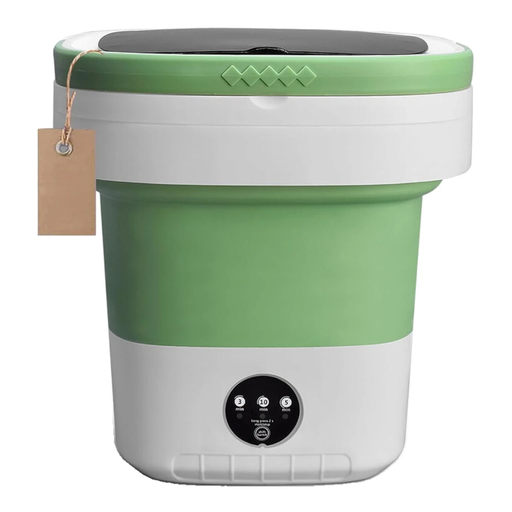 Image unavailable
Foldable mini washing machine, 12 l, with spin-drying basket
The product title mentions socks and a foldable design for small loads you want to put away after use.
The title lists a capacity of 12 l and a spin-drying basket.
View at Joybuy
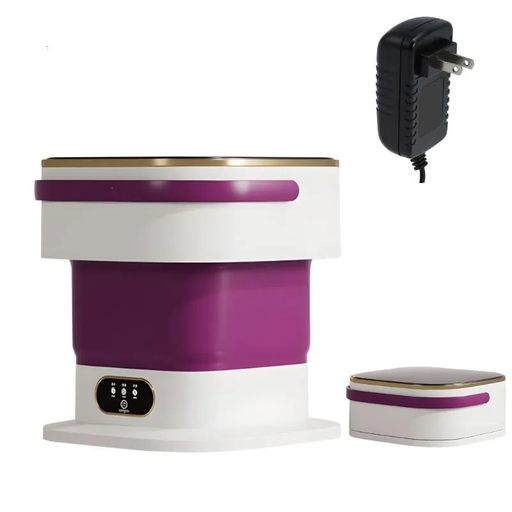 Image unavailable
Foldable mini washing machine, 15 l, with spin-drying basket
The product title mentions socks and a foldable mini washing machine for small loads.
The title lists a capacity of 15 l and a spin-drying basket.
View at Joybuy
 Image unavailable
TCL FF1006WB0 washing machine, 6 kg, 45 cm deep
An option to compare if limited depth is important; the product information also lists a wool programme for socks that are suitable for this type of programme.
The title lists a 6 kg capacity, a depth of 45 cm, a BLDC inverter motor, steam washing and energy class B.
View at Joybuy
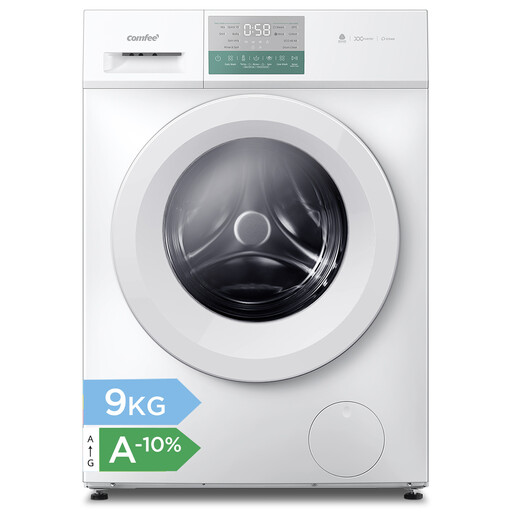 Image unavailable
Comfee' CFP03EW90W-HR freestanding washing machine, 9 kg
The product description lists a wool programme to consider if it suits your socks’ care label.
The title lists a 9 kg capacity, a BLDC motor, a steam function and a touch-control panel.
View at Joybuy
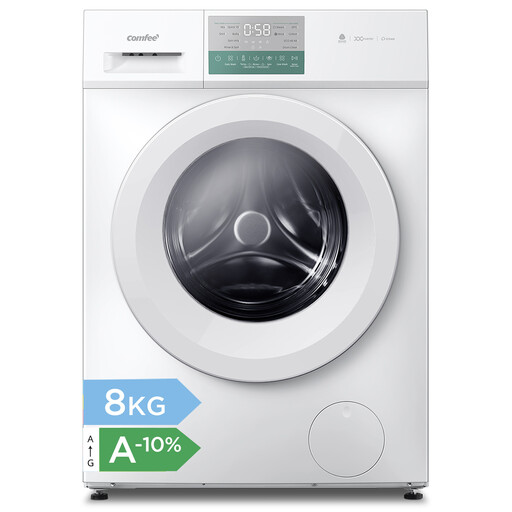 Image unavailable
Comfee' CFP03EW80W-HR freestanding washing machine, 8 kg
The product description lists a wool programme to consider if it suits your socks’ care label.
The title lists an 8 kg capacity, a BLDC motor, a steam function and energy class A.
View at Joybuy
Frequently asked questions
Can I wash muddy merino walking socks on eco 40-60?
Not just because the machine has this programme: according to the European Commission, eco 40-60 is intended for normally soiled cotton that can be washed at 40 or 60 °C according to its care label. Follow the care label on your own socks; Darn Tough recommends washing its socks in cold water on a gentle cycle and inside out.
What should I check before using a mini washing machine in a small space?
Check the location, socket, water supply and where the waste water can drain. The Mestic MW-100 manual specifies a firm, level surface and explains how to connect the inlet hose and drain water through the outlet hose.
How do I compare the energy and water consumption of washing machines?
For machines with the relevant label information, compare energy consumption per 100 eco 40-60 cycles and water consumption per eco cycle on the same basis. These figures don’t predict consumption on a wool programme or for a mini washing machine used by hand; also take your usual load into account.
In the Netherlands, am I only entitled to the stated manufacturer’s guarantee?
No. ACM ConsuWijzer explains that your statutory guarantee applies in addition to any manufacturer’s or seller’s guarantee. If a product breaks sooner than you could reasonably expect under normal use, the seller is responsible for providing an appropriate solution free of charge; there isn’t one fixed statutory guarantee period for every washing machine in the Netherlands.


