
Shopper with a narrow laundry area
Wants to find out which type and size will fit the available space. Measure the area itself, but also allow for hoses and room to open the machine, as Consumentenbond recommends.


First, measure the available width, depth and height, as well as the space needed to open the machine. Consumentenbond also recommends allowing room for hoses and the door. A top-loader may be suitable if width or the space in front of the machine is limited, while a shallower front-loader will only help if there is enough width. Choose a washer-dryer only if you also want to dry clothes in the machine and its separate drying capacity suits your load.
Wants to find out which type and size will fit the available space. Measure the area itself, but also allow for hoses and room to open the machine, as Consumentenbond recommends.
Washes cotton shirts regularly and looks for a suitable load capacity, an appropriate programme and an adjustable spin speed. Follow the care label; AEG Nederland offers washing advice to help you do this.
Also wants to dry clothes in the machine but has no room for two appliances. With a washer-dryer, compare its washing capacity with its separate capacity for washing and drying.
When: if there is enough width and the door can open freely. According to Bosch Nederland, the Bosch WGE02406NL measures 848 × 598 × 588 mm.
Trade-off: a shallower front-loader will not solve a lack of width.
When: if width or the space in front of the machine is limited, and there is enough clearance above it to open the lid.
Trade-off: the top-opening lid needs clearance above the machine. According to AEG Nederland, the AEG LTR6363A is 903 mm high and 397 mm wide.
When: if you want one appliance to wash and dry, and the full machine fits in your laundry area.
Trade-off: Bosch lists the Bosch WNA13400NL as having an 8 kg capacity for washing only and a 5 kg capacity for washing and drying. If you have room for two appliances, Milieu Centraal recommends a separate washing machine and tumble dryer because their combined energy consumption is lower.
| What to consider | What to look for when buying | Who should prioritise this? |
|---|---|---|
| Will the machine fit? | Measure the width, depth and height at several points. Leave room for hoses and for the door or lid to open fully. | If my laundry area is tight, I want to be sure the machine will fit and that I can open it properly. Around 36% of consumers would make fit their top priority. |
| Caring for shirts | Check that it has a cotton programme and an adjustable spin speed. Follow the care label for the temperature and treatment. | If I wash shirts regularly, I want to be able to choose a programme and treatment that suit the clothes. Around 29% of consumers would prioritise shirt care. |
| Load capacity | Compare the cotton load capacity with the amount you usually wash. For a washer-dryer, check the drying capacity too. | If I usually wash small or larger loads of cotton, I want the drum capacity to suit them. Around 21% of consumers would make their usual load size their top priority. |
| Energy use and noise | Compare energy label figures based on the same programme. Check the model manual for information on other programmes. | If my laundry area is near a living space or I’m mindful of energy use, I want to take these factors into account. Around 14% of consumers would prioritise energy use or noise. |
Hoses and the space needed to open a door or lid also take up room. So a model that seems to fit the recess on paper may not be practical to install.
Measure the full space needed for installation and opening, then compare it with the dimensions of the exact model.
The stated load capacity applies to cotton. A large drum is not necessarily right for the number of shirts and other cotton items you usually wash at once.
Weigh a typical sorted cotton load and choose a capacity to suit it.
Bosch lists different capacities for the Bosch WNA13400NL: 8 kg for washing only and 5 kg for washing and drying.
Check both capacities separately for the exact model.
A load that exceeds the drying capacity may need to be dried in batches.
Energielabel.nl bases the washing machine energy label on the eco 40-60 programme. This does not automatically tell you how much energy another frequently used programme consumes.
Compare labels based on the same programme, and consult the model manual for other programmes.
AEG Nederland offers top-loaders, including the LTR6363A, for shoppers with limited width and enough space above the machine.
Bosch Nederland offers front-loaders and washer-dryers, among other options. The dimensions and capacities below apply to the models specified.
Whirlpool Nederland offers top-loaders such as the TW 6521S SENSE WASH BE, designed for shoppers looking to make the most of a narrow space.
This selection focuses on front-loaders for washing cotton in a small laundry area. Compare the listed features with your usual load and the space available.
 Image unavailable
A front-loader for anyone looking for a 7 kg capacity. Check that this load size suits the amount of cotton you usually wash.
Specifications: 1,400 revolutions per minute; 15 washing programmes; energy rating C.
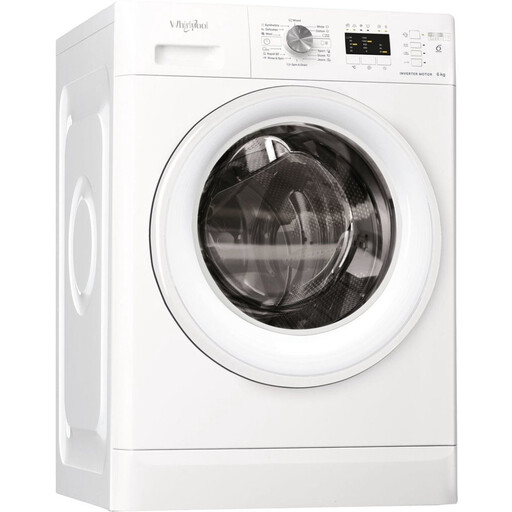 Image unavailable
This front-loader may suit you if a 6 kg capacity matches the amount of cotton you usually wash.
Specifications: 6 kg; 1,200 revolutions per minute.
 Image unavailable
The stated depth of 45 cm may be useful if you have a shallow recess. Remember to measure the space needed for hoses and connections too.
Specifications: 6 kg capacity; 45 cm deep.
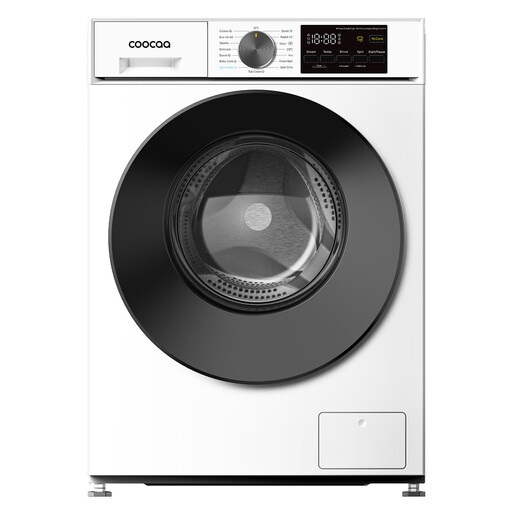 Image unavailable
A front-loader with a 7 kg capacity to compare with your usual load and the dimensions of your laundry area.
Specifications: 7 kg capacity; 15 programmes.
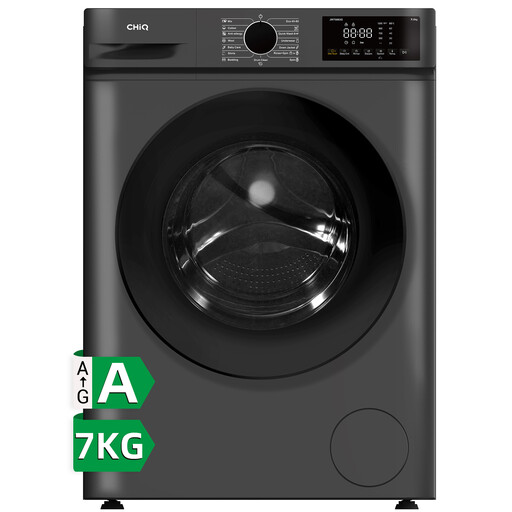 Image unavailable
This front-loader may suit you if a 7 kg capacity matches your usual cotton load and there is enough space for the machine.
Specifications: 7 kg capacity; 1,200 revolutions per minute; 16 programmes.
Measure the width, height and depth of the space at several points. Also leave room for hoses and for the door of a front-loader or the lid of a top-loader to open. Compare these measurements with the dimensions and installation instructions for the exact model.
No, check the care label first. Energielabel.nl explains that eco 40-60 is intended for laundry whose care label says it can be washed at 40 or 60 degrees. The energy label does not show the consumption of other programmes.
Follow your model’s installation instructions for positioning and connections, and remove the transit bolts as directed. Siemens Huishoudapparaten recommends a firm, level surface and stresses that general installation information does not replace the model’s instructions.
No. According to the Rijksoverheid, consumers in the Netherlands have a legal guarantee, and the seller must provide a solution if something goes wrong. An additional warranty is only worthwhile if its terms give you more rights than you already have.
For a private purchase in the Netherlands, the seller must, according to the Rijksoverheid, take back an old, similar appliance free of charge. This also applies to online purchases; the Rijksoverheid outlines alternatives if the old appliance cannot be collected at the time of delivery.