
People with a narrow alcove
Measure more than just the alcove: allow for hoses, ventilation and space to open the door or lid, as advised by the Consumentenbond.


If depth is your main constraint, a slimline front-loader could fit. If width is limited, a top-loader may be worth considering, provided there is room to open the lid. Allow space for hoses and the doorway too, and choose a load size that suits the synthetics or delicates programme: the maximum capacity does not automatically apply to tracksuits.
Measure more than just the alcove: allow for hoses, ventilation and space to open the door or lid, as advised by the Consumentenbond.
Follow the care label and check the programme’s load limit. The Consumentenbond recommends a smaller load for delicates and synthetics than the maximum cotton capacity.
Compare the drum capacity with your usual laundry load and check the energy label. Milieu Centraal recommends choosing a capacity that suits your household.
Choose this when: depth is the limiting factor and there is enough room for a front-loader. Beko lists the B1W764BB BE as having a cabinet depth of 52 cm and a width of 60 cm.
Bear in mind: hoses, ventilation and the space needed to open the door take up room too; cabinet depth is not the same as the space required for installation.
Choose this when: width is the main constraint and there is room above the machine to open the lid. AEG lists the LTR8765AL as 397 mm wide; Whirlpool lists the TW 6521S SENSE WASH BE as 40 cm wide.
Bear in mind: the models listed are 599 mm and 60 cm deep respectively, so a top-loader will not necessarily solve a depth problem.
Choose this when: you want to wash and dry with one appliance and do not have space for two separate machines.
Bear in mind: according to the Consumentenbond, drying capacity is lower than washing capacity, and standard washer-dryers are less energy-efficient when drying than separate heat-pump tumble dryers. Also check whether the tracksuit’s care label says it can be tumble-dried.
| What to consider | What to check before buying | Who is this important for? |
|---|---|---|
| Will the machine fit in the space? | Measure the width, depth, access route and space for connections and for opening the door or lid. | If space is limited, I want to know first whether the machine will fit with its hoses and the clearance needed to open it. Around 36% of consumers put fitting the appliance into their space first. |
| Caring for your tracksuit | Read the care label and check the temperature and maximum load for the suitable programme. | I want to care for synthetic tracksuits according to their care label, rather than assume the cotton setting will do. Fabric care is a top priority for around 29% of consumers. |
| Choosing the right drum capacity | Compare your usual laundry load with the cotton capacity and the limit for the programme you choose. | For my usual wash, a drum that suits the load matters more than a high cotton capacity alone. A suitable small load is the top priority for around 21% of consumers. |
| Energy use and additional services | Compare energy use on the same label basis and check whether you need delivery, installation or removal of your old appliance. | I want to take energy use and any installation or removal services into account before ordering. Around 14% of consumers prioritise running costs and additional services. |
Hoses, ventilation and an open door or lid need extra room too. That is why the Consumentenbond recommends measuring this space as well.
Before ordering, check the full installation dimensions and the clearance needed to open the machine.
The machine may prove impractical to install, or you may need to alter the connections.
The stated capacity applies to cotton. Delicates or synthetics may need a smaller load; the Consumentenbond recommends a maximum of half the cotton capacity for these fabrics.
Compare the amount of tracksuit laundry you usually wash with the limit for the programme you plan to use.
According to the Consumentenbond, the drying load is smaller than the washing load, and standard washer-dryers are less energy-efficient when drying than separate heat-pump tumble dryers.
Choose this option if you need to dry clothes in the same appliance, and check that the care label allows tumble drying.
Washing and drying take time because the cycles run one after the other; drying may use more energy than a separate heat-pump tumble dryer.
AEG offers top-loaders for situations where available width is the main consideration.
The TW 6521S SENSE WASH BE top-loader is worth considering if width is your main constraint.
The B1W764BB BE is a front-loader worth considering if depth is the main factor and a width of 60 cm will fit.
Bosch highlights sportswear care across its range; check the features of each model.
These Joybuy products are intended for small laundry loads and space-conscious installation. For tracksuits, always check the care label and the programme load limit for the exact model.
 No image available
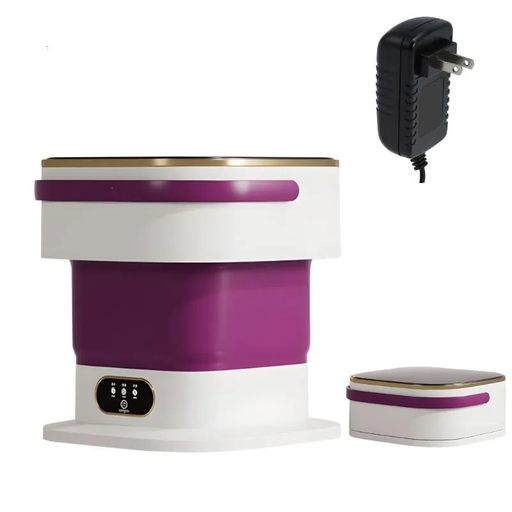
The product description lists small items as suitable for washing; the maximum load is 1.9 kg, so check that it is enough for what you want to wash.
The title gives a capacity of 15 litres and mentions a spin basket. The machine is described as foldable and portable.
 No image available
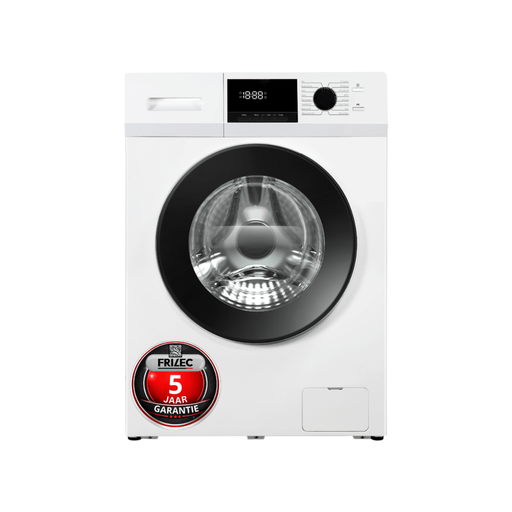
The product description lists several wash programmes, including one for delicates; check the maximum load for the programme you plan to use for your tracksuit.
The stated capacity is 8 kg. The description also lists 1400 rpm and a quick-wash programme.
 No image available
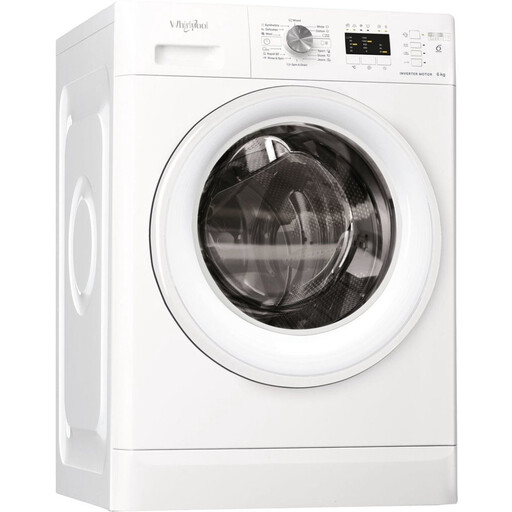
This front-loader has programmes for wool, jeans and cotton, among other fabrics; check which programme suits your tracksuit’s care label.
The product description lists 14 programmes and a capacity of 6 kg. Its stated dimensions are 59.5 × 57.5 × 84.5 cm.
 No image available
The title describes a slim design; before buying, check the full installation dimensions to make sure the model will fit your available space.
The product description lists 16 programmes and a 15-minute quick-wash programme. The title gives a capacity of 7 kg and a 400 mm design.
 No image available
The stated depth of 45 cm may be useful if depth is your main constraint; remember to allow for connections and room to open the door.
The title lists a capacity of 6 kg and energy class B. The description mentions a 15-minute quick-wash programme and steam washing, among other features.
No, not simply because the machine has that programme. The European Commission describes eco 40-60 as being for normally soiled cotton that can be washed at 40 °C or 60 °C. For a tracksuit, follow its care label and your machine’s instructions.
Measure the access route too, and allow room for hoses and to open the door or lid. Follow the model’s instructions when installing it, including those for the transit bolts, and check in advance what the delivery and installation service includes.
Don’t leave sweaty sportswear damp in a bag for long, and sort fabrics according to the care label. Milieu Centraal recommends running a 60 °C wash about once a month to maintain the machine; only use laundry that can be washed at that temperature according to its care label.
No. According to ACM ConsuWijzer, your statutory rights exist alongside any manufacturer’s or retailer’s guarantee. If a product is faulty despite being used normally, the seller is responsible for providing an appropriate remedy at no extra cost; statutory rights do not simply have a fixed two-year period for every washing machine.
According to the European Commission, the A to G scale has applied to domestic washing machines since 1 March 2021, and includes energy consumption per 100 cycles. Compare the product information sheets for the exact models: label figures are based on eco 40-60 and do not guarantee the same energy use for a sportswear or delicates programme.