
People washing small pet loads
You regularly wash one or a few small blankets and want a drum suited to your usual loads, rather than choosing purely on maximum capacity. Milieu Centraal recommends choosing a drum capacity that suits your household.


Choose a drum to suit your usual small loads, rather than sizing up just for your largest blanket. A larger drum may make sense if the blanket would otherwise have too little room to move, but also check its care label and the maximum load for the relevant programme. Load detection can adjust consumption, but it doesn’t guarantee a clean result in a large, half-empty drum.
You regularly wash one or a few small blankets and want a drum suited to your usual loads, rather than choosing purely on maximum capacity. Milieu Centraal recommends choosing a drum capacity that suits your household.
You wash blankets covered in hair and want to remove loose hair before washing, as well as check the filter and door seal regularly. Bosch Netherlands recommends removing as much hair as possible from clothes before putting them in the machine.
You also wash a bulky blanket, so you need to consider the door opening, room to move and the maximum load for the selected programme, as well as its weight. Consumentenbond points out that the stated load capacity applies to a cotton wash.
Suitable if: your usual sorted loads are small and your largest blanket fits in the drum with enough room, according to its care label.
Consider: a bulky blanket may be awkward to fit, even if its dry weight is within the stated load capacity.
Suitable if: your largest blanket demonstrably needs more room and you regularly have enough washing to fill a larger machine.
Consider: a larger drum isn’t automatically the better choice if you always wash small loads; load detection doesn’t guarantee clean washing in a half-full drum.
| What to consider | What should you check? | Who is this important to? |
|---|---|---|
| Small loads | Weigh a typical sorted load and check the capacity and any load detection on the exact model. | If I often wash just a few small blankets, I want a machine that suits those everyday loads. Around 36% of consumers prioritise washing small loads effectively. |
| Pet hair and maintenance | Check that the filter and door seal are easy to reach and whether the model has an extra rinse option. Remove loose hair before washing. | When washing hairy blankets, I want to remove hair beforehand and find it easy to check and clean the machine. Around 29% of consumers prioritise pet hair and maintenance. |
| Room for the largest blanket | Check the care label, dry weight, folded dimensions, door opening and maximum load for the relevant programme. | If I also want to wash a large blanket, it needs to fit and move freely according to its care label. Around 21% of consumers prioritise this. |
| Purchase and running costs | Compare the purchase price and the eco 40-60 label values separately from the programmes you need for the blanket. | If you wash frequently, you’ll want to weigh up the purchase price and consumption without assuming every programme uses the same amount. Around 14% of consumers prioritise overall costs. |
A machine with load detection doesn’t necessarily adjust consumption in a way that means it will wash small loads well in a large drum. In a test of ten large machines with drums 40% full, some didn’t wash clothes sufficiently clean, reports Consumentenbond.
First weigh your usual loads, then assess your largest blanket separately by its volume, care label and maximum programme load.
The energy and water values on the label refer to eco 40-60 and don’t automatically describe a quick, delicates or other blanket programme, according to Consumentenbond.
Compare label values on a like-for-like basis, and also check which programme is permitted by the blanket’s care label.
A steam function or pet-focused brand positioning alone isn’t proof that a particular model removes more pet hair from your blanket.
Remove loose hair beforehand and check that both the exact model and the blanket are suitable for the programme you choose.
In the Netherlands, there is no fixed statutory warranty period of two years. The Dutch government states that the retailer remains your point of contact if a product is faulty.
Check exactly what additional cover you’re buying, and keep it separate from your statutory rights.
Bosch Netherlands lists a 7 kg capacity for the Serie 2 WGE02404NL and describes water adjustment for smaller loads.
Beko Netherlands lists a 7 kg capacity and a depth of 49,6 cm for the BM3WFU3741W.
AEG lists an 8 kg capacity, ProSense load detection and an extra rinse option for the LR63864.
Samsung promotes models with AI EcoBubble and Hygiene Steam for households with pets.
The products below are front-loading machines with a stated capacity of 7 to 9 kg, selected for small loads and for weighing up the space needed for larger blankets. For each model, check that the programme is suitable for the care label and size of your blanket.
 Image unavailable
The stated Mini Load function is designed for small loads; also consider whether the capacity suits your largest blanket.
Stated: 9 kg, 1,400 rpm, energy label A and an NL/FR control panel.
 Image unavailable
The stated quick wash cycle and Bedding programme may be useful for small loads and blankets; check suitability against the care label.
Stated: 8 kg, 1,400 rpm and 16 wash programmes.
 Image unavailable
The stated quick wash cycle and duvet programme are worth considering for small loads and blankets; check that the programme suits the fabric and care label.
Stated: 7 kg and a design depth of 400 mm.
 Image unavailable
The stated load detection and quick cycle may be useful for small loads; check whether the other programmes are suitable for the blanket you want to wash.
Stated: 8 kg, 1,400 rpm and energy label A.
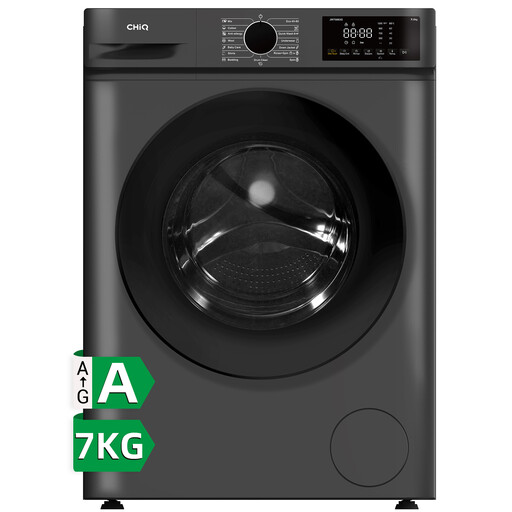 Image unavailable
The stated quick cycle and automatic adjustment of wash settings are worth comparing if you often wash small loads.
Stated: 7 kg, a 530 mm drum, 1,200 rpm, 16 programmes and a steam function.
Follow the blanket’s care label and check the maximum load for the relevant programme in the machine’s manual. The maximum capacity applies to cotton; the permitted load may be lower for delicates or synthetic fabrics.
Remove or shake as much loose hair as possible from the blanket before washing it. Bosch Netherlands recommends doing this because hair can work its way deeper into textiles during washing. Check and clean the filter and door seal as instructed in your machine’s manual.
Only if you need the extra space for a blanket that won’t fit properly in a smaller drum, and you’re happy to accept the drawbacks for your usual loads. Load detection can adjust consumption, but it doesn’t guarantee a clean result in a large, half-empty drum.
The energy label describes consumption based on eco 40-60, not necessarily the consumption of a quick, delicates or other programme. Compare label values on the same basis, and consider separately which programmes your blanket needs.
Yes. In the Netherlands, statutory rights don’t have a fixed two-year time limit: a product must meet what you can reasonably expect from it. The Dutch government names the retailer as your point of contact if a product is faulty; misuse and normal wear and tear don’t automatically mean that repairs will be free.