First, measure whether width, depth or space for the door to open is the main constraint. A shallow front-loader may fit if there’s enough width and space in front of the door; a top-loader needs less floor width, but must have clear space above it to open. Then choose a load capacity that suits the number of beach towels you usually wash and a programme that matches their care labels.
Who is this choice for?
Anyone with a narrow laundry area
You want to know whether the machine, connections and open door or lid will fit. The Consumers’ Association describes top-loaders as narrower than front-loaders; a shallow front-loader may be a better option if depth is the main constraint.
Anyone washing several beach towels
You want to wash your usual load without cramming the drum. Weigh your dry laundry and check the permitted load for your chosen programme. The Consumers’ Association notes that the maximum load capacity applies to cotton washes and may be lower for delicate or synthetic fabrics.
Anyone looking to save energy in a small home
You’re comparing energy consumption and spin noise, but also want a drum that suits your usual load. Milieu Centraal recommends choosing a drum capacity that matches the size of your household.
What should you consider when choosing?
Shallow front-loader
A good fit when: there’s enough width, but depth is limited and you have room in front of the machine to open the door.
Bear in mind: it needs more width than a top-loader; hoses and the door opening also require installation space.
Narrow top-loader
A good fit when: floor width is the main constraint and there’s enough clear space above the machine to open the lid.
Bear in mind: you’ll need clear space above the machine to load it, so it can’t be used as a fixed worktop. The Consumers’ Association reported that the top-loaders it tested washed less effectively than a standard front-loader; this is not an individual test result for every model.
Front-loader with greater depth
A good fit when: the laundry area is wide and deep enough and you want to keep the top clear.
Bear in mind: check the full installation space against the manual and your own measurements; the stated cabinet depth isn’t the only space you’ll need.
| What to consider |
What should you look for? |
Who should pay particular attention? |
| Fit in the laundry area |
Measure the width, height and depth at several points. Also check the door opening or lid clearance and the connections. |
If space is tight, I want to know whether I can fit the machine and access it easily to load it. Around 36% of consumers say fit is their first consideration. |
| Room for beach towels |
Weigh a typical dry load and check the permitted weight for a programme that suits the care labels. |
If I want to wash several beach towels at once, I look at the load I actually wash, not just the maximum capacity. Around 29% of consumers prioritise their beach towel load. |
| Energy and water consumption |
For suitable models, compare the kWh per 100 cycles and litres per cycle on the EU energy label. The European Commission describes this label as a standardised basis for comparison. |
If I wash frequently, I want to compare consumption without choosing a drum that doesn’t suit my usual load. Around 21% of consumers prioritise ongoing consumption. |
| Noise and positioning |
Check the noise rating on the EU label and follow the installation instructions to ensure the machine is stable and level. |
If the machine is close to my living space, I want the spin cycle and positioning to be manageable. Around 14% of consumers say noise and positioning are their first considerations. |
Common buying mistakes
-
Measuring only the cabinet depth
A front-loader needs room for the door to open; connections and access space matter too. So the cabinet’s external dimensions alone won’t tell you whether you can install and use the machine comfortably.
Measure the space at several points and allow for the door, connections and installation requirements.
-
Choosing a top-loader without checking the space above it
The lid needs to open fully. A top-loader won’t fit under a worktop that blocks the lid.
Choose this setup only if the top of the machine will remain clear and accessible.
-
Assuming the maximum load capacity applies to every programme
The stated maximum applies to cotton washes; delicate or synthetic fabrics may have a lower load limit.
Weigh a typical dry load and check which programme suits the beach towels’ care labels.
-
Confusing the manufacturer’s warranty with your statutory rights
An additional manufacturer’s warranty doesn’t replace the retailer’s responsibility for a faulty product. The Dutch government explains that there is no fixed statutory warranty period for all products in the Netherlands.
Check the terms of any additional warranty and report a faulty product to the retailer.
Brands to compare
Beko
The Beko BM3WFU3741W is a 7kg front-loader that may be suitable if depth is limited.
- Beko lists the cabinet depth of this model as 49,6 cm and its width as 60 cm.
- Width is still a consideration if floor space is the main constraint. Also check the space needed for installation and the door to open.
AEG
The LTR7573A top-loader is worth comparing if floor width is limited and there’s room above the machine.
- AEG lists this model as 39,7 cm wide, with a maximum depth of 59,9 cm.
- The lid needs to open fully. An assessment of other top-loaders isn’t an individual test result for the LTR7573A.
Bosch
The WGE02404NL is a 7kg front-loader to compare if you have more depth available.
- Bosch lists this model as 59,8 cm wide and 58,8 cm deep.
- Its stated cabinet depth is greater than that of the Beko model mentioned above. Check the required installation space before buying.
Whirlpool
Whirlpool offers top-loaders that may be worth considering if you need a narrow setup.
- A top-loader may be worth looking into when floor width is the deciding factor.
- Check the dimensions of the specific model and make sure the lid can open fully above the machine.
Washing machines at Joybuy
These front-loaders are worth comparing for their load capacity, stated dimensions and other listed specifications. Measure your available space and check that the programme load suits the care labels on your beach towels.
 No image available
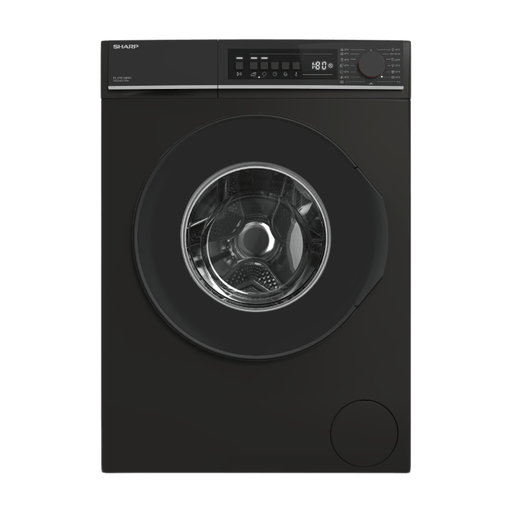
SHARP ESNFB714BBNACB, 7 kg
A 7kg model to compare if this capacity suits your usual beach towel load.
The product information lists 1400 rpm, energy rating A and 99 kWh per 100 cycles.
The stated dimensions are 597 × 845 × 600 mm; also check the space needed for installation and the door to open.
View at Joybuy
 No image available
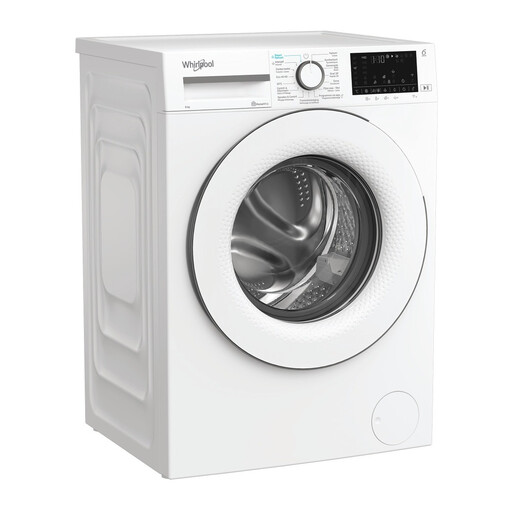
Whirlpool WAM 87W BE, 7 kg
A 7kg model to compare with other front-loaders if this capacity suits your usual load.
The product name lists 1200 rpm. Check the dimensions for this specific model before choosing it for a small laundry area.
View at Joybuy
 No image available
Beko BM3WFU38412CW, 8 kg
Compare the 8kg capacity with your usual load, and check the limit for the programme that suits your beach towels.
The product information lists energy rating A, 1400 rpm and 47 kWh per 100 cycles.
The stated dimensions are 84,5 × 60 × 54,6 cm. Also allow space for the connections and door.
View at Joybuy
 No image available
Coocaa Galaxy A3 Series F702A3AВC0, 7 kg
This 7kg front-loader is worth comparing if you’re looking for a machine for your usual beach towel load.
The product information lists dimensions of 595 × 440 × 850 mm and 15 programmes. Check which programme settings suit the care labels.
View at Joybuy
 No image available
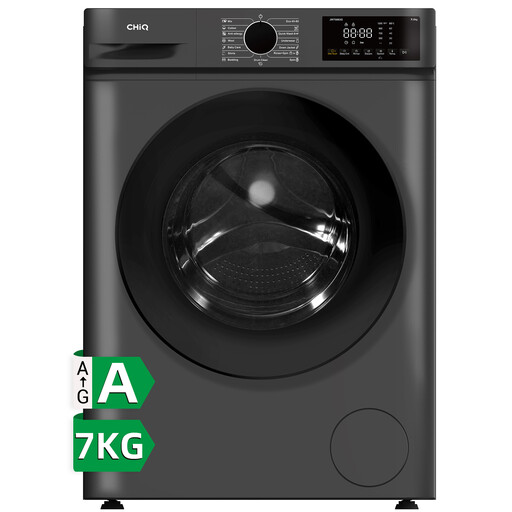
CHiQ JW75883G, 7 kg
A 7kg front-loader to compare if the capacity suits your usual load and there’s room for a front-loader door.
The product name lists energy rating A and 1200 rpm; the product information gives a depth of 47 cm. Check the full external dimensions and the space required for installation.
View at Joybuy
Frequently asked questions
How do I work out the load capacity I need for my beach towels?
Weigh a typical sorted dry load and check the limit for a programme that suits the care labels. The Consumers’ Association stresses that the maximum load capacity applies to cotton washes and may be lower for delicate or synthetic fabrics.
Can a top-loader go under a worktop?
Only if the lid can open fully, so a worktop that blocks it isn’t suitable for this setup. The Consumers’ Association also points out that the top can’t be used as fixed storage space.
What should I check when installing a washing machine in a small laundry area?
Make sure the water supply, drain and a suitable power socket are accessible, and follow the manual’s instructions for transit bolts, positioning and levelling. Ask the retailer whether installation is included with delivery or charged separately.
Does the energy label show my actual consumption per wash?
No. The EU label provides standardised comparison figures, including energy per 100 cycles and water per cycle. The programme and load you choose can affect the consumption of your own wash.
Who should I report a faulty washing machine to in the Netherlands?
Report the problem to the retailer, who is responsible for providing an appropriate solution under the statutory guarantee. The Dutch government states that there is no fixed statutory warranty period for all products in the Netherlands; what you can expect depends, among other things, on the product and normal use.


