What should you look for when choosing?
Start with the care label and the amount of laundry you usually wash together. Then consider the installation space, noise and energy and water use.
| What to consider |
What should you check? |
Who might this matter more to? |
| Getting aprons clean |
Compare the care label with the programmes and maximum load for each programme. The Consumers’ Association advises sticking to the maximum temperature on the label. |
If I’m washing stained aprons, I want to choose a suitable programme without treating the fabric incorrectly. Around 33% of consumers put getting laundry clean first. |
| Choosing the right drum capacity |
Think about how much dry laundry you usually wash together and check the programme’s load limit. Milieu Centraal advises against buying a machine that’s too large. |
If you sometimes wash a few aprons and sometimes a larger mixed load, you’ll want a drum that suits your usual washing routine. Around 27% of consumers prioritise a suitable load capacity. |
| Installation and noise |
Measure the height, width and depth, including space for hoses and the door. Check the connections and compare the stated spin noise level; the European Commission explains the information shown on the EU energy label. |
In a small utility room, I want to be sure the machine will fit and remain accessible. Noise may be a bigger consideration if there’s a living area next door. Around 20% of consumers prioritise installation space. |
| Energy and water use, and faults |
Compare the stated electricity consumption in kWh per 100 eco cycles and water consumption per eco cycle, using the same label basis. Also check the seller’s repair and warranty terms. |
If I’m mainly focused on running costs, I also want to know how consumption and a possible fault might affect my choice. Around 20% of consumers give running costs the highest priority. |
Washing machines on Joybuy
These options range from a small machine for small loads to household front-loaders with capacities of 8–9 kg. Compare the listed capacity, dimensions and programmes with the laundry you usually wash and the care labels on your aprons.
 No image available
Samsung WW90DG6U25LE, 9 kg, 1400 rpm
The 9 kg capacity may suit a larger load of laundry washed together. Check that the programmes are suitable for the care labels on your aprons.
The product information lists a 9 kg capacity, 1400 rpm, steam, 15 programmes and dimensions of 60 × 55 × 85 cm.
Joybuy
 No image available
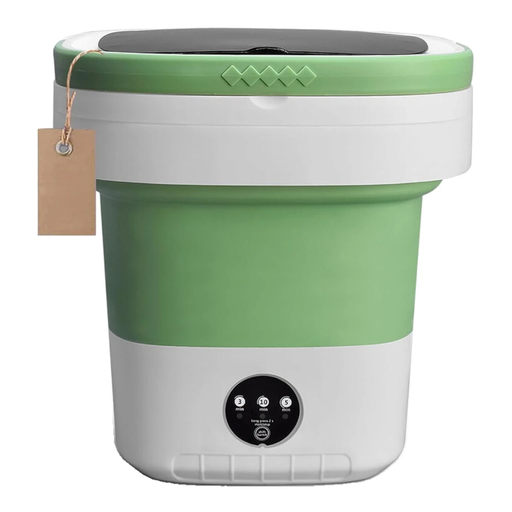
Foldable mini washing machine, 12 L
This model is described as being for small loads and small items of clothing. Check whether its capacity suits your aprons and washing routine.
The product name lists a 12 L capacity, a foldable design, a spin-drying basket and 50 dB.
Joybuy
 No image available
Midea MF110W80BA10/W-NL, 8 kg
The 8 kg capacity may suit a medium-sized load of laundry washed together. Check the programme settings for the fabrics you wash.
The product information lists 16 programmes, prewash, extra rinse and dimensions of 850 × 595 × 475 mm.
Joybuy
 No image available
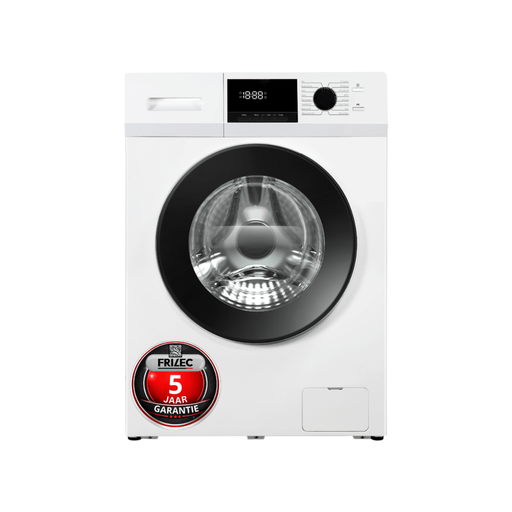
Frilec KOBLENZ8314WA-342, 8 kg
The stated 8 kg capacity may be useful if you usually wash your aprons with other laundry. Check that the machine will fit in the available space.
The product information lists an 8 kg capacity, 1400 rpm and a depth of 52 cm. Programmes include cotton, delicates, hygiene and quick wash.
Joybuy
 No image available
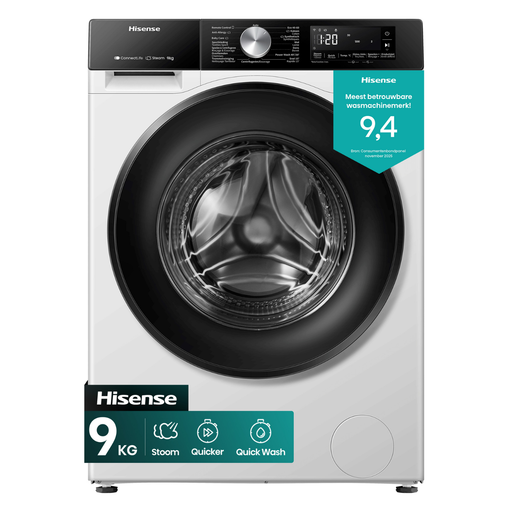
Hisense WF3S9043BW3, 9 kg, 1400 rpm
The 9 kg capacity is intended for a larger load of laundry washed together. Check the permitted load and fabrics for each programme.
The product information lists a 9 kg capacity, 1400 rpm, 15 programmes and dimensions of 59.5 × 59 × 84.5 cm.
Joybuy
Frequently asked questions
Can I always wash aprons on Eco 40-60 if I want a 60 °C wash?
No, you can’t simply set the temperature to 60 °C on Eco 40-60. AEG states that you can’t choose the temperature for this programme. Check the apron’s care label and the programme conditions in the manual for your chosen model.
What should I check before running the washing machine for the first time?
Check that the installation space and connections meet the requirements in the installation instructions. Bosch’s connection guidance includes removing the transit bolts before use. Always follow the manual for the model you’ve bought.
How can I prevent smells if I often wash at low temperatures?
Clean the machine according to the manufacturer’s instructions, including the parts intended for cleaning. Bosch explains that detergent residue can build up in places such as the door seal and detergent drawer. Follow the maintenance instructions for your model.
Who should I contact if my washing machine breaks down too soon?
For a consumer purchase in the Netherlands, the retailer is your point of contact for your statutory guarantee rights. ACM ConsuWijzer explains that the appropriate solution depends on what you could reasonably expect from the product and the circumstances; the manufacturer’s warranty period doesn’t automatically set the limit of your statutory rights.
Are there special rules for aprons used in a catering business?
If you prepare, process or sell food, the Netherlands Food and Consumer Product Safety Authority (NVWA) requires you to work with a HACCP food safety plan; a hygiene code may be one way to do this. The machine’s programme name won’t tell you which washing procedure is right for your aprons: check the applicable plan and how the aprons are used. Protective workwear is also subject to workplace safety requirements based on the risks involved, but these don’t automatically apply to every apron.


