What should you look for when choosing?
Measure the space and access route before comparing models. Then check the care instructions, your usual load size and whether you also want to tumble-dry clothes. Which? discusses installation and use, while Arboportaal refers to the relevant care instructions for protective clothing.
| What to consider |
What should you check? |
Who is this important for? |
| Space and access |
Measure the width, depth and height, including room for hoses and clearance for the door or lid. Also check the route to your laundry area. |
In a small flat, I want to know that the machine will fit and be easy to open. Around 33% of consumers say space is the deciding factor when choosing. |
| Care instructions |
Check the care label, as well as the available programmes and temperatures. For protective clothing, ask for the relevant care and work instructions. |
If I wash different fabrics or clothing with specific care instructions, I want to be able to choose a suitable programme. Around 33% of consumers put wash suitability first. |
| Noise and stability |
Compare the spin noise level on the energy label and check whether the machine can stand on a flat, sturdy surface. |
If the machine is close to my living or sleeping area, noise and vibrations are important factors. Around 20% of consumers say noise is their main consideration when choosing. |
| Capacity and drying |
Compare the load capacity with the size of a typical dry laundry load. For a washer-dryer, check the washing and drying capacities separately, and make sure the care label allows tumble drying. |
If I don’t have a suitable place to dry clothes, I want to know whether one appliance can handle both the washing and any permitted drying. Around 14% of consumers give most weight to energy use and drying needs. |
Joybuy products for these options
This selection includes front-loaders for limited spaces and a washer-dryer for anyone who also wants to dry clothes indoors. Check the full space needed for installation and the care instructions for your workwear before choosing a model.
 No image available
AEG LF61R840 6000 Series, 8 kg
A front-loader to consider if you’re looking for an 8 kg model. Measure the alcove and clearance for the door before deciding.
The product name lists an 8 kg capacity, 1400 rpm and energy rating A.
For protective clothing or garments that may be contaminated with hazardous substances, follow the relevant care and work instructions. A machine programme doesn’t prove that washing at home is safe.
Joybuy
 No image available
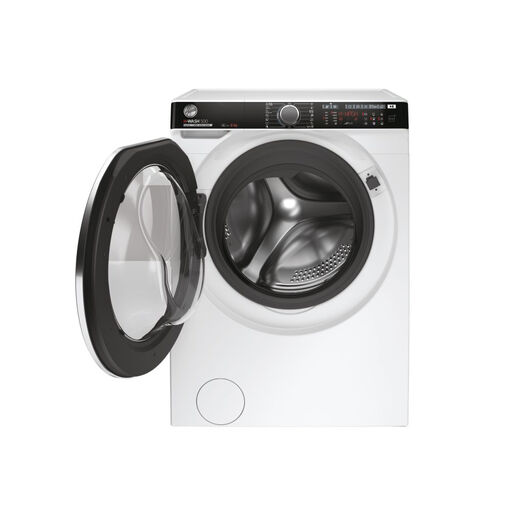
HWP 48AMBC7/1-S, 8 kg
This front-loader is an option if you’re looking for an 8 kg model. Check the full installation dimensions and clearance for the door.
The product name lists an 8 kg capacity, 1400 rpm and energy rating A.
For protective clothing or garments that may be contaminated with hazardous substances, follow the relevant care and work instructions. A machine programme doesn’t prove that washing at home is safe.
Joybuy
 No image available
TCL FF1006WB0, 6 kg
A front-loader listed in the product name as 45 cm deep, with a 6 kg capacity. Compare these dimensions with your alcove and usual load size.
The product name lists a BLDC inverter motor, steam wash and a 15-minute Quick Wash programme.
For protective clothing or garments that may be contaminated with hazardous substances, follow the relevant care and work instructions. A machine programme doesn’t prove that washing at home is safe.
Joybuy
 No image available
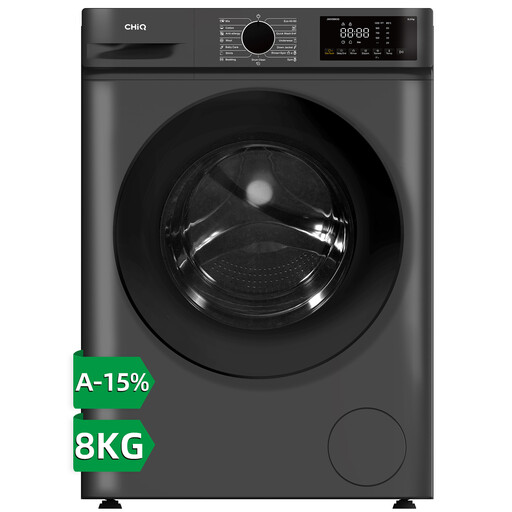
CHiQ JW85883G, 8 kg
This front-loader is an option if you’re looking for an 8 kg model. Check the stated dimensions and the space required in the product information.
The product name lists 1400 rpm, 16 programmes and a steam function.
For protective clothing or garments that may be contaminated with hazardous substances, follow the relevant care and work instructions. A machine programme doesn’t prove that washing at home is safe.
Joybuy
 No image available
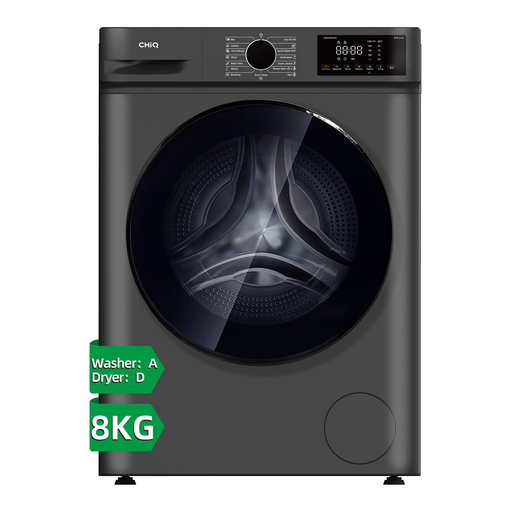
CHiQ JW85882HG washer-dryer, 8 kg
A washer-dryer to consider if you want to use one appliance and the care label allows tumble drying. Check the space needed for installation and the separate drying capacity before choosing.
The product name lists an 8 kg capacity, 1400 rpm and a steam function.
For protective clothing or garments that may be contaminated with hazardous substances, follow the relevant care and work instructions. A machine programme doesn’t prove that washing at home is safe.
Joybuy
Frequently asked questions
Can I wash every washable work jacket or pair of work trousers at 60 °C?
No. Follow the maximum temperature and programme instructions on the care label. If the garment is also personal protective equipment, check the care and work instructions. The word ‘washable’ alone doesn’t tell you which treatment is suitable.
What should I check before installing a washing machine in a small flat?
Measure the laundry area and the route to it, including the space needed to open the door or lid. Check the connections and follow the instructions for the floor, transit bolts and levelling the machine.
What does the energy label tell me about washing my workwear?
The EU energy label shows, among other things, energy consumption per 100 cycles, water consumption per cycle and spin noise level. These figures are based on the eco 40–60 programme, so they don’t automatically reflect the energy use or washing results of the programme you use for your workwear.
Who should I contact if my washing machine is faulty?
Report a faulty product to the retailer. According to the Dutch Government, the Netherlands has no fixed statutory warranty period; what you can expect from a product depends on the product and the circumstances. A manufacturer’s warranty doesn’t replace your statutory rights.
Should I wash protective workwear at home?
Don’t assume that washing at home is suitable for every job or type of contamination. Arboportaal explains that personal protective equipment must come with instructions for use, storage and care. Follow those specific instructions and ask your employer how the clothing should be cleaned.


