What should you look for when choosing?
First, check which items can be washed together and what care their labels recommend. Then compare the drum capacity with the loads you’re usually allowed to wash together. Consumentenbond and Milieu Centraal recommend choosing a capacity that matches what you actually wash.
| What to consider |
What to look for when buying |
Who should pay extra attention? |
| How workwear is treated |
Compare the temperature settings and programmes with the care labels on your clothes. For protective clothing, follow the specific care instructions too. |
If I have workwear with different care requirements, I want to be able to choose a programme that suits each permitted treatment. Around 36% of consumers prioritise suitable treatment. |
| Drum capacity |
Match the load capacity to the loads that can be washed together according to their care labels. Also check the loading instructions for the programme you choose. |
When my weekly loads vary, I don’t want to simply add up the total amount of laundry. I want to know what can actually go in one cycle. Around 29% of consumers focus on choosing a suitable load capacity. |
| Energy use and cycle time |
Compare energy and water consumption on the same label basis, and check the duration of the programmes you plan to use. The European Commission describes eco 40–60 as being for normally soiled cotton that can be washed at 40 °C or 60 °C according to its care label. |
If I wash several suitable loads each week, I want to compare energy use and know whether a cycle fits my schedule. Around 21% of consumers prioritise energy use and the time available for washing. |
| Space and water protection |
Measure the space and access route, check the connections and stability of the floor, and compare the water protection features of the exact model. |
If the machine is near living areas or somewhere a leak could cause damage, I mainly want to know whether it will fit and what protection it has. Around 14% of consumers prioritise installation and the risk of leaks. |
Washing machines at Joybuy
These Joybuy washing machines offer a range of drum capacities and programmes to compare for changing laundry loads. Always check that the settings are suitable for the care labels and instructions for your workwear.
 No image available
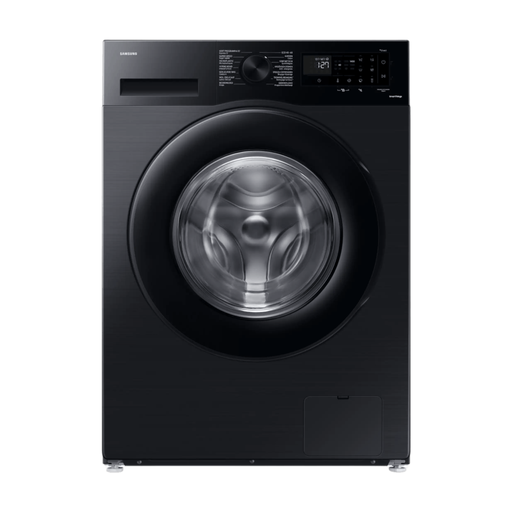
Samsung WW1UDG5B25ABEN
An option to compare if your loads vary and you need a choice of programmes.
11 kg; maximum 1400 rpm; energy class A. Listed programmes include Delicates/Silk and Wool, and automatic load detection is mentioned. Do not wash oily or flammable clothing directly in the drum.
Joybuy
 No image available
Midea MF110W80BA10/W-NL
A model to compare if you’re looking for an 8 kg capacity and want to explore programmes for different types of laundry.
8 kg; 16 programmes; 42 kWh per 100 cycles; maximum 1400 rpm. The product information lists a Wool programme and AquaStop water protection, among other features. Do not wash oily or flammable clothing directly in the drum.
Joybuy
 No image available
Beko BM3WFU38412CW
An option to compare if you need programmes for mixed and delicate laundry across changing loads.
8 kg; maximum 1400 rpm; energy class A; 47 kWh per 100 cycles. The programme list includes Mixed Load and Delicates/Wool/HandWash, with temperature selection and load detection. Do not wash items treated with flammable solvents, industrial chemicals or dry-cleaning fluids.
Joybuy
 No image available
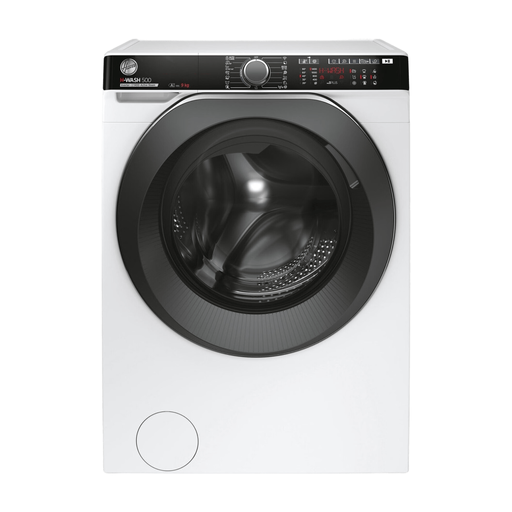
Hoover H-WASH 500 HWP 49AMBC7/1-S
A model to compare if you’re considering a 9 kg capacity and features for handling changing loads.
9 kg; maximum 1400 rpm; 42 kWh per 100 cycles. The product information lists Auto Care and the option to add laundry during a cycle. According to the product information, Scan to Care can save garment care instructions and suggest programmes. Check for yourself that the chosen treatment is suitable for the care label.
Joybuy
 No image available
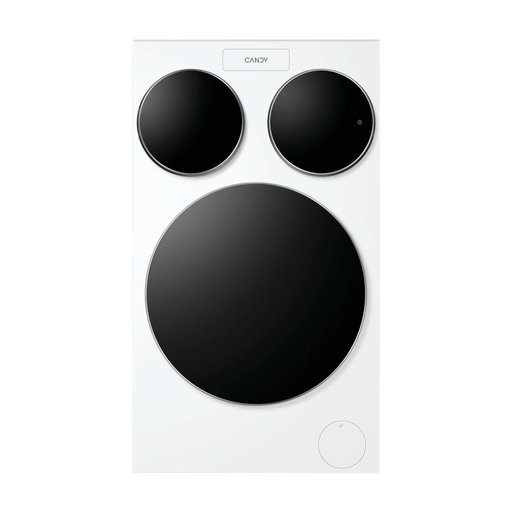
Candy MQD 410CBL9-S
An option to compare if you want to separate and treat loads individually. Check which combinations are allowed for each item of clothing.
Three drums: one with a 10 kg capacity and two with a 2 kg capacity each. The product information lists 33 kWh per 100 cycles and programmes including Delicates and Sportswear.
Joybuy
Frequently asked questions
Can you always wash workwear with your everyday laundry?
No, not without checking the care labels first. Follow the permitted temperature and any requirements for gentler treatment for each item. For protective clothing, check the specific care instructions too. Don’t rely on the washing machine programme alone to decide whether an item can be washed with the family laundry.
Is eco 40–60 the same as a hygiene programme or a standard 60 °C programme?
No. According to the European Commission, eco 40–60 is intended for normally soiled cotton that can be washed at 40 °C or 60 °C according to its care label. This doesn’t automatically mean the programme is suitable for every type of workwear or soiling.
What should you check when installing and connecting the machine?
Check the dimensions, access route, connections and stability of the space where the machine will go. Ask in advance which installation services are included in the delivery and what you’ll need to arrange separately.
Does the Dutch statutory guarantee end when the manufacturer’s guarantee expires?
No. ACM ConsuWijzer explains that statutory guarantee is separate from a manufacturer’s or seller’s guarantee, and depends on what you could reasonably expect from the product with normal use. If a product is faulty, contact the seller.
Does a retailer have to take away your old washing machine when you buy a new one as a private individual?
For a similar old appliance, the Dutch government says private individuals are entitled to have it taken away free of charge when buying a new one, including online. Agree in advance how collection will be arranged at delivery. This scheme doesn’t apply to equipment owned by businesses.


