
Renter with limited space
You wash work trousers at home and need to consider the width, depth and space for connections. Bosch Netherlands recommends placing the washing machine on a stable surface.


First, measure the available space, access route and room for connections and for opening the machine. A slimline front-loader suits a shallow space, while a top-loader is worth considering if width is limited and there’s enough clearance above the lid. Then choose a capacity and programmes to suit your usual load and the care label on your work trousers.
You wash work trousers at home and need to consider the width, depth and space for connections. Bosch Netherlands recommends placing the washing machine on a stable surface.
You want to choose a programme that suits the fabric and care label. Blåkläder provides washing and care instructions for workwear.
You want enough space for the loads you usually wash, without assuming the maximum capacity is suitable for every programme. The Consumers’ Association notes that this capacity applies to cotton washes.
Suitable for: limited depth, with around 60 cm of width available.
Keep in mind: allow space for the door, hoses and controls too; the appliance depth does not automatically include the space needed for installation.
Suitable for: a narrow space where there’s enough clearance above the machine to open the lid.
Keep in mind: you can’t open a top-loader beneath a fixed worktop.
Suitable for: a space that can accommodate a machine with the required width and depth.
Keep in mind: a higher maximum capacity is no reason to wash small loads in a larger drum every time.
| What to consider | What to look for | Who is this important for? |
|---|---|---|
| Positioning and access | Measure the width, depth, height, access route and space for the door or lid, hoses and connections. Check the installation dimensions for the exact model. | If the machine has to go in a tight space, I want to be sure the door, hoses and connections will fit. Around 31% of consumers give positioning and access top priority. |
| Washing work trousers | Read the garment label and any additional instructions for protective clothing. Then compare the model’s programmes and settings. | If my work trousers have specific washing instructions, I want to be able to choose a suitable programme. Around 25% of consumers prioritise caring for work trousers. |
| Capacity for your load | Compare your usual sorted load with the maximum load allowed for the programme you want to use. The maximum capacity does not automatically apply to every programme. | If I usually wash small, regular loads, I want the capacity to suit them. Around 25% of consumers prioritise their usual laundry load. |
| Energy use and noise | Compare energy use on the EU label on a like-for-like basis, and check the stated spin noise level if the machine is near a living area. | If I wash frequently or the machine is near my living area, I want to consider energy use and spin noise. Around 19% of consumers see these practical factors as their main consideration. |
The stated depth doesn’t automatically allow for hoses, the tap, drainage or the space needed to open the door.
Measure the full space needed for use and connections, and check the installation diagram for the exact model before ordering.
The maximum capacity applies to cotton washes; other programmes may allow a smaller load.
Compare your sorted, weighed laundry with the load permitted for the programme you need.
A programme name doesn’t confirm that the treatment is suitable for the care instructions or protective properties of a particular pair of work trousers.
Always follow the garment label and any additional instructions for protective clothing first, then choose a suitable washing machine programme.
The CO4474TWM6/1-S is a front-loader with a stated capacity of 7 kg. Candy lists an appliance depth of 454 mm.
The LTR7573A is a top-loader with a stated capacity of 7 kg. AEG lists a width of 397 mm and a maximum depth of 599 mm.
According to Bosch, the freestanding front-loader WGE02404NL has a capacity of 7 kg and measures 598 × 588 mm (width × depth).
The BM3WFU3741W is a front-loader with a stated capacity of 7 kg. Beko lists a depth of 49,6 cm.
The HW70-BP14357TU1 is a front-loader with a stated capacity of 7 kg. Haier lists a depth of 468 mm and a width of 595 mm.
These product picks are all front-loaders. Compare their dimensions, capacity and programmes with your available space and the washing instructions for your work trousers.
 No image available
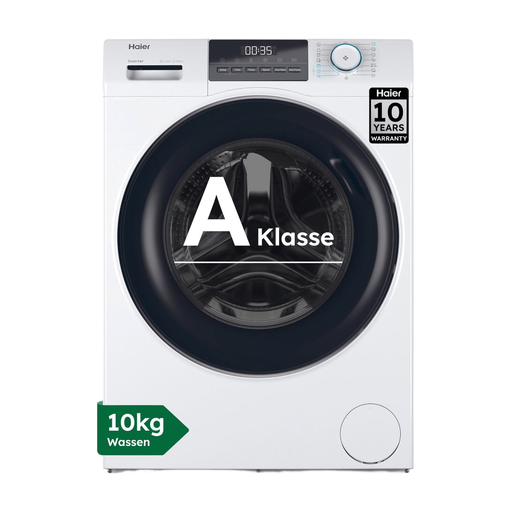
The capacity and automatic load adjustment may be useful if you wash both small and larger loads; always follow the garment care instructions for work trousers.
Stated capacity: 10 kg. The product lists 1400 rpm and automatic adjustment of water use and programme duration to the weight of the laundry.
 No image available
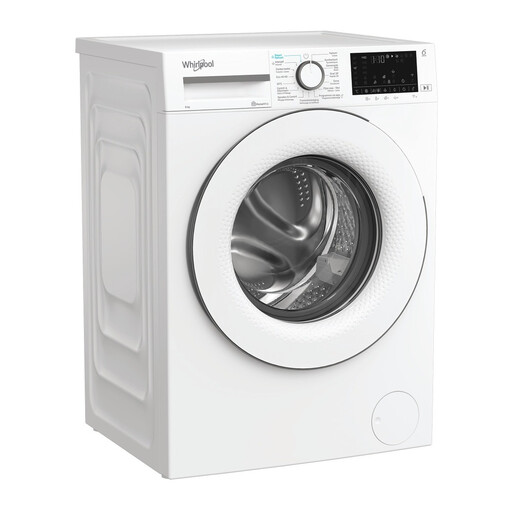
The listed programmes and sensors may help when comparing different types of laundry; check that the settings are suitable for the care label on your work trousers.
Stated capacity: 7 kg and 1200 rpm. Programmes include cotton, synthetics, delicates and wool; sensors adjust the settings to the fabric type, soil level and load.
 No image available
The stated depth may be useful if space is limited; remember to measure the space needed for connections and use too.
The product title lists a capacity of 7 kg, a depth of 400 mm and energy class A-10%. The product information lists 16 programmes and a 15-minute quick wash for small, lightly soiled loads.
 No image available
The stated depth and capacity may be useful if space is tight or your usual load is small; check the load limit for the programme you want to use.
The product title lists a depth of 45 cm, a BLDC motor and energy class B. The product information lists automatic load adjustment and a 15-minute quick wash programme.
 No image available
The stated external dimensions may be useful when comparing machines for a limited space; also check which temperature and programme settings are suitable for your work trousers.
Stated capacity: 7 kg. The product information lists dimensions of 595 × 440 × 850 mm (width × depth × height), 1200 rpm, 15 programmes and adjustable temperatures from cold to 90 °C.
It depends on the work involved. The Dutch government says you don’t need permission for a minor change that can be reversed without significant cost. Don’t automatically treat a new water, drainage or electrical connection as a minor alteration; discuss the specific work with your landlord in advance.
Check that the machine has been connected according to the manual and is standing securely. Bosch Netherlands recommends paying attention to a stable surface and the correct connection method, among other things. Follow the manual for your chosen model for the connections, required clearance and removal of the transit bolts.
No. ‘Washable’ doesn’t mean that all work trousers can be washed together. Follow the garment label and any additional instructions. Blåkläder says that certain certified garments can only be washed together with garments that have the same certifications and washing instructions. If there’s a risk of exposure to hazardous substances, the employer’s assessment is also important.
Compare energy use on the EU energy label in kWh per 100 eco 40–60 cycles. To estimate your own costs, multiply the energy used per cycle by the expected number of cycles and your own electricity price per kWh. Actual use may differ from the label’s test conditions.
Report the problem to the retailer. ACM ConsuWijzer explains that your statutory rights apply alongside any manufacturer’s guarantee, and that under the applicable law the retailer must put things right if a product breaks down too soon under normal use. There isn’t one fixed statutory guarantee period for every washing machine.