
Someone who washes work trousers every week
You want clean trousers after the working week and choose a programme that suits the care label. If the clothing is protective, follow the specific care instructions too.


Choose a washing machine that suits your usual weekly load and offers programmes permitted by the care label on your work trousers. A quick programme is only suitable if the recommended load size and level of soiling are also right; the energy label compares the eco 40-60 programme, not necessarily every other cycle. If the trousers are protective clothing, follow the relevant care instructions too.
You want clean trousers after the working week and choose a programme that suits the care label. If the clothing is protective, follow the specific care instructions too.
You wash work trousers alongside other laundry and want a drum that suits your usual load, not just an exceptionally full wash.
You’re considering a quick programme, but first check how much laundry it can take and what level of soiling it’s designed for.
| Key consideration | What to look for | Who is this important for? |
|---|---|---|
| Suitable washing | Check that the temperature, programme and load size are suitable for the care label and the machine’s manual. | I want to wash my work trousers according to the care instructions, especially if they have a protective function; around 28% of consumers make clothing care their top priority. |
| Drum capacity | Weigh a typical weekly load and check the maximum load for the programme you want to use. | I want to wash work trousers with my usual laundry, without choosing a large drum just for the occasional peak; around 22% of consumers focus mainly on choosing the right load size. |
| Programme duration | Compare the duration, maximum load and recommended level of soiling for relevant programmes in the manual. | If I have little time after a busy week, I want to know how long a suitable programme takes; around 17% of consumers make washing time their top priority. |
| Consumption | Compare energy and water consumption on the same labelling basis; note that the label value relates to eco 40-60. | I expect to do laundry regularly and want to consider consumption on a like-for-like basis; around 17% of consumers focus mainly on running costs. |
| Installation and purchase | Measure the space available and check which delivery or installation services are included with your order. | I want a machine that fits my space and stays within my budget; around 16% of consumers put purchase and installation first. |
A larger capacity isn’t automatically useful if you can’t usually fill the drum properly for a normal wash.
Weigh a typical weekly load and distinguish it from an exceptional peak.
The label value relates to eco 40-60 and doesn’t automatically predict the consumption of other cycles.
Compare label values with one another and check the information separately for the programme you actually want to use.
A refresh function has a different purpose from washing dirty clothes. A quick programme’s suitability also depends on the laundry and the load size.
Check the clothing care label and programme instructions, especially if the clothes are visibly soiled or are protective workwear.
The BM3WFU38412CW is an 8 kg model with a range of programmes to compare, including cotton, synthetics, quick wash, jeans and stain programmes.
The Serie 6 WGJ23400NL is an example of an 8 kg front-loading machine to consider when comparing programme controls and dimensions.
The 7000 ProSteam L73FR86N4V is an 8 kg model to compare if you’re considering a refresh function as well as washing.
These Joybuy models vary in drum capacity and programme selection, including quick cycles. Always check the permitted load size and level of soiling when using a quick programme.
 No image available
The product information lists a Quick 15’ programme for lightly soiled everyday laundry; check whether the conditions are suitable for your work trousers.
8 kg; 1400 rpm; 16 wash programmes; Steam Wash.
 No image available
This model may be worth considering if you want to compare quick cycles; check which cycle is suitable for the amount of laundry and level of soiling.
8 kg; 1351 rpm; energy class A; steam function; eight quick cycles from 14 minutes.
 No image available
The programme list includes options for different fabrics; only choose a programme that suits the care label on your work trousers.
7 kg; 1400 rpm; energy class C; 15 programmes, including Mini/Mini14 and a stain programme.
 No image available
Daily Xpress is described as being for lightly soiled laundry. Check whether it’s suitable for the work trousers you want to wash.
8 kg; 1400 rpm; energy class A; programmes including cotton, synthetics, delicates/wool, jeans and StainExpert; extra rinse function.
 No image available
The Quick 15’ cycle is described as being for lightly soiled laundry; check whether it’s suitable for your work trousers and the load in question.
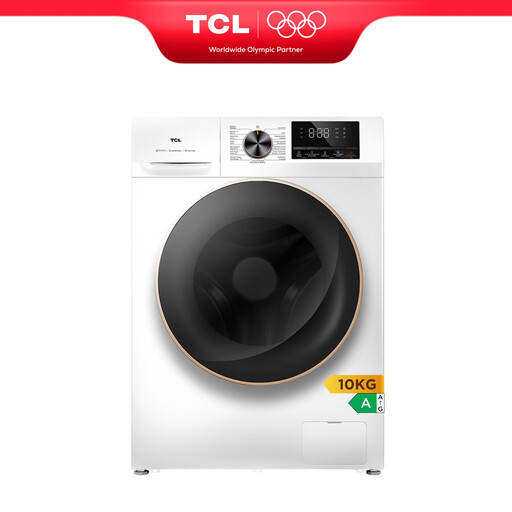
10 kg; Smart DD motor; Steam Wash; 15-minute Quick Wash; energy class A.
Only if the care label permits that treatment. The European Commission describes eco 40-60 as being for normally soiled cotton garments that can be washed at 40 °C or 60 °C according to the label; for other fabrics or specific workwear, follow the relevant instructions.
Start by following the care label on your trousers. Snickers Workwear recommends fastening closures and turning garments inside out for its workwear; this advice doesn’t replace the instructions for your specific trousers.
Compare the machine’s stated dimensions with the space available and check which installation services are included with your order. Milieu Centraal recommends running a wash at 60 °C once a month to remove detergent and dirt residues; only use laundry that can withstand this temperature.
No. According to the Dutch Government, there is no fixed statutory warranty period in the Netherlands. You’re entitled to a product that is fit for purpose, and what you can expect from it depends on several factors, including the product itself. If a product is faulty, contact the seller. A manufacturer’s warranty is separate from this.
Yes. Follow the instructions for that personal protective equipment too. According to Arboportaal, protective workwear should come with instructions covering matters such as use and care; if in doubt, check with your employer about how to clean it.