What to look for in a washing machine for work trousers
Don’t choose on drum capacity alone: the programme, noise, installation and energy and water use should all suit the shared space.
| What to consider |
What should you check? |
Who is this important for? |
| Effective cleaning |
Check the garment care label, the available programmes and the permitted temperature. Don’t treat potentially hazardous contamination as ordinary household laundry. |
If I wash work trousers made from different fabrics or with different types of soiling, I want to use a programme that suits the care label. Around 26% of consumers put effective cleaning first. |
| Noise in a shared space |
Compare the stated spin-cycle noise using the same label basis, and check that the machine can be installed securely according to the instructions. |
In a shared space, I want to factor in spin-cycle noise so that washing causes as little disruption as possible. Around 21% of consumers prioritise noise above all else. |
| Capacity for your load |
Work out how much laundry you usually have and check the maximum load for the programmes you plan to use. |
I want a drum that suits my usual wash, not just an exceptionally large load. Around 21% of consumers prioritise having the right capacity. |
| Leaks and installation |
Measure the space and check the connections, that the floor is stable and the specific type of water protection fitted to the model. |
For a shared installation, I want to know how the machine will fit and what water protection it has. Around 16% of consumers prioritise installation and leak protection. |
| Energy and water use, and maintenance |
Compare energy use per 100 cycles and water use per cycle on the same label basis. Agree how maintenance will be handled, too. |
If several people use the machine regularly, I want to be able to consider energy and water use and maintenance. Around 16% of consumers prioritise these running costs and practical arrangements. |
Washing machines for shared laundry rooms
These freestanding front-loading machines offer a range of drum capacities and programmes to compare. Above all, check that the capacity and wash settings suit your usual load and the work trousers you wash.
 No image available
Samsung WW90DG6U25LE, 9 kg, 1400 rpm
This freestanding front-loader has a 9 kg capacity, making it an option to compare if you wash different-sized loads.
The stated spin-cycle noise is 72 dB and the maximum spin speed is 1400 rpm. The product description lists pre-wash, cotton, synthetics and quick wash, plus SmartThings control.
View at Joybuy
 No image available
Midea MF110W80BA10/W-NL, 8 kg
This 8 kg front-loader could be worth considering if its capacity suits your usual wash.
The stated spin-cycle noise is 72 dB and the maximum spin speed is 1400 rpm. The description lists 16 programmes, including Jeans, pre-wash and extra rinse. The product instructions warn against putting hot, flammable items such as oil-stained workwear in the drum.
View at Joybuy
 No image available
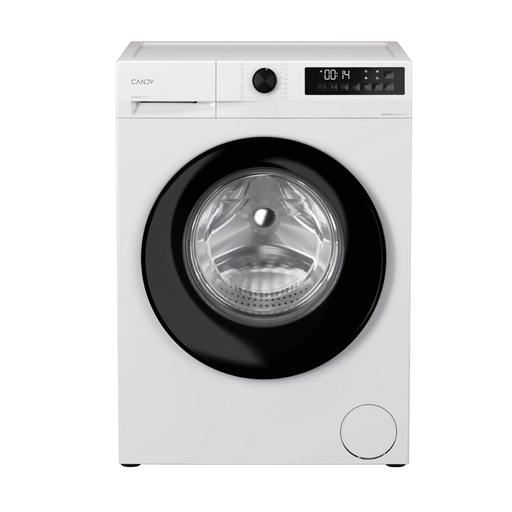
Candy GD 49B8-S, 9 kg, 1351 rpm
With a 9 kg capacity, this model is worth comparing if you sometimes wash larger shared loads.
The stated spin-cycle noise is 69 dB. The description lists 16 programmes and quick cycles from 14 minutes. A short cycle won’t necessarily suit every pair of dirty work trousers.
View at Joybuy
 No image available
Beko BM3WFU38412CW, 8 kg
This 8 kg front-loader is an option if its capacity matches the amount of laundry you usually wash.
The maximum spin speed is 1400 rpm and the stated spin-cycle noise is 76 dB. The product description lists Jeans, StainExpert and Hygiene+ programmes. The safety instructions warn against washing items treated with flammable solvents or industrial chemicals.
View at Joybuy
 No image available
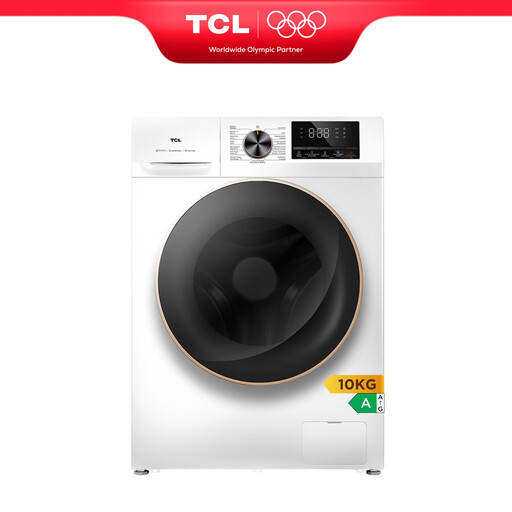
TCL FP1210WA0, 10 kg, 1200 rpm
The 10 kg drum capacity is worth considering if it suits the size of your usual shared load.
The stated spin-cycle noise is 72 dB. The description lists programmes for different fabrics, a quick wash programme and an end-time delay of up to 24 hours.
View at Joybuy
Frequently asked questions
Can you wash any washable work trousers with your regular clothes?
No. The word ‘washable’ doesn’t tell you which temperature is permitted or how to deal with knee pads or work-related contamination. Follow the care label for the specific pair of trousers. If there may have been exposure to hazardous substances, your employer must assess the risks and establish a safe procedure. A household washing machine or steam programme doesn’t prove that contaminated trousers have been cleaned safely.
Is eco 40-60 always suitable for dirty work trousers?
No. The European Commission defines eco 40-60 for normally soiled cotton laundry that can be washed at 40 °C or 60 °C according to the care label. For any other situation, choose a programme only if it suits the trousers and the machine instructions.
What should you consider when installing a machine in a shared laundry room?
Measure the available space and check the connections, how stable the floor is and the type of water protection fitted to the exact model. Before buying, ask whether delivery, connection and any additional protection are included in the price. The Dutch Consumers’ Association notes that installation sometimes costs extra.
What maintenance is recommended when several people use the machine?
Agree who will clean the machine and accessible parts, and follow the manufacturer’s maintenance instructions. The Dutch Consumers’ Association covers regular maintenance to help prevent odours, limescale and blockages. Milieu Centraal recommends running the machine at 60 °C periodically.
Is an energy label compulsory, and what can I compare with it?
Yes. According to the Dutch government, household washing machines newly offered on the Dutch market must have an energy label. The EU label includes information such as energy use per 100 cycles, water use per cycle and spin-cycle noise. Use these figures to compare models on the same label basis; they don’t predict the consumption of every individual programme.


