First, choose a washing machine with a drum capacity to suit your usual sorted weekly wash. Then check that its programmes are suitable for the care labels on your work clothes. A quick programme can be useful when you need your clothes again soon, but check its maximum load and suitability for your laundry. For normally soiled washing, also compare the duration and consumption of Eco 40-60.
Who is this choice relevant to?
If you save up your weekly washing
You want to get through the accumulated laundry in as few suitable, sorted loads as possible. The amount of laundry you actually wash will help you decide which drum size is right for you, as advised by Milieu Centraal and the Consumentenbond.
If you wash different types of work clothes
Your clothes have different care labels, so you’re looking for programmes suited to cotton, synthetics or more delicate items, for example. The Consumentenbond advises taking the permitted treatment and programme limits into account.
If you need your clothes again quickly
You compare not only programme duration, but also the permitted load and whether the programme is suitable for the clothes you need before your next working day. The Consumentenbond points out that a quick programme may not be able to handle a full drum.
What should you look for?
Start by weighing a typical load that can be washed together according to its care labels. Milieu Centraal advises choosing a drum that suits your household, while the Consumentenbond stresses that the maximum load can vary from one programme to another.
| What to consider |
What to look for |
Who is this important for? |
| Load capacity |
Weigh a typical sorted load and compare it with the drum capacity and the load limit for your programmes. |
If I save up my washing, I want to know whether my weekly load of clothes that can be washed together will actually fit in the drum. Around 26% of consumers put load capacity first. |
| Fabric programmes |
Check that the machine has programmes suited to the fabrics and treatments shown on the care labels. |
When clothes have different care labels, I want to know which items can be washed together safely and which programme to use. Around 26% of consumers make fabric care their top priority. |
| Programme duration |
Check the duration and maximum load of the quick programme you plan to use. |
If I need certain clothes before my next working day, I want to know whether the load I need will be ready in time. Around 21% of consumers prioritise cycle time. |
| Electricity and water consumption |
Compare consumption and programme duration on the same Eco 40-60 basis; check the manual for other programmes. |
When I have a load to wash every week, I want to be able to factor in electricity and water consumption. Around 16% of consumers put running consumption first. |
| Space and installation |
Measure the available space using the installation diagram and compare spin noise levels and water protection features. |
If space is tight or the machine is close to a living area, I want to know in advance whether it will fit and how much noise it makes during the spin cycle. Around 11% of consumers focus mainly on installation and their living situation. |
Avoiding common buying mistakes
-
Choosing the largest drum without weighing your laundry
Work clothes with different care labels aren’t always suitable for one full load. A large capacity only helps if you can often wash your clothes together using the same programme.
Weigh a typical weekly load of items that can be washed together, and check the maximum load for the programmes you use too.
-
Assuming a quick cycle gives you a full, equally clean wash
A quick programme may have a lower maximum load and isn’t automatically suitable for more heavily soiled clothes.
Check the programme’s load limit and settings in the manual, then compare them with your care labels and the load you actually wash.
-
Assuming the energy label shows consumption for every programme
The EU energy label is based on Eco 40-60 and doesn’t automatically tell you how much energy other programmes use, such as quick, gentle or hotter cycles.
Compare labels on the same basis and check the manual for the programmes you use regularly. Energielabel.nl explains what the washing machine label tells you.
-
Assuming delivery includes installation
Delivery, connection and removal may be separate services. The Dutch Government explains that free take-back of an old, similar household appliance is separate from any removal service.
Before ordering, ask what’s included in the delivery and how you can hand over your old appliance. The Dutch Government sets out the conditions for free take-back.
Arrange to hand over your old appliance in advance; free take-back doesn’t automatically include removal.
Brands to consider
AEG
The LR6KOLN is a front-loading washing machine with an 8 kg capacity and a synthetic programme, among others. This makes it a useful point of comparison if you’re looking at programmes for a mixed weekly wash.
- AEG says ProSense adjusts washing time, water and energy consumption to the load.
- An adjusted cycle doesn’t automatically mean the lowest consumption per kilogram; check the limits of the programmes you use too.
Beko
The B3WM4841W2 is a front-loading washing machine with an 8 kg capacity and programmes for cotton, synthetics, quick washes and stains, among others.
- This selection of programmes may be useful if you wash work clothes with different care labels.
- Beko’s EnergySpin comparison relates to a specific, different Beko model and doesn’t, by itself, say anything about performance compared with other brands.
Bosch
According to Bosch, the Serie 6 WGG244ZONL has a 9 kg capacity. It’s worth comparing if you regularly have a larger weekly load that can be washed together.
- Bosch lists dimensions of 845 × 598 × 588 mm and AquaStop for this model.
- Check the dimensions and space required against the installation diagram for the exact version.
Samsung
According to Samsung, the WW90DG6U25LBU3 from the SuperSpeed 6000 series has a 9 kg capacity. It’s worth comparing if you’re also considering shorter programmes.
- Its stated capacity and range of programmes make it relevant if you’re weighing up larger loads and time-saving features.
- Check the full model code, version and maximum programme load; a similar model code doesn’t automatically mean it’s the same machine.
Miele
According to Miele, the WWE380 WCS PWash&Steam&8kg combines an 8 kg capacity with QuickPowerWash and SteamCare.
- Miele lists a programme duration of 49 minutes for QuickPowerWash.
- This stated duration doesn’t prove that a full, heavily soiled weekly wash will be cleaned suitably in that time; check the conditions and maximum load.
Washing machines for different weekly loads
This selection includes machines for a range of weekly loads and fabric care needs. Compare the capacity with the laundry you can wash together, and check which programmes and load limits suit your clothes for each model.
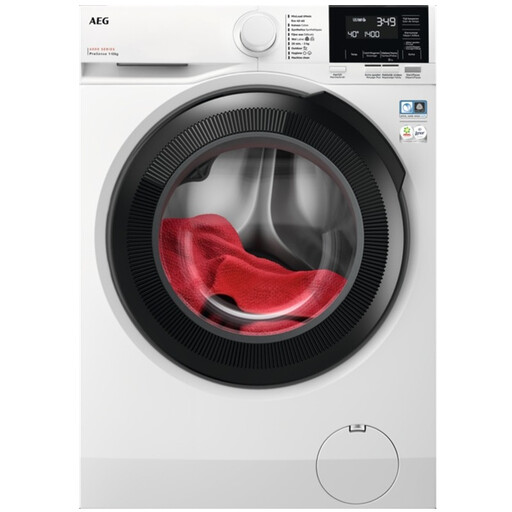 Image unavailable
AEG LR63R144 6000 Series, 10 kg
Could suit a larger weekly load that can be washed together according to the care labels.
Capacity: 10 kg. The product information lists ProSense load detection and TimeSave Plus.
View product at Joybuy
 Image unavailable
Bosch WGB2440BFG Serie 8, 9 kg, NL/FR panel
Could suit a larger load if you also want to compare programmes for smaller or delicate washes.
Capacity: 9 kg. Programmes listed include Mini Load, wool/hand wash, delicates and Extra Quick 15’/30’.
View product at Joybuy
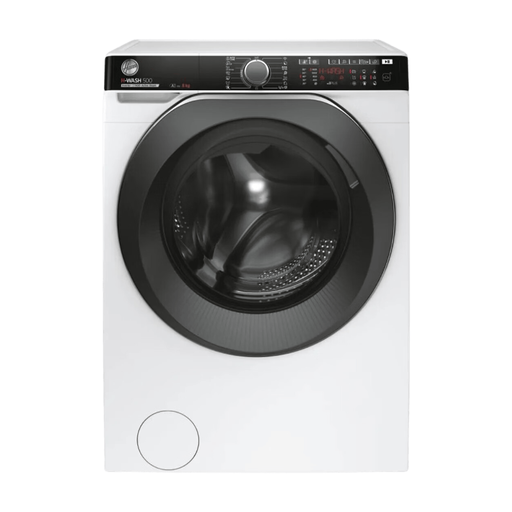 Image unavailable
Hoover HWP 48AMBC7/1-S, 8 kg
Could suit a medium-sized load if you want to weigh up programmes for different fabrics.
Capacity: 8 kg. According to the product description, Auto Care adjusts settings to the load and fabric type.
View product at Joybuy
 Image unavailable
Midea MF110W80BA10/W-NL, 8 kg
Could suit you if you want to match the capacity to a sorted load and need a range of fabric programmes.
Capacity: 8 kg. Programmes include Eco 40-60, wool and bedding; a 15-minute quick wash is also listed.
View product at Joybuy
 Image unavailable
Candy GD 48B9-S, 8 kg
Could suit you if the capacity matches your weekly wash and you also want to compare quick cycles.
Capacity: 8 kg. Eco 40-60 and quick cycles from 14 minutes are listed.
View product at Joybuy
Frequently asked questions
Can all work clothes that are suitable for washing at home go in an Eco 40-60 cycle?
No, it depends on the care labels and how soiled the clothes are. Sort clothes according to their permitted treatment; Eco 40-60 is intended for normally soiled laundry that’s suitable for the programme. The Consumentenbond says it isn’t suitable for laundry that needs hygienic cleaning.
What should you check if you’re installing the washing machine yourself?
Check the installation diagram and connections, place the machine on a stable surface, and follow the manual for the exact model. Before ordering, ask whether delivery and installation are included or offered separately.
How can you prevent smells in your washing machine?
For maintenance, Milieu Centraal advises running a wash at 60 °C about once a month to remove detergent and dirt residues. Always choose a programme permitted by the care label for your work clothes.
What are your rights if a washing machine bought online is faulty?
If a product is faulty, the seller must resolve the problem. The Dutch Government states that there’s no fixed statutory guarantee period in the Netherlands and that a manufacturer’s guarantee doesn’t replace your statutory rights. Online purchases generally come with a 14-day cooling-off period; this is separate from your rights if a product is faulty.
Does the seller have to take back your old washing machine?
When you buy a new, similar appliance, the seller must, according to the Dutch Government, take back an old household appliance from a private individual free of charge. This also applies to online purchases; arrange in advance how you’ll hand over the appliance when it’s delivered.


