Who is this advice for?

Commuters with wet socks on a regular basis

You want to be able to wash your socks after a wet journey and check whether your current machine is up to the job. The European Commission describes eco 40-60 as a programme for normally soiled cotton that can be washed at 40 °C or 60 °C according to its care label.

Small households with small loads

You often wash a small amount at a time and want a drum that also suits the rest of your household laundry. Milieu Centraal recommends choosing a drum capacity that matches the size of your household.

Households keeping an eye on consumption

You compare consumption for everyday laundry and weigh up buying a new machine against keeping or repairing your current one. The European Commission explains the eco consumption figures on the energy label; Milieu Centraal discusses whether to repair or replace.

What should you look for when choosing?

Keep using your current machine

When: If the machine works and you’re only considering a purchase for wet socks, check the care label and the available programmes first.

Consider: You won’t get a different capacity or new programmes; if the machine is faulty, Milieu Centraal also recommends considering a repair.

Buy a new machine for all your laundry

When: If you also need a different machine for your everyday household laundry, choose a drum size that suits your usual load.

Consider: The eco label doesn’t show the exact consumption for every quick programme. The European Commission describes eco 40-60 as a programme for normally soiled cotton that can be washed at 40 °C or 60 °C according to its care label.

What to consider What to look for when buying Who should pay particular attention?
Washing socks after your journey Check the cotton and quick programmes, the permitted load and the care label on your socks. If I mainly want to know whether my socks can be machine-washed after a wet journey according to their care label, I check the programme instructions. Around 40% of consumers put washing socks after a journey first.
A drum capacity that suits your needs Compare the amount of laundry you usually wash with the drum capacity and the limit for your chosen programme. If you often run small loads, you’ll want a drum that also suits the rest of your household laundry. Around 30% of consumers prioritise a suitable load size.
Electricity and water consumption Compare the energy use per 100 eco cycles and the water consumption shown on the label with the programmes you use. If I wash often, I want to compare consumption for a normal wash without mistaking it for the consumption of a quick programme. Around 20% of consumers put consumption first.
Space and noise Measure the available installation space and check the dimensions and stated spin noise level for the exact model. If space is limited or you wash close to a living or sleeping area, check the dimensions and spin noise level carefully before buying. Around 10% of consumers prioritise installation space or noise.

Common buying mistakes

  • Buying a whole washing machine for a few wet socks

    You don’t automatically need to replace a machine that works or can be repaired just for this one laundry need.

    Check the care label and the programmes on your current machine first. If the machine is faulty, consider whether a repair might be suitable too.

  • Assuming a quick programme is as economical as an eco wash

    The energy label describes the eco programme; it doesn’t necessarily show the consumption of every other programme.

    Compare programmes only on their own terms, and check the permitted load and intended use in the manual.

  • Choosing a larger drum because it holds more

    More capacity isn’t automatically the right choice if you usually collect small amounts of laundry.

    Choose the drum capacity to suit your usual household laundry, and check the load limit for the programme you want to use too.

Brands to consider

Beko

The BM3WFU3741W is a freestanding front-loader with a 7 kg capacity.

  • Beko lists a cotton programme and a 14-minute quick programme for this model.
  • Check the load limit for the quick programme. Beko’s stated energy savings aren’t a comparison with all washing machines.

AEG

The LR63864 is a front-loader with an 8 kg capacity, ProSense load sensing and TimeSave Plus.

  • AEG lists 47 kWh per 100 eco cycles for this model.
  • AEG states a maximum depth of 602 mm. Load sensing doesn’t prove that every small load is as economical as a full drum.

Bosch

The WGE03408NL is a Serie 2 front-loader with a maximum capacity of 8 kg.

  • Bosch lists a maximum spin speed of 1400 rpm for this model.
  • Bosch states that the maximum spin speed may be reduced automatically if the load is unbalanced. Check the programmes and available installation space for the exact model.

Miele

The WEB368 WCS PWash&8kg is a W1 front-loader with an 8 kg capacity.

  • Miele lists a spin speed of 1400 revolutions per minute and QuickPowerWash for this model.
  • Check the programme conditions before relying on QuickPowerWash for a small load of socks.

Washing machines at Joybuy

The range includes everything from a compact mini washing machine for small loads of socks to machines with a 7 or 8 kg capacity for household laundry. Choose based on your total laundry load, and check the permitted load and programmes for each model.
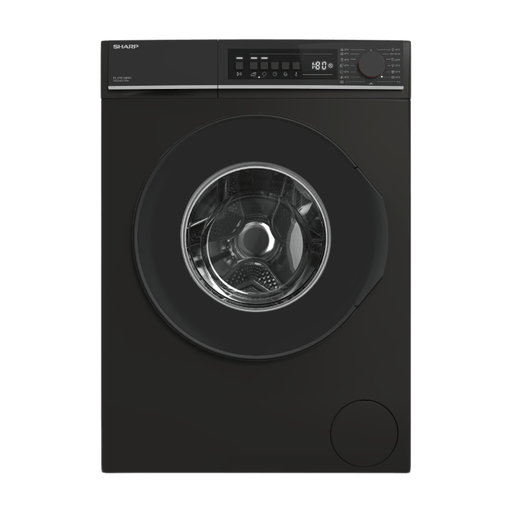
SHARP washing machine ESNFB714BBNACB, black

SHARP ESNFB714BBNACB washing machine, 7 kg, black

A model for household laundry as well as socks; choose a drum capacity to suit your usual load.

Features: 7 kg, 1400 rpm, energy rating A and inverter motor.

View at Joybuy
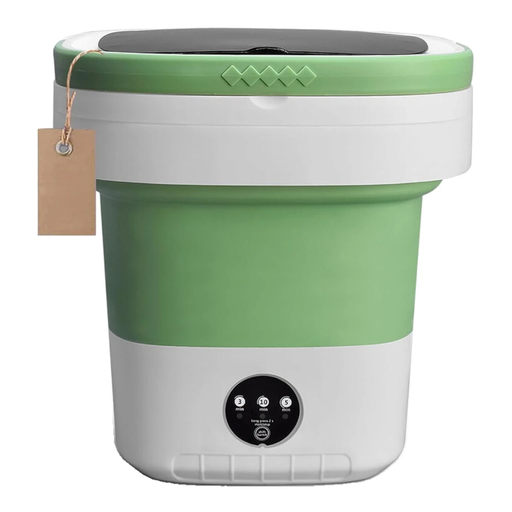
12 L foldable mini washing machine with spin-drying basket, green

Foldable mini washing machine, 12 L, with spin-drying basket, green

The product title lists socks as suitable laundry; this compact model isn’t an obvious replacement for a machine that handles all your household laundry.

Features: 12 L capacity, foldable design and 50 dB.

View at Joybuy

Midea MF110W80BA10/W-NL washing machine, white

Midea MF110W80BA10/W-NL washing machine, 8 kg, white

A freestanding model for anyone who also wants to consider everyday household laundry when choosing.

Features: 8 kg, 1400 rpm and 16 wash programmes.

View at Joybuy
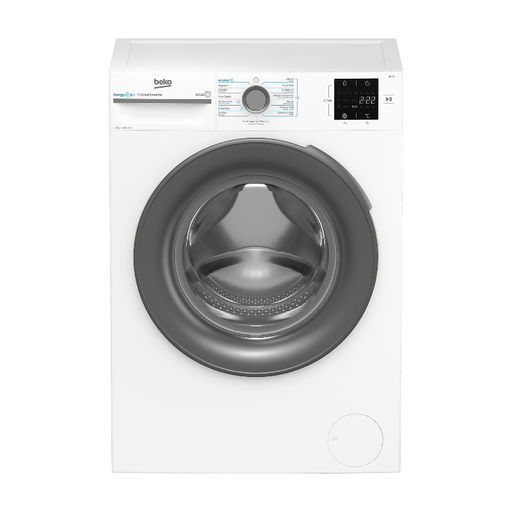
Beko BM3WFU3741S washing machine, silver

Beko BM3WFU3741S washing machine, 7 kg, silver

A front-loader for household laundry; check that the capacity suits your usual loads as well as smaller washes.

Features: 7 kg, 1400 rpm, energy rating C and 15 wash programmes.

View at Joybuy
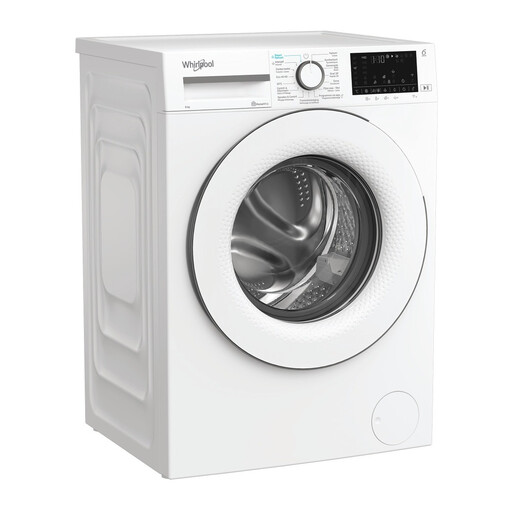
Whirlpool WAM 87W BE washing machine, white

Whirlpool WAM 87W BE washing machine, 7 kg, white

A freestanding machine for household laundry; choose the capacity to suit your usual load.

Features: 7 kg and 1200 rpm.

View at Joybuy

Frequently asked questions

Should cotton socks always be washed at 60 °C after getting wet in the rain?

No. Rain alone doesn’t mean socks need to be washed at 60 °C. Follow the care label and take how soiled they are into account. The European Commission says eco 40-60 is intended for normally soiled cotton that can be washed at 40 °C or 60 °C according to the label.

Can a quick programme replace a normal cotton wash?

Not without checking the conditions for that specific programme. Check the manual for the permitted load and intended use, and follow the care label on your socks.

What should I check when installing and maintaining a washing machine?

Measure the available space and follow the installation instructions for your chosen model. Milieu Centraal recommends running a 60 °C wash about once a month to help prevent detergent and dirt build-up and unpleasant smells; check your machine’s instructions for this too.

Am I automatically entitled to exactly two years’ legal guarantee in the Netherlands?

No. According to the Dutch government, the Netherlands has no fixed statutory guarantee period; you’re entitled to a product that works properly, and the retailer is your point of contact if there’s a fault. A manufacturer’s guarantee is separate.

Is an energy label compulsory, and where can I take my old washing machine?

The Dutch government states that washing machines must have an energy label. You can hand in an old, similar appliance at the shop or online retailer where you buy a new one, or at your local council recycling centre.
