
Washing muddy school clothes
You want to wash cotton shorts after a busy week without overlooking the care label or how soiled they are. Consumentenbond recommends taking the care label and suitable programmes into account.


Choose the drum capacity based on your usual sorted weekly wash, not just the shorts. Always follow the care label and check the load limit for each programme. Eco 40-60 is designed for normally soiled cotton that the care label says can be washed at 40 °C or 60 °C. A standard cotton programme may be more suitable depending on how soiled the clothes are or how much time you have. Before buying, measure the installation space and delivery route.
You want to wash cotton shorts after a busy week without overlooking the care label or how soiled they are. Consumentenbond recommends taking the care label and suitable programmes into account.
You wash the shorts with other suitable clothes and need a drum that can handle your usual sorted load. Consumentenbond and Milieu Centraal highlight the importance of choosing the right capacity.
You want to choose a capacity that suits your usual wash and check that the appliance and delivery route will fit. Bosch and Samsung recommend taking the available space and dimensions into account.
Start with the care label and your usual sorted weekly load. Then consider the programmes, energy and water use, and available space.
| What to consider | What to look for when buying | Who is this important for? |
|---|---|---|
| Washing cotton with care | Check the care label and compare the cotton programmes with Eco 40-60 and the permitted load sizes. | I want the shorts to come out clean without ignoring the care label or how soiled they are. An estimated 36% of consumers put cleaning performance and fabric care first. |
| Capacity for the weekly wash | Compare the drum capacity with a typical dry load and check the maximum load for the programmes you use. | If I wash the shorts with other suitable, sorted clothes, the drum needs to suit my usual weekly load. Capacity is the top priority for an estimated 29% of consumers. |
| Energy and water use | Compare energy use per cycle and programme duration on the EU label, using the same measurement basis. | I want to be able to take energy and water use into account for regular washes. An estimated 21% of consumers say this is their main concern when buying. |
| Space and connections | Measure the installation space and doorways; check the location of the water and waste connections. | If space or the delivery route is tight, check the dimensions and connections first. An estimated 14% of consumers say installation is their top priority. |
The shorts may make up only part of your regular wash. The maximum load can also vary from one programme to another.
First, work out the size of your usual dry, sorted weekly load, then compare it with the drum capacity and programme load limits.
A drum that is the wrong size for your usual weekly wash could make your laundry routine impractical.
The name does not refer to a temperature that you can set yourself. In the tests cited, Consumentenbond found that Eco 40-60 rinsed detergent out less effectively than the standard cotton programme.
Follow the care label and choose a programme based on how soiled the clothes are and the rinse you want. If time is short, also compare the duration and permitted load for the specific programme.
The EU label shows energy use and programme duration based on specific test conditions. A special programme may also have a lower maximum load.
Compare energy use on the same basis, and check the duration and permitted load for the programmes you actually plan to use.
A programme that does not suit your load or available time could mean splitting your washing across more cycles.
The Bosch Serie 2 WGE02404NL is a front-loading washing machine with a 7 kg capacity. Consider it if you want to check whether that size suits your usual weekly wash.
The AEG 6000 ProSense LF628600 is a front-loading washing machine with an 8 kg capacity. It may suit you if you want to take varying load sizes and automatic adjustment into account.
The Samsung WW80CGC04AAHEN is a front-loading washing machine with an 8 kg capacity and SmartThings features. Consider it if app control matters to you.
The Miele WEA135 WCS 8kg Active is a front-loading washing machine with AddLoad, which lets you add laundry part-way through a cycle.
The models shown have a stated capacity of 6 to 10 kg. Compare this with your usual sorted weekly wash.
 Image unavailable
An option to compare if 8 kg suits your usual sorted weekly wash.
The product name lists an 8 kg capacity, 1400 rpm and 16 wash programmes.
 Image unavailable
Before choosing this model, compare its capacity with the size of your usual weekly load.
The product name lists an 8 kg capacity, 1351 rpm, energy class A and a steam function.
 Image unavailable
This capacity may suit a mixed weekly wash if it matches your usual sorted load.
The product name lists an 8 kg capacity, 1400 rpm and energy class A.
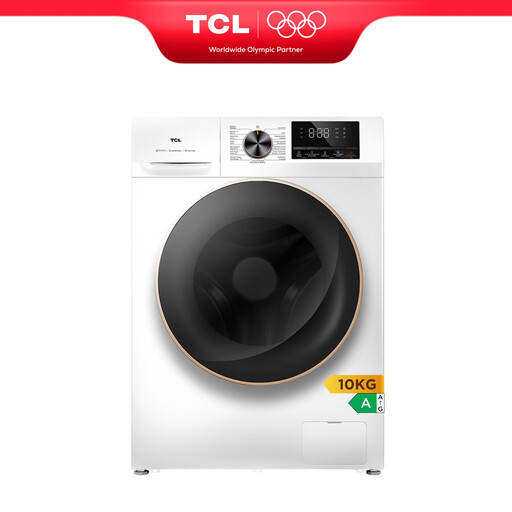 Image unavailable
The larger stated capacity is worth comparing if it suits your usual sorted weekly wash.
The product name lists a 10 kg capacity, a 15-minute quick wash, a steam function and energy class A.
 Image unavailable
The stated capacity and depth are useful points of comparison if you have a smaller load and limited installation space.
The product name lists a 6 kg capacity, a depth of 45 cm, a 15-minute quick wash and energy class B.
No. Eco 40-60 is designed for normally soiled cotton that the care label says can be washed at 40 °C or 60 °C. The programme name does not mean you set the temperature to 40 °C or 60 °C yourself. If the clothes are more soiled, also compare the standard cotton programme.
Follow the instructions for your chosen model. For the connections, Bosch recommends, among other things, securing the inlet and drain hoses and checking the water supply for leaks. Also measure the delivery route and installation space in advance.
On the EU label, compare the stated electricity use per 100 cycles and water use per cycle, using the same stated Eco 40-60 test basis. Actual costs depend on how often you wash, which programme you use and your own energy and water tariffs.
According to the Dutch government, you are entitled to a product that is fit for purpose in the Netherlands, and the retailer is your point of contact if there is a fault. The Netherlands has no fixed statutory warranty period. For distance purchases, you are also often entitled to a 14-day cooling-off period; check the applicable terms and conditions.
For household washing machines covered by EU rules, the energy label has used a scale from A to G since 1 March 2021. According to the European Commission, the label includes information such as energy use, water use and programme duration. Check the label and product information sheet for the exact model.