What should you look for?
Start with the care labels on your socks, then check whether the drum capacity and available space suit your everyday laundry.
| What to consider |
What should you check? |
Who is this important for? |
| Protecting your socks |
Check the exact model for a wool or delicates programme, along with adjustable temperature and spin speed. Always follow the care label first. |
If I wash wool or blended walking socks, I want a programme that suits the care label and fibres. Around 36% of consumers say caring for materials is their top priority. |
| Muddy laundry and programmes |
Check which programmes the model actually has and what the manual says about washing the fabric in question. A stain function doesn’t guarantee a clean result. |
After walks, I want to be able to wash socks and other muddy clothes according to their fabric and care instructions. For around 29% of consumers, dealing with muddy laundry comes first. |
| Suitable drum capacity |
Compare the load capacity with a typical sorted laundry load and measure the space where the machine will go. The stated maximum capacity applies to cotton; delicates may have a lower load limit. |
If I mainly use the machine for everyday clothes, I want the capacity to suit those loads and the appliance to fit in the available space. Around 21% of consumers prioritise capacity and space. |
| Consumption for your laundry habits |
Compare kWh per 100 eco cycles and water consumption for the labelled cycle. Check the manual for figures on other programmes if you often wash wool or delicates. |
If I expect to do a lot of washing, I want to compare consumption for the programmes I actually use. Around 14% of consumers put consumption first. |
Washing machines at Joybuy
These Joybuy products are washing machines with a stated wool or delicates programme, for anyone washing walking socks alongside everyday clothes. Before use, check that the programme and settings suit the care label on your socks.
 No image available
Midea MF110W80BA10/W-NL
Worth considering if you want a stated wool programme as well as capacity for everyday laundry; first check whether the care labels say your socks are machine washable.
The product information lists an 8 kg capacity, 16 programmes and a wool and delicates programme.
Joybuy
 No image available
Beko BM3WFU3741S
An option to compare if you’re looking for a wool programme and a separate stain function; these features don’t guarantee that mud will be removed.
The product information lists a 7 kg capacity, 15 programmes and a spin speed of 1400 rpm.
Check the programme settings on the exact model and the care label on your socks.
Joybuy
 No image available
Comfee' CFP01EW70W-JD
Worth considering if a stated wool programme and limited space in terms of depth are important factors for you.
The product information lists a 7 kg capacity and 16 programmes, including a wool programme; the product name states a depth of 400 mm.
Joybuy
 No image available
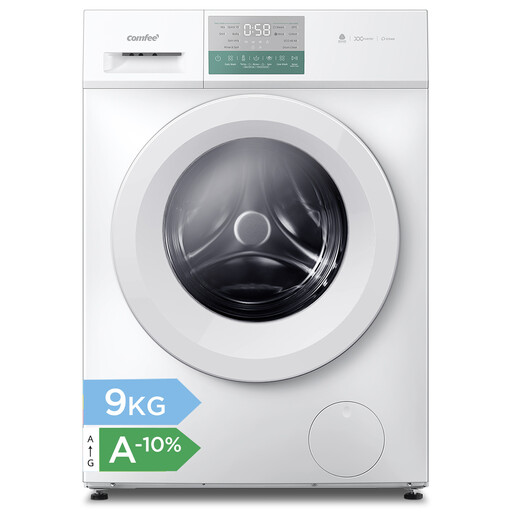
Comfee' CFP03EW90W-HR
Worth comparing if you want a wool programme for your socks and expect to wash larger everyday loads; adjust the load to suit the programme you choose.
The product name states a 9 kg capacity. The product information lists 12 programmes, including a wool programme.
Joybuy
 No image available
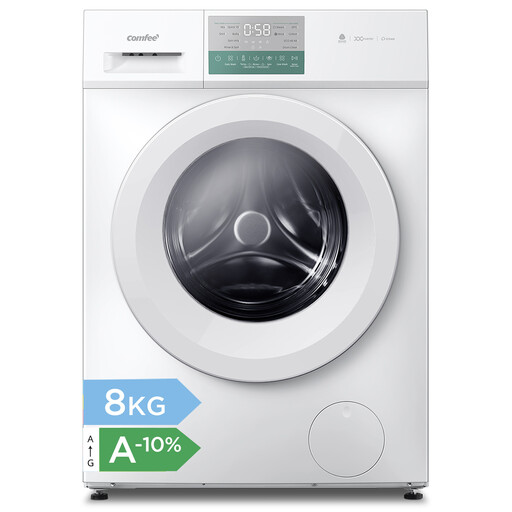
Comfee' CFP03EW80W-HR
Worth considering if you want a wool programme as well as capacity for everyday laundry; check the load limit for the programme you choose.
The product name states an 8 kg capacity. The product information lists 12 programmes, including a wool programme.
Joybuy
Frequently asked questions
Can I wash wool walking socks on Eco 40-60?
Don’t rely on the energy label alone. The European Commission describes Eco 40-60 as being for normally soiled cotton laundry that can be washed at 40 or 60 °C according to its care label. Read the care label on your wool socks and only choose a programme that matches it.
What should I check before using the washing machine for the first time?
Follow the installation instructions for the model you’ve bought, including how to connect it and remove the transit bolts. Bosch warns that leaving the transit bolts in place can prevent the drum from turning during use.
What maintenance matters if I often wash at low temperatures?
Keep the machine clean as instructed in the manual and use the correct amount of detergent. Consumentenbond recommends running a genuinely hot wash periodically to prevent build-up and odours; Eco 40-60 is not the same as a wash that stays hot for long enough. This advice doesn’t mean you should wash delicate socks at a high temperature.
Who should I contact if the machine develops a fault, and what should I do with the old one?
For a consumer purchase in the Netherlands, the seller must provide a solution if a product is faulty; a manufacturer’s guarantee doesn’t replace your statutory rights. According to the Dutch government, you can take an old appliance to the shop or online service where you buy a new, similar appliance, or to your local recycling centre. Ask the seller about the practical arrangements for collection and installation.
Does a new washing machine in the Netherlands have to carry an energy label?
Household washing machines covered by EU energy-labelling rules must meet EU energy-labelling requirements. The Dutch government describes energy labels for household appliances as compulsory. This doesn’t mean you, as the buyer, have to choose an A-rated machine.


