What should you look for when buying?
First, choose a machine to suit your usual total wash load. Then compare noise, water protection, installation requirements and consumption using the specifications for the exact model.
| What to consider |
What should you check? |
Who should pay particular attention? |
| Noise and vibration |
Compare the spin noise using the same label basis and check whether you have a firm, level surface. |
If I live upstairs, I want to know how noisy the spin cycle is and whether the machine can stand securely. An estimated 25% of consumers put noise and vibration first. |
| Leaks and water protection |
Check the inlet hose protection, any base sensor and the overflow protection separately, and inspect the connections and drainage. |
If water could reach rooms below, I want to know which protective features the exact model actually has. An estimated 25% of consumers put leak prevention first. |
| Drum and cotton programme |
Compare the load capacity with a typical mixed load and check the care label and available programmes. |
For small cotton loads, I want to be able to wash shorts with suitable clothes without choosing an unnecessarily large drum. An estimated 20% of consumers mainly look for a capacity that suits their cotton loads. |
| Delivery and installation |
Measure the machine, doorways, stairs and alcove, including space for connections; ask what delivery to your floor and installation include. |
If my washing machine needs to go upstairs, I want to know in advance whether the route and installation space are suitable. An estimated 15% of consumers put installation and access first. |
| Energy and water consumption |
Compare the EU label based on the stated Eco 40–60 programme and check which programme suits your care label and load. |
If I do laundry regularly, I want to take consumption into account alongside capacity and programmes. An estimated 15% of consumers put consumption first. |
Washing machines at Joybuy
This selection includes a compact mini washing machine for small loads and front-loading machines for mixed loads. See which capacity suits your usual load and check that the dimensions and programmes work for your needs.
 No image available
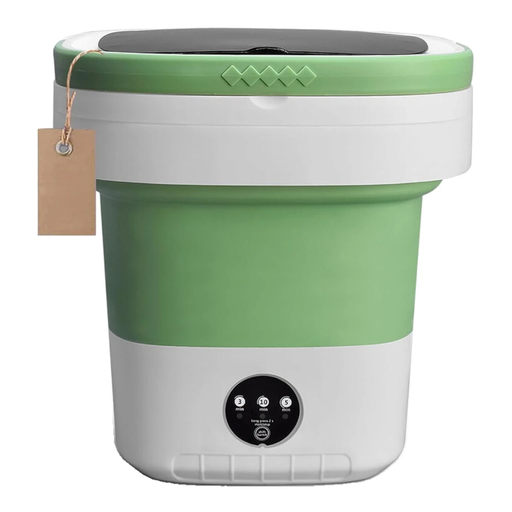
12L Foldable Mini Washing Machine
Could suit very small loads; check that the maximum load is suitable for your shorts and any other clothes.
The product information lists a capacity of 12 litres, a maximum load of 1,5 kg, a foldable design and a separate spin-drying basket.
View at Joybuy
 No image available
Midea MF110W80BA10/W-NL
A front-loading machine to consider if its capacity suits your usual mixed loads; check the noise level and water protection for your installation space.
The product information lists 8 kg, 1400 rpm, a spin noise level of 72 dB, noise class A, AquaStop, and cotton and Eco 40–60 programmes.
View at Joybuy
 No image available
Candy GD 48B9-S
The listed capacity could suit mixed loads; if you live on an upper floor, compare the spin noise level with other machines on the same label basis.
The product information lists 8 kg, Eco 40–60, a spin noise level of 69 dB(A) and noise class A. The product name lists 1351 rpm.
View at Joybuy
 No image available
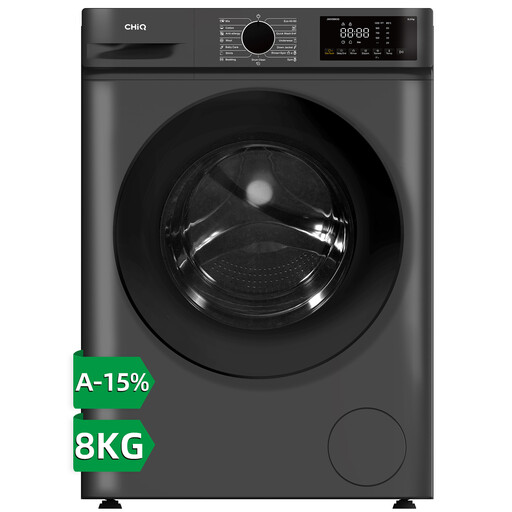
CHiQ JW85883G
A front-loading machine to compare if the depth of your available alcove is a key constraint; remember to check the space needed for connections too.
The product information lists 8 kg, 1400 rpm, 16 programmes and a cabinet depth of 52 cm.
View at Joybuy
 No image available
Beko BM3WFU38412CW
The cotton and Eco 40–60 programmes are worth comparing with the care label; take the listed noise level into account if the machine will be close to living areas.
The product information lists 8 kg, 1400 rpm, cotton and Eco 40–60 programmes, a spin noise level of 76 dB(A), noise class B and a depth of 54,6 cm. The product name lists energy class A.
View at Joybuy
Frequently asked questions
Which programme should I use for cotton shorts?
Check the care label first. For normally soiled cotton that can be washed at 40 °C or 60 °C according to the label, Eco 40–60 is a suitable option. For other care labels or circumstances, choose an appropriate cotton programme and temperature. The programme name doesn’t mean every load is washed at 60 °C.
Is a low dB(A) figure enough to avoid disturbing the neighbours below?
No, a low figure on the label alone can’t guarantee that. The label compares noise during the spin cycle under standardised conditions, but a firm, level and stable installation is important too. If noise is a concern, practical arrangements with your neighbours may help; check your building’s rules as well.
What should I check when arranging delivery and connection on an upper floor?
Measure the route upstairs and the installation space, check the water supply and drainage, and ask what delivery and installation include. The Consumers’ Association recommends a stable, level surface and highlights getting the machine upstairs as something to consider when arranging installation.
Do I need permission to have a washing machine in a rented home?
Buying a washing machine isn’t the same as carrying out building work. The Government of the Netherlands says you don’t need your landlord’s permission for a change that can be reversed without much expense, but you do for renovation work. Consider any changes to connections or the bathroom separately and, if necessary, agree them with your landlord in advance.
How do I compare washing machine energy labels?
Compare the label information on the stated Eco 40–60 basis, but don’t treat it as a prediction of consumption for every programme. The European Commission says that the EU label for household washing machines has used the A to G scale since 1 March 2021.


