
Washing uniforms made from different fabrics
You wash school uniforms with different care labels and want to compare programmes for cotton, synthetics and delicates. The Consumentenbond recommends using garment care labels as your starting point.


Start by choosing a washing machine with programmes that suit the care labels and a capacity that matches a typical sorted load; a larger drum isn’t automatically a better choice. Then measure the route in and the space at your new home, check the connections, and compare programme times and energy ratings. If you’ll be moving the machine again, remember to arrange safe transport and installation.
You wash school uniforms with different care labels and want to compare programmes for cotton, synthetics and delicates. The Consumentenbond recommends using garment care labels as your starting point.
You want to know before buying whether the machine will fit through the entrance and can be connected in its new location. The Consumentenbond also highlights the need to allow space for hoses and the door, and to secure the drum for transport.
You want the uniforms ready before the move, so you’re comparing programme times. The Consumentenbond recommends choosing wash programmes and features to suit how you use the machine; a quick programme won’t necessarily suit every fabric or level of soiling.
| What to consider | What to look for | Who should pay particular attention? |
|---|---|---|
| Fabric care | Read the care labels and check the programmes and permitted load for each type of fabric. | If your uniforms are made from different fabrics, you’ll want to choose a suitable wash for each care label. Fabric care is the top buying priority for around 31% of consumers. |
| Fit and transport | Measure the space and route in, allowing for hoses and the door; check the connections too. | When moving home, you’ll want to know in advance whether the machine will fit through the entrance and can be connected in its new location. Around 25% of consumers prioritise fit and transport. |
| Timing | Check the duration, maximum load and permitted fabrics for a quick programme; allow for drying time too. | If the uniforms need to be ready before you leave, you’ll want to factor both the programme and drying times into your plans. Time is the top buying priority for around 25% of consumers. |
| Energy use and drum size | Choose a capacity to suit a typical sorted load and compare energy label figures on a like-for-like basis. | You don’t want a larger drum than your usual load requires, or to mistake the energy label figures for the consumption of every programme. Around 19% of consumers prioritise energy efficiency. |
The stated load capacity applies to cotton washing. A larger drum won’t necessarily be more energy-efficient if you often only fill it part-way after moving.
Choose a capacity to suit a typical sorted load, rather than basing your decision only on the temporary pile of laundry.
Care labels may call for gentler treatment, and the conditions for quick programmes vary by model.
Sort the uniforms and check which fabrics, levels of soiling and load sizes are permitted for each programme.
Depth, door swing, hoses, the route in and connections also determine whether the machine will work in its new location.
Measure the full route and the space where the machine will go. When transporting it, follow the model’s instructions for securing the drum.
Energy label figures are based on the eco 40-60 programme and don’t directly show the consumption of other programmes, according to Energielabel.nl.
Compare label figures on a like-for-like basis and look separately for information about the programmes you use regularly.
The freestanding front-loading BM3WFT3841W is a specific model you can compare with your uniform washing for its programmes, dimensions and capacity.
The Serie 4 WAN2829ZNL is a freestanding front-loading model to compare if its standard 8 kg capacity suits your laundry and the space at your new home.
The W1 range is an option to compare if you want to weigh up specific fabric-care and control features against what you actually need.
These freestanding washing machines are options to compare for their capacity and the space available at your new home. Before buying, check the full model specifications, wash programmes and dimensions.
 No image available
A freestanding front-loader to compare if you want to check the capacity against the available space before you buy.
According to the product name: 9 kg, 1400 rpm, energy rating A and an NL/FR control panel.
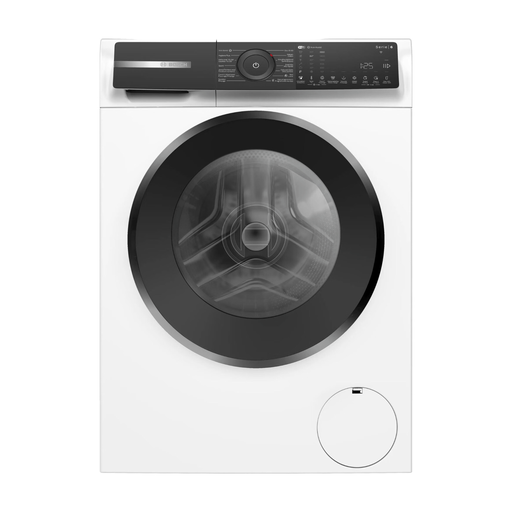 No image available
A freestanding front-loader to compare if you want to check whether its capacity suits your typical load.
According to the product name: 10 kg, 1600 rpm, energy rating A and an NL/FR control panel.
 No image available
A freestanding washing machine to compare if its stated capacity and dimensions need to suit your circumstances.
According to the product name: 8 kg, 1400 rpm and 16 wash programmes.
 No image available
A freestanding front-loader to compare if you want to match the capacity and available space to how you use it.
According to the product name: 8 kg, 1400 rpm and energy rating A.
 No image available
An option to compare if available depth is an important consideration; also measure the route in and space for connections.
According to the product name: 6 kg, 45 cm deep, a 15-minute Quick Wash programme and energy rating B.
Start with the care label on each garment; it tells you, among other things, which temperature and treatment are suitable. Then sort by colour and fabric type, and pre-treat light stains if needed.
Disconnect the water and power supplies, drain any remaining water and secure the drum for transport as instructed in the model’s manual. Keep the machine upright as far as possible, and check the space for hoses, the door and connections again in its new location.
The energy label helps you compare the eco 40-60 programme, but it doesn’t show the energy use of other programmes. Check the manual for the exact model for information about its quick programmes.
Compare the energy label for washing machines, but don’t use the figures as a prediction for every programme. The Dutch Government states that retailers are legally required to supply a product that is of satisfactory quality. When you buy a new, similar machine, the shop must also take back the old appliance, according to the Dutch Government.