
Property manager with a short changeover
You wash uniforms or other laundry between stays and want to know what a quick programme can really handle.


Start by checking the uniforms’ care labels and how much washing you expect to do per load: a quick programme is only suitable if the fabric and load size allow for it. Then compare programme duration, dimensions, water protection and energy label. A washer-dryer can save space, but it isn’t necessarily the quickest option when you have several loads to get through. The Consumers’ Association (Consumentenbond) points out that washer-dryers dry smaller loads than they wash and use more energy than a separate washing machine and tumble dryer.
You wash uniforms or other laundry between stays and want to know what a quick programme can really handle.
You wash uniforms and possibly bedding too. Choose a drum capacity that suits the loads you actually expect to wash.
You want to be able to select programmes easily and take account of the care instructions for different garments.
Start with the care labels and the amount of washing you usually need to do at each changeover. Then compare programme duration and the space available for installation, so speed and capacity reflect how the machine will actually be used.
| What to consider | What should you check? | Who should pay particular attention? |
|---|---|---|
| Washing time between stays | Check the programme duration with your chosen settings and make sure the fabrics and load size are suitable. | If you need uniforms ready again quickly, check whether a quick programme is suitable for the fabric and load. Around 31% of consumers prioritise the time available between changeovers. |
| Care instructions | Check the maximum temperature on the garment label and compare suitable delicate, synthetic or mixed-load programmes. | If you’re washing uniforms made from different materials together, you’ll want to follow the care labels. Around 25% of consumers therefore prioritise fabric care. |
| Amount of washing per load | Compare the rated capacity with your actual loads, and check the limit for the programme you plan to use. | If you wash bedding as well as uniforms, the key consideration is how much laundry needs to fit in the drum at each changeover. Around 25% of consumers consider the right capacity most important. |
| Installation space and risk of leaks | Measure the available space, including connections and the door opening. Also check the model’s water protection system. | If the machine will be installed in a confined space or a leak could cause damage there, check the installation requirements and protection in advance. Around 19% of consumers prioritise installation space and the risk of leaks. |
Programme duration, permitted load size and suitable fabrics depend on the settings and the model. A quick-sounding programme name alone doesn’t tell you whether you can wash a full drum of uniforms on that programme.
Before buying, check the model’s manual and compare the programme’s permitted load size and fabric types with the uniforms’ care labels.
A washer-dryer may be able to dry a smaller load than it can wash. The Consumers’ Association (Consumentenbond) highlights this as something to consider when comparing one with a separate washing machine and tumble dryer.
Check the washing and drying capacities separately, and plan how many loads need to be ready between stays.
A smaller drying capacity may mean extra drying cycles and a longer turnaround time.
Water protection systems come in different forms. Consumer protection when buying a machine for holiday lets can also depend on whether the contract is mainly for private or business use.
Check which protection system the model has, what installation involves and which contract and service terms apply to your use.
The Dutch Serie 6 front-loaders include the WGG244FSNL, with a rated capacity of 9 kg. It’s an option for property managers who regularly wash larger loads.
The LR86CB86 is an 8 kg front-loader to consider if a specific quick programme is important to you.
The B3WM4841W2 is an 8 kg front-loader with programmes for delicate, mixed and synthetic loads, among others.
The W1 WWE380 WCS PWash&Steam&8kg is an 8 kg front-loader to compare if model-specific quick and care features are relevant to you.
This selection of Joybuy products includes front-loaders and a washer-dryer for uniforms and varied laundry in a holiday let.
 Image unavailable
An option to consider if you need to wash and dry with one appliance; bear in mind the separate capacities.
 Image unavailable
A front-loader to compare if you’re looking for a 9 kg drum and want to weigh up different wash programmes for your needs.
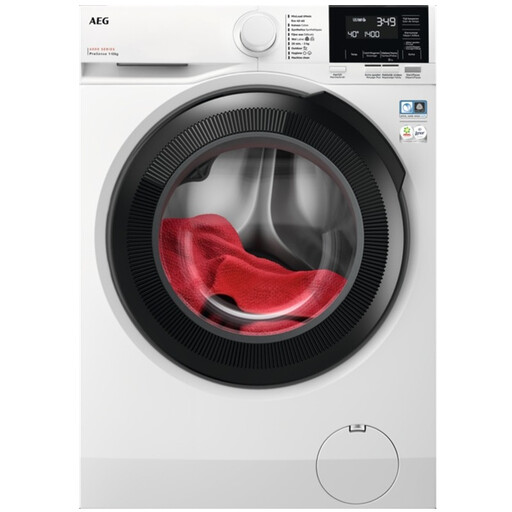 Image unavailable
A front-loader with a larger rated capacity to compare if you wash bigger loads as well as uniforms.
 Image unavailable
An 8 kg front-loader to compare if you want to match the drum size to varying load sizes.
 Image unavailable
An 8 kg front-loader to compare if you’re looking for a machine for uniforms with different care requirements.
No. Check the garment label first: the number in the wash tub shows the maximum temperature, and bars underneath indicate that a gentler wash is needed. Then check the washing machine manual to see which fabrics and load sizes are suitable for the quick programme.
Measure the installation space and check the water supply, drainage and electrical connection. When buying, ask what installation includes and consider the water protection system in light of the possible consequences of a leak in that location.
Clean the machine according to the maintenance instructions and keep an eye out for blockages. The Consumers’ Association (Consumentenbond) recommends running a wash at 60 °C regularly; don’t use uniforms for this if their care labels don’t allow that temperature.
Not automatically. According to ACM ConsuWijzer, consumer protection can depend on whether the contract is mainly for private or business use; that protection doesn’t apply if the use is predominantly business-related. Check in advance which contract and service terms apply to your situation.
An energy label is compulsory for household washing machines. The European Commission states that the EU scale for this product group has run from A to G since 1 March 2021. Compare details on the label, including energy use per 100 cycles, water use per cycle, programme duration and noise.