
Shopper with limited space
You want to find out whether width, depth or the space needed to open the machine is the main constraint. The Consumentenbond also recommends allowing for hoses, the door and ventilation.


Start by measuring the available width and depth, as well as the space needed to open the machine. A slimline front-loader is a good fit when depth is limited, while a top-loader is worth considering if width and space in front of the machine are the main constraints and the lid can open freely. Next, choose a programme and load size that suit the care labels on your tracksuits and your usual washing. The maximum capacity does not automatically apply to synthetics. Only then compare energy use, spin noise and any installation services.
You want to find out whether width, depth or the space needed to open the machine is the main constraint. The Consumentenbond also recommends allowing for hoses, the door and ventilation.
You want to take the care label, a suitable programme and its maximum load into account, rather than looking only at the stated drum capacity. The Consumentenbond recommends following the care label and distinguishes between the capacity for cotton and that for delicate synthetics.
You regularly wash smaller, sorted loads and want the capacity and programmes to suit what you actually wash. Milieu Centraal recommends considering factors such as size and energy use.
Start with the dimensions and loading type, then check that the programmes and load sizes suit your clothes and washing routine.
Best for: a laundry area where depth is the main constraint, with enough room in front of the machine for the door to open.
Bear in mind: a shallower machine is not necessarily narrower; check the space needed for connections and the door, too.
Best for: a space where width and clearance in front of the machine are the main constraints.
Bear in mind: the lid must be able to open freely above the machine.
Best for: a laundry area with enough room for the machine, hoses and an opening door.
Bear in mind: a larger drum is not necessarily practical if you usually wash small loads.
| What to consider | What to check before buying | Especially important if |
|---|---|---|
| Fit and opening space | Measure the width, height and depth; allow for hoses and the space needed for the door or top lid. | I have limited space and want to know which dimension is the constraint before choosing a loading type. Around 36% of consumers prioritise physical fit. |
| Fabric care | Check the suitable programme, temperature and maximum load in the manual. | I wash synthetic tracksuits and want to follow the care labels rather than assume that every programme is suitable. Around 29% of consumers put clothing care first. |
| Capacity and washing routine | Compare your usual sorted load with the capacity of the programme you want to use. | I often wash smaller loads and want to choose a drum that suits my routine. Around 21% of consumers focus mainly on how capacity fits their washing routine. |
| Energy use and noise | Compare energy use and spin noise on the energy label, and check which installation services are included. | My laundry area is close to my living space, so I also want to know how washing affects energy use and noise. Around 14% of consumers focus mainly on running costs and noise. |
A model can be shallower and still just as wide. The door, hoses and ventilation clearance also affect where you can install it.
Compare the external dimensions and the space needed for connections and opening with your own measurements before choosing a model.
The stated capacity applies to cotton laundry; delicate synthetics may have a lower maximum load for their programme.
Check the maximum load for the programme you want to use for your tracksuits.
The Joybuy listing for the Beko BM3WFU3741S states energy class C and silver in the title, but energy class A and white in the description. Beko lists its model as energy class A and white.
Before buying, check the exact version and its corresponding product information sheet.
Installation or disposal may involve practical considerations or extra costs, in addition to buying the machine.
Before checkout, check which delivery, connection and disposal services are included with your order.
The CO4474TWM6/1-S is an example of a front-loader with a relatively shallow depth: 600 × 454 × 850 mm, with a stated capacity of 7 kg.
Beko lists the freestanding BM3WFU3741S with a capacity of 7 kg, a width of 60 cm and a depth of 49.6 cm. The brand also mentions a programme for synthetics.
The LTR7STEAM is an example of a top-loader with a stated capacity of 7 kg.
Bosch lists the WGJ234A7NL with a capacity of 8 kg and dimensions of 845 × 598 × 590 mm.
These products range from compact machines for small, separate washes to front-loaders with a variety of capacities and depths. Compare the stated capacity and features with the care label, your usual load and the space available.
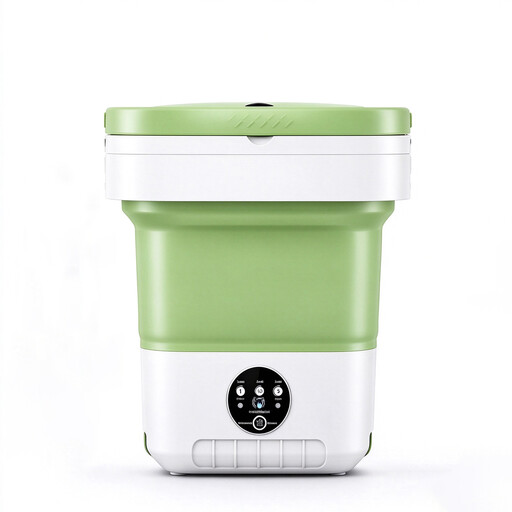 Image unavailable
It may be worth considering for small, separate washes; its limited capacity does not automatically make it suitable for a full load of tracksuits.
Capacity: 12 litres; maximum load: 1.5 kg. The product description mentions a spin-drying basket and a foldable design.
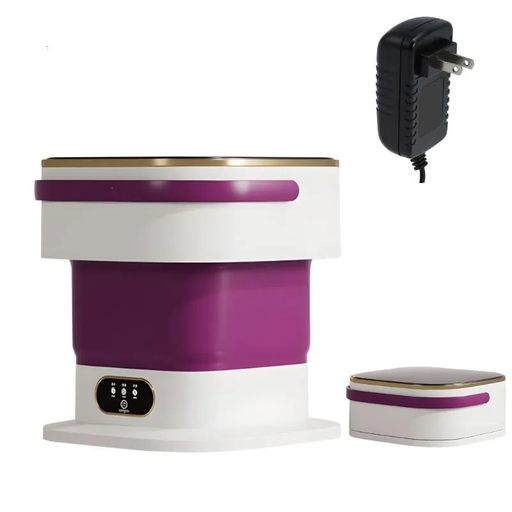 Image unavailable
It may suit small, separate washes if the stated maximum load is right for what you want to wash.
Capacity: 15 litres; maximum load: 1.9 kg. The product description mentions a spin-drying basket and a foldable design.
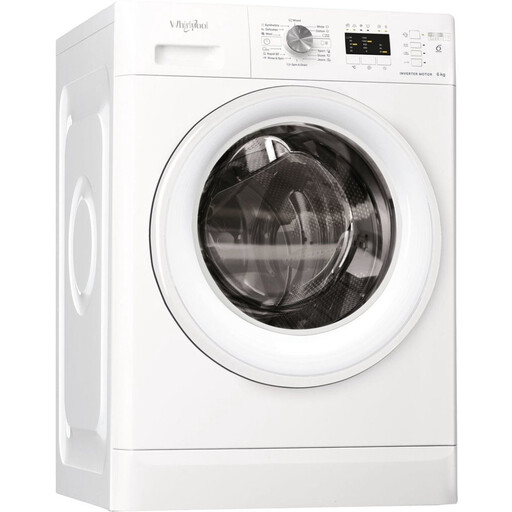 Image unavailable
A front-loader to compare if you’re looking for a conventional model and have plenty of depth available.
Capacity: 6 kg; spin speed: 1200 rpm. The product description lists programmes for wool, jeans and quick washes, among others.
Dimensions: 59.5 × 57.5 × 84.5 cm.
 Image unavailable
The stated depth makes this model worth comparing if space behind the machine is limited; check the width and height, too, as well as room for the door and hoses.
Capacity: 7 kg; depth: 400 mm. The description lists 16 programmes and a 15-minute quick wash for small, lightly soiled loads.
 Image unavailable
The stated depth may be relevant if there is little room behind the machine in your laundry area; check the other dimensions and the programme load for your clothes, too.
Capacity: 6 kg; depth: 45 cm. The product description lists a steam wash, a 15-minute quick wash and automatic adjustment of water and programme duration to the weight of the load.
No, not simply because the machine has that programme. Check the care label first, then consult the manual for the temperature and maximum load for the programme you’ve chosen.
Not necessarily: the stated maximum load applies to cotton laundry. As a general guide, the Consumentenbond recommends using about half that weight for delicate synthetics; the manual sets the limit for the specific programme.
No. According to the European Commission, this programme is intended for normally soiled cotton laundry that can be washed at 40 °C or 60 °C according to its care label. For a tracksuit, check its own care label and the suitable programme on your machine.
Leave room for the hoses and for the door or lid to open, and follow the manual when connecting the machine. The Consumentenbond also recommends running a programme at 60 °C or hotter at least once a month to maintain the machine; this is not washing advice for a tracksuit.
No. According to the Government of the Netherlands, there is no fixed statutory warranty period in the Netherlands: you are entitled to a product that works properly, and the retailer is your first point of contact if something goes wrong. A manufacturer’s warranty is in addition to these statutory rights.