Who is this guide for?

Renters with a tight laundry space

Check that the machine, hoses and open door or lid will fit in the available space. A top-loader is narrower, but you’ll need room above it to open the lid; a shallow front-loader is a better fit when depth is limited. The Consumentenbond points out that you should also allow space for hoses, the door and ventilation.

People who wear synthetic tracksuits

Follow the care labels and check whether the machine has a suitable synthetic or delicate programme. The Consumentenbond recommends a smaller load for synthetic and delicate fabrics than the maximum capacity for cotton.

Renters concerned about noise or leaks

Compare the stated spin noise level and check what water-protection features are included. A stable, level installation can help reduce vibration and noise, so check the installation instructions too.

What should you look for?

What to consider What should you check? Who is this most relevant to?
Space and positioning Measure the width, depth and access route. Also check there’s room for the hoses and to open the door or lid. If my laundry space is tight, I want to be sure the machine can still be opened once it’s connected. Around 36% of consumers prioritise a suitable installation space.
Wash programmes and load capacity Read the care labels and check the synthetic or delicate programmes and their maximum load capacities. I want to wash my tracksuits according to their care labels, rather than relying on the maximum cotton load capacity. Around 29% of consumers put fabric-appropriate washing first.
Noise and water protection Compare the stated spin noise level and check what type of water protection is included. If my machine is close to a living area, or I want to guard against potential leaks, I’ll pay particular attention to these points. Around 21% of consumers focus mainly on noise and water damage.
Running costs Compare energy labels on a like-for-like basis: the label values are based on Eco 40-60 and don’t predict the energy use of a synthetic programme. The European Commission explains EU energy labels for washing machines, while the Consumentenbond clarifies which programme the figures are based on. I want to take ongoing costs into account, but not mistake the label for the energy use of my own wash programme. Around 14% of consumers make running costs their main concern when choosing.

Common mistakes

  • Using the maximum cotton load as a limit for every wash

    The maximum load capacity applies to cotton. The Consumentenbond recommends a smaller load for delicate and synthetic fabrics, so the suitable amount also depends on the programme you choose.

    Check the load capacity for each programme in the manual and compare it with your sorted laundry. A lower maximum load may mean you need to do laundry more often.

  • Measuring only the machine’s depth

    Hoses and an open door or lid also need space. So the cabinet dimensions alone won’t tell you whether the machine will fit and be usable in its intended spot.

    Measure the access route, connection space and clearance on the opening side before choosing a model.

  • Treating the energy label as a guide to energy use for synthetic washes

    The label values are based on Eco 40-60. The European Commission explains EU energy labels for household washing machines; the Consumentenbond stresses that these figures don’t necessarily reflect the energy use of a different programme.

    Compare labels on a like-for-like basis, and don’t use them as a precise cost estimate for washing synthetic fabrics.

  • Taking a single product listing as confirmation of every specification

    The energy class details for the Beko BM3WFU3741S differ on the Joybuy page: the title states class C, while the description states class A. Beko lists this model as class A.

    If the details don’t match, check the product information sheet and the full model number.

Brands to consider

AEG

The AEG LTR7573A is an example of a slim top-loader with programmes for synthetic and delicate fabrics.

  • AEG lists the LTR7573A as 397 mm wide and 903 mm high.
  • You’ll need clearance above the machine to open the lid. The Consumentenbond assesses tested top-loaders as a group; this isn’t an individual test result for this model.

Beko

The Beko BM3WFU3741S is a shallower front-loader for spaces where there’s room for a standard-width machine, but depth is limited.

  • Beko lists this model as 60 cm wide and 49.6 cm deep, with programmes for synthetic and delicate fabrics.
  • A shallower cabinet doesn’t remove the need for space for hoses and an open door. Beko lists a spin noise level of 76 dBA; check any conflicting energy class details against the model number and product information sheet.

Bosch

The Bosch WGE02404NL is a standard-width front-loader for a space that can accommodate a conventional front-loader.

  • Bosch lists the width and depth as 598 and 588 mm respectively, a maximum load capacity of 7 kg, and programmes for delicates and easy-care fabrics.
  • The maximum load capacity doesn’t tell you how much laundry you can put in a synthetic programme. Check the programme’s load capacity and follow the care labels.

Washing machines at Joybuy

This Joybuy selection features front-loaders, including a shallower model. Compare the stated dimensions with the full space available for installation, and choose a programme that suits the care labels on your tracksuits.

AEG LR73S840 front-loader, 7000 Series

AEG LR73S840 7000 Series

A front-loader to consider if a standard-width model will fit in your available space.

Joybuy lists an 8 kg load capacity, 1400 rpm, a spin noise level of 74 dB and dimensions of 84,7 × 59,6 × 57,2 cm. The product name mentions ProSteam.

View at Joybuy
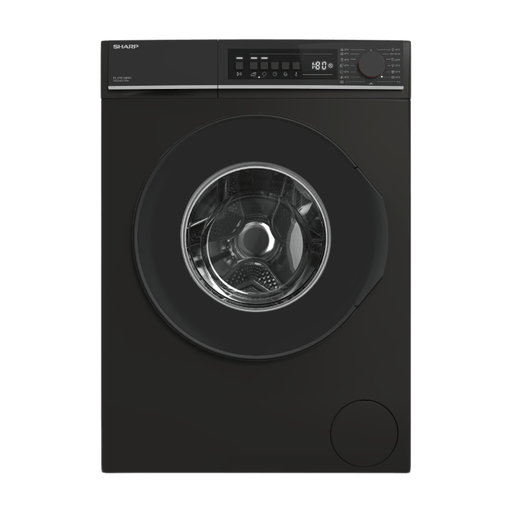
SHARP ESNFB714BBNACB front-loader

SHARP ESNFB714BBNACB

A front-loader to compare if your available space can accommodate a standard-width model.

Joybuy lists a 7 kg load capacity, 1400 rpm, a spin noise level of 77 dB(A) and dimensions of 597 × 845 × 600 mm. The product information lists 15 programmes.

View at Joybuy
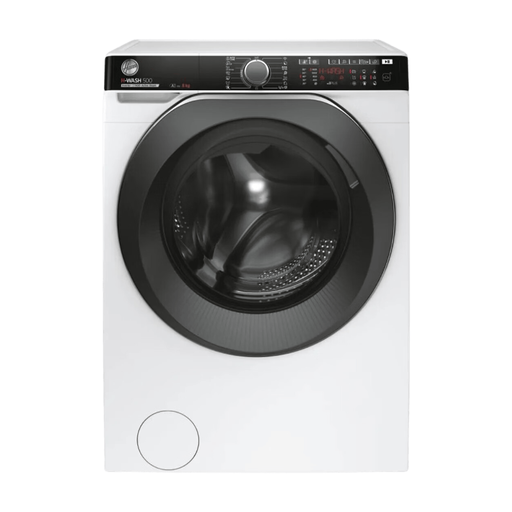
Hoover HWP 48AMBC7/1-S front-loader

Hoover HWP 48AMBC7/1-S

A front-loader to include in your comparison if the stated dimensions suit your laundry space.

Joybuy lists an 8 kg load capacity, 1400 rpm and a spin noise level of 76 dB. The stated width and depth are 600 × 540 mm; the stated depth excluding the door and hoses is 470 mm.

View at Joybuy
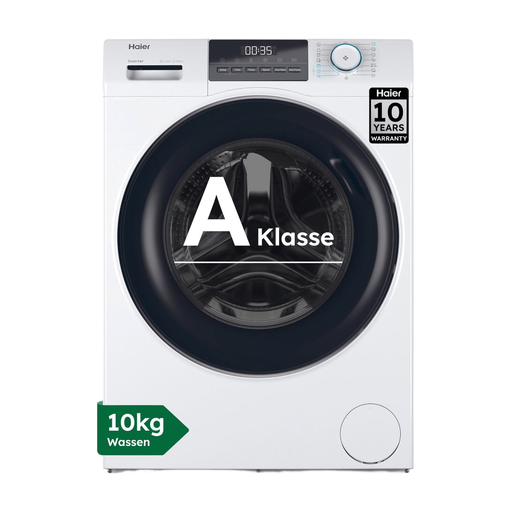
Haier HW100-BP14929A i-Pro 1 front-loader

Haier HW100-BP14929A i-Pro 1

A front-loader to assess based on the space available and the load capacity your laundry needs.

Joybuy lists a 10 kg load capacity, 1400 rpm and 70 dB. The product name mentions an inverter motor and steam.

View at Joybuy
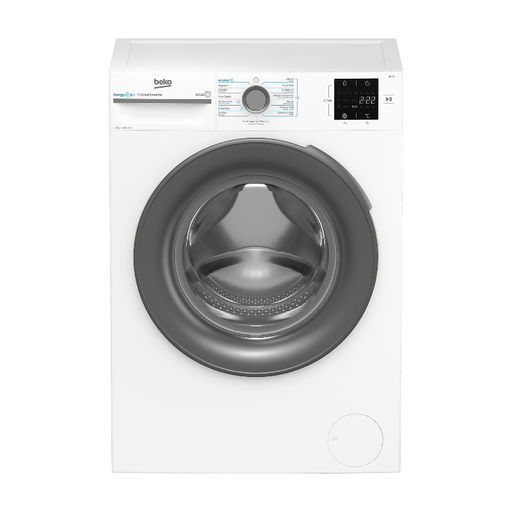
Beko BM3WFU3741S shallower front-loader

Beko BM3WFU3741S

An option to compare if depth is limited but there’s room for a standard-width machine.

Beko lists a width of 60 cm and a depth of 49,6 cm. Joybuy lists a 7 kg load capacity, 1400 rpm, 15 programmes and a spin noise level of 76 dB(A). The energy class details on the Joybuy page conflict; check the product information using the full model number.

View at Joybuy

Frequently asked questions

Can every washable tracksuit be washed on Eco 40-60?

No, not automatically. Follow the care label on each item. If it specifies a synthetic or delicate wash, check whether the machine has a suitable programme. The Consumentenbond also recommends a smaller load for delicate and synthetic fabrics than the cotton load capacity.

What should you consider when installing a washing machine?

Make sure the machine is stable and follow the manual for connections and installation. The Consumentenbond points out that a stable surface can help reduce noise. When measuring, also leave room for the hoses and an open door or lid.

Can I have a new connection installed in my rented home?

It depends on the alteration. According to the Rijksoverheid, you don’t need permission for a minor change that can be reversed without much expense, such as filling a small hole in the wall. Discuss any new permanent connection with your landlord beforehand.

Who is responsible if my washing machine turns out to be faulty?

According to the Rijksoverheid, the retailer is obliged to supply a product that works properly. So, discuss any fault with the retailer; the solution will depend on the circumstances.

Does the shop have to take my old washing machine?

When you buy a new, similar appliance, the Rijksoverheid says that the take-back scheme applies to private purchases: the shop must take your old appliance free of charge. Agree the practical arrangements with the retailer.
