Choose the capacity based on the weight of a typical shared load, not just the number of housemates. The Consumers' Association recommends 5–6 kg for one or two people, or up to 7 kg if a smaller model isn't available; for three or four people, it recommends 7–8 kg. Also compare energy and water use, spin noise and water protection, and check that the programmes suit your towels and any specific washing instructions.
Who is this choice relevant to?
Housemates who do their washing together
If you collect towels and other suitable cotton items for a shared wash, choose the drum capacity based on the weight of the load. The Consumers' Association points out that the stated maximum applies to cotton; other programmes may have a lower maximum load.
Housemates who share the costs
Compare both the purchase price and ongoing electricity and water use. Milieu Centraal and Energielabel.nl explain that the energy label is based on the eco 40-60 programme, so it doesn't show the consumption of every other programme.
Housemates living next to the laundry area
If the machine is near a living or study area, pay attention to spin noise and make sure it is installed securely. The Consumers' Association also highlights water protection, especially if a leak could affect other rooms.
What should you look for when buying?
First, choose a drum that suits the weight of a typical load. Then compare running costs, available space and the programmes you actually need.
Smaller shared loads
A good fit when: one or two housemates usually use the machine, or the load tends to be modest. The Consumers' Association recommends 5–6 kg for one or two people; a model with a capacity of up to 7 kg could be an alternative.
Trade-off: a smaller drum may mean extra washes for larger shared loads.
Larger shared loads
A good fit when: three or four housemates regularly build up loads that make use of a 7–8 kg capacity, as recommended by the Consumers' Association.
Trade-off: make sure the drum won't regularly be half-empty, and measure the available space too.
| What to consider |
What should you check? |
Who is this important for? |
| Suitable capacity |
Weigh a typical shared cotton load and compare it with the drum capacity. Also check the lower maximum loads for other programmes. |
I want to choose a drum that suits a typical shared load, so it isn't regularly too small or half-empty. Around 33% of consumers prioritise a suitable capacity. |
| Shared costs |
Compare kWh per 100 eco 40-60 cycles and litres of water per cycle using the same label basis. Check delivery and installation terms separately. |
If we share the machine and the bills, I want to consider electricity and water use as well as the purchase price. Around 27% of consumers prioritise shared costs. |
| Positioning and noise |
Measure the space and access route, check the connections and compare the spin noise in dB(A). Also check what water protection the model has. |
If the machine is next to a living or study area, I want to know how loud it is when spinning and what impact a leak could have. Positioning and noise are the top priority for around 20% of consumers. |
| Washing programmes |
Check the load capacity for each programme, the care labels and whether a suitable 60°C wash is available if specific instructions require one. |
For towels, I want to know which programme is suitable for a regular wash and which cycle may be needed if there are specific washing instructions. Around 20% of consumers prioritise their washing routine and programmes. |
Common buying mistakes
-
Choosing a large drum just because there are lots of housemates
Load detection doesn't fully adjust consumption for smaller loads. A drum that isn't properly filled can also affect washing results.
Weigh a typical shared load before choosing between 7 and 8 kg. The maximum capacity applies to cotton.
-
Assuming eco 40-60 is a programme that heats the wash to 60 °C
According to Energielabel.nl, the temperature of the eco 40-60 label programme does not exceed 40 °C. Thuisarts advises washing towels used by someone with scabies at 60 °C.
If you have specific health-related instructions, follow them and check the care label. Don't rely on the programme name or a steam function alone.
-
Comparing only the energy rating
Label figures are based on eco 40-60 and don't show the consumption of other programmes. Spin noise and water protection may also matter, depending on where the machine will go.
Compare label figures on the same basis, and check the dimensions, connections and delivery and installation terms before buying.
Also factor in ongoing electricity and water costs, as well as any installation costs.
Brands to compare
Beko
Beko lists the BM3WFU3741S as a freestanding machine with a 7 kg capacity and 1400 rpm.
- The Dutch product page confirms the model name, capacity and stated spin speed.
- Treat Beko's EnergySpin wording as a claim by the manufacturer, and compare the energy label and features of the exact model you're considering.
LG
For its Dutch F4X1008NWH, LG lists an 8 kg capacity, an A energy rating, app features and steam functions.
- LG's product specifications provide information for comparing this model with other machines for larger loads.
- LG's claims about hygiene or quiet operation don't prove that a specific programme replaces a 60 °C washing instruction or will sound quiet in every room.
Bosch
For the Serie 4 WAN2809XNL, Bosch lists a freestanding front-loading machine with an 8 kg capacity and a maximum spin speed of 1400 rpm.
- The official product page provides model details for comparing capacity and features with other 8 kg models.
- The energy costs per cycle shown are calculated using a separate energy tariff; your costs will depend on your own tariff and usage.
Siemens
For the WM14N27TNL, Siemens lists a front-loading machine with an 8 kg capacity and a maximum spin speed of 1400 rpm.
- The model details offer another 8 kg option to compare for suitability in your space and for your needs.
- Check the additional motor warranty against its own terms. It doesn't replace your statutory rights with the seller.
7–8 kg washing machines at Joybuy
These models are aimed at shared loads where a capacity of 7 or 8 kg is being considered. Choose based on the weight of your usual wash and the space available.
 No image available
Midea MF110W80BA10/W-NL, 8 kg
Its capacity is worth considering for larger shared loads.
8 kg; 1400 rpm; 16 washing programmes; 72 dB when spinning; 42 kWh per 100 cycles; AquaStop leak protection.
View at Joybuy
 No image available
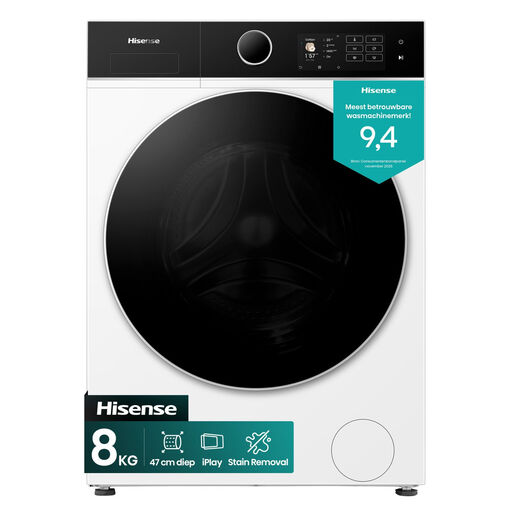
Hisense WF5I8043BWF, 8 kg
An 8 kg model to consider if your shared loads make use of that capacity.
8 kg; 1400 rpm; 18 programmes; 72 dB when spinning; 38 litres of water per cycle; 47 cm deep; ConnectLife app control.
View at Joybuy
 No image available
Candy GD 48B9-S, 8 kg
The capacity makes it worth comparing for larger shared loads; check that its consumption suits the programmes you use.
8 kg; 1351 rpm; A energy rating; 16 programmes; 33 kWh per 100 eco 40-60 cycles; 40 litres of water per cycle; 69 dB when spinning; steam function.
View at Joybuy
 No image available
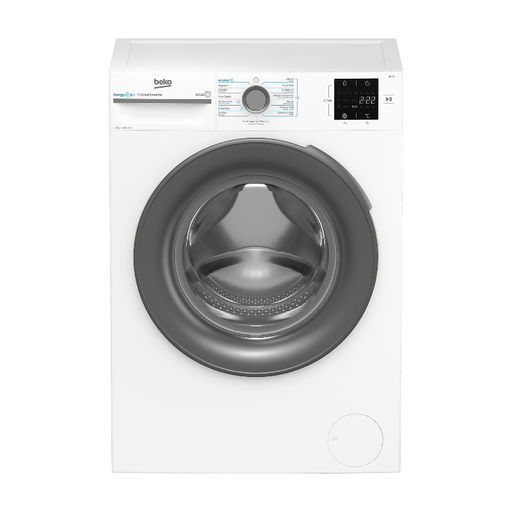
Beko BM3WFU3741S, 7 kg, silver
A 7 kg option to consider if your shared loads are usually modest.
7 kg; 1400 rpm; C energy rating; 15 programmes; 76 dB when spinning; half-load option; Aquasafe overflow protection.
View at Joybuy
 No image available
Comfee CFP01EW70W-JD, 7 kg
A 7 kg model to compare if your shared loads are usually modest; measure the available depth too.
7 kg; 16 programmes; 40 kWh per 100 cycles; 37 litres of water per cycle; 76 dB when spinning; 400 mm deep; 60 °C programme.
View at Joybuy
Frequently asked questions
Do towels in a student house always need to be washed at 60 °C?
No, not every wash. Milieu Centraal recommends using the eco programme for normally soiled laundry, but you should follow any specific washing instructions. Thuisarts advises washing towels used by someone with scabies at 60 °C. According to Energielabel.nl, the eco 40-60 label programme does not exceed 40 °C, so it is not necessarily the same wash.
How do you choose the capacity if housemates don't always do their washing together?
Weigh what usually goes into one sorted wash rather than counting the number of people in the house. According to the Consumers' Association, the maximum capacity applies to cotton; the maximum may be lower for delicates or synthetics.
What should you agree on about installation and maintenance?
Check the dimensions and connection point, and make sure the machine has a stable base; according to the Consumers' Association, this helps reduce noise and vibrations. If you share the machine, also agree who will leave the door and detergent drawer open to dry, and check the door seal and filter.
Does a two-year manufacturer's warranty mean your cover ends after two years in the Netherlands?
No. ACM ConsuWijzer explains that statutory rights apply in addition to any manufacturer's or seller's warranty. If a product breaks under normal use sooner than you could reasonably expect, the seller is responsible for providing an appropriate solution at no cost. What is appropriate depends on the circumstances; there is no fixed two-year statutory limit in the Netherlands.
Does a new washing machine in the Netherlands need an energy label?
The Dutch government describes the energy label as a mandatory label for household appliances; for washing machines, it also shows water use. Compare the figures on the labels for the specific models and check which programmes the figures apply to.


