
Anyone who wants to wash used tea towels hygienically
You regularly use damp kitchen towels and want to choose a suitable wash programme, using the care label as your guide.


Choose a washing machine based on your usual full load and the space available, rather than just a few tea towels. Voedingscentrum advises washing used tea towels at 60 °C if their care label allows it; Consumentenbond warns that Eco 40-60 is not necessarily the same as a 60 °C wash. Compare energy labels on a like-for-like basis, as they do not automatically show the consumption of a separate 60 °C programme.
You regularly use damp kitchen towels and want to choose a suitable wash programme, using the care label as your guide.
You often wash small loads and want a drum capacity that also suits your regular household laundry.
You want to weigh up the machine’s dimensions and programme duration against its capacity and consumption.
Start with the space available and the load you usually wash, then compare the programmes that are suitable for tea towels.
| What to consider | What should you check? | Who is this important for? |
|---|---|---|
| Hygienic washing | Check whether the exact model has a suitable 60 °C programme and whether the care label allows that temperature. | If I want to wash used tea towels after a wet commute, I want to know which programme is suitable. Around 28% of consumers say hygienic washing is their top priority. |
| Drum capacity | Compare the load capacity with your usual full load and check the maximum load for the programme you choose. | If I often do small loads, I want a drum that also suits my regular household laundry. Around 22% of consumers prioritise a suitable capacity. |
| Having clean towels ready | Compare programme duration and load capacity; don’t assume a quick wash works in the same way as a suitable 60 °C wash. | If I need clean towels again quickly, I want to know how long a suitable programme takes. Around 17% of consumers say turnaround time is their main buying concern. |
| Space and installation | Measure the width, height and depth, as well as the space needed for the door, hoses and connections. | If the available space determines my choice, I want to be sure the machine will fit before I buy. Around 17% of consumers put fitting the machine into their space first. |
| Running costs and purchase price | Compare energy and water consumption on the same label basis; check delivery and installation costs separately. | If I’m weighing up running costs and the purchase price, I want to compare figures on a like-for-like basis. Around 16% of consumers prioritise consumption and costs. |
The programme name does not guarantee that the water reaches 60 °C. Consumentenbond points out that the temperature can vary between machines and may be below 60 °C.
For used tea towels, follow Voedingscentrum’s advice and check that their care label allows a suitable 60 °C setting.
A higher maximum capacity does not automatically mean the machine will wash small loads efficiently. Consumentenbond warns that load detection does not provide an accurate guarantee of consumption.
Choose a capacity to suit the total amount of laundry you usually wash, not just an occasional large load.
If you often wash small loads, consumption per kilo of laundry can be unfavourable.
The energy label’s consumption figures are based on Eco 40-60; another programme may use a different amount of energy and water.
Compare energy labels on the same basis, and don’t use them to work out the exact consumption of a separate 60 °C wash.
According to Beko, the BM3WFT3841B1 is a freestanding front-loader with an 8 kg capacity and cotton and hygiene programmes.
According to Bosch, the Serie 6 WGJ23400NL is a front-loader with an 8 kg capacity.
According to Miele, the WED395 WPS is a front-loader with a 9 kg capacity, SteamCare and QuickPowerWash.
The WW10FG6U94LBU3 is an example of a front-loader with a 10 kg capacity and smart features.
LG is worth comparing if you’re looking for automatic detergent dosing or smart features; check that these are available on the exact model.
These washing machines offer a range of capacities and programmes to compare when washing tea towels with your regular household laundry. For each model, check the care label, the suitable programme setting and the space available.
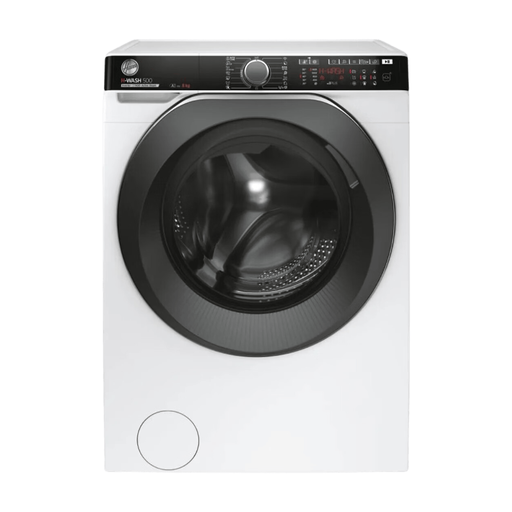 No image available
An option to compare if you want to wash tea towels with a regular household load; check that the programme setting suits the care label.
Freestanding front-loader; 8 kg capacity; 1400 rpm; A energy rating. The product description mentions a Hygiene programme at 60 °C for more than 20 minutes.
 No image available
An 8 kg machine to compare if you want to wash tea towels with other household laundry; a short cycle is not automatically the same as a suitable programme for used towels.
Freestanding machine; 8 kg capacity; 1400 rpm; 16 programmes, including Cotton and a 15-minute Quick Wash.
 No image available
Worth comparing if you’re looking for an 8 kg front-loader for tea towels and a regular household load; check the exact setting you want to use.
Freestanding front-loader; 8 kg capacity; 1400 rpm; A energy rating. The listed programmes include Cotton, Hygiene+ and Daily Xpress.
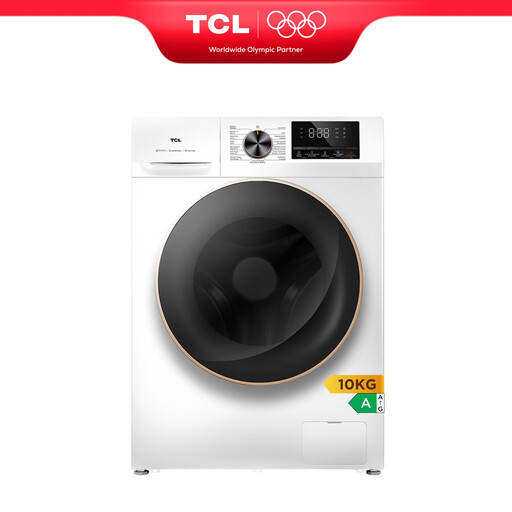 No image available
Only compare this larger capacity if it suits the total amount of laundry you usually wash; the maximum drum capacity alone is no reason to choose a larger machine.
10 kg capacity; A energy rating; Quick 15’ programme.
 No image available
An option to compare if you have less depth available and your usual laundry load fits within 6 kg.
Slim model; 45 cm deep; 6 kg capacity; B energy rating; 15-minute Quick Wash; BLDC inverter motor.
No, don’t assume they’re equivalent. Consumentenbond points out that Eco 40-60 does not guarantee the machine washes at 60 °C. Voedingscentrum advises washing used tea towels at 60 °C; check the care label too.
Hang wet towels up to dry. When you wash them, choose a programme that suits the used towels and their care label.
Measure the space where the machine will go and the access route, and check the available connections. Compare the dimensions of the specific model and check which installation service the retailer offers.
Yes. According to Rijksoverheid, household washing machines must have an energy label. The EU label for this product group uses a scale from A to G and provides information including energy and water consumption.
According to ACM ConsuWijzer, the retailer is responsible for the legal guarantee. If the washing machine does not do what you could reasonably expect, you may be entitled to a free repair, replacement or refund; this does not mean every machine has a fixed guarantee period.