Start by looking for a wash programme that lets you wash the tea towels at 60 °C, in line with advice from the Netherlands Nutrition Centre. Don’t assume that ‘eco 40-60’ or a steam function will do this. Choose a drum capacity that suits your overall laundry routine, and if you live in an upstairs flat, compare where the machine can go, its spin noise and the water-protection features it has. A slim top-loading machine may suit a narrow space, but check its capacity and how much room you need to open the lid.
Who is this guide for?
Housemates who share kitchen tea towels
You want to wash used tea towels regularly, so look for a programme that can be set to 60 °C. Don’t rely on a steam function or the name of an eco programme alone. The Netherlands Nutrition Centre recommends washing dishcloths at 60 °C.
People living above other homes
When choosing where to put your machine, consider spin noise, a stable floor and the potential impact of leaks on the neighbours below. The Dutch Consumers’ Association recommends placing a washing machine on a stable surface and describes different types of water protection.
People with a narrow space for a washing machine
Compare a slim top-loader with a front-loader for width, capacity and the room needed to open the lid or door. The Dutch Consumers’ Association notes that top-loaders are narrower than front-loaders.
What should you look for when buying?
Front-loader with a suitable drum capacity
A good fit if: you collect enough other laundry alongside the kitchen tea towels and have room for a door that opens at the front.
Consider: a larger drum isn’t automatically the right choice if you often wash small loads; a stable installation is still important.
Slim top-loader
A good fit if: width is the deciding factor and there’s enough space above the machine to open the lid.
Consider: top-loaders are generally narrower, but often have a smaller capacity and can’t be installed under a worktop.
The Netherlands Nutrition Centre recommends washing dishcloths at 60 °C. So don’t choose based on a programme name alone: check the temperature, permitted load and care label for the exact model and your tea towels.
| What to consider |
What should you check? |
Who is this for? |
| Washing at 60 °C |
Check the temperature setting and suitable load in the programme table, and follow the care label too. |
I want to be able to wash used kitchen tea towels at 60 °C, as recommended, so I’ll check the specific programme settings. Around 29% of consumers would say hygienic washing is their main buying concern. |
| Noise and leaks |
Compare the stated spin noise and check which water-protection features each model has. |
In an upstairs flat, I want to take noise and the risk of water damage to the neighbours below into account. Around 29% of consumers would put noise disturbance and leaks first. |
| Capacity and dimensions |
Measure the space and access route, then compare them with the machine’s dimensions and the permitted load for your chosen programme. |
If the space is narrow or I usually wash small loads, I want a suitable size rather than choosing on maximum drum capacity alone. Around 21% of consumers would prioritise dimensions and capacity. |
| Running costs and service |
Compare energy-label figures on the same basis, and confirm in advance what delivery upstairs, installation and removal of the old appliance include. |
I want to assess ongoing running costs alongside the practicalities of installation. Around 21% of consumers would see running costs and service as their main buying concern. |
Common buying mistakes
-
Assuming a steam function or ‘eco 40-60’ means the machine has a confirmed 60 °C programme
A programme or feature name alone doesn’t confirm that the wash will reach the temperature you want for this load.
Check the manual for the exact model, its temperature settings and the care label on your tea towels.
-
Assuming all water-protection features do the same thing
A base sensor and a protected inlet hose are designed to deal with different types of leak.
Check which protection features the exact model has, and inspect the tap, hoses and drain too.
-
Choosing a large drum based on maximum capacity alone
The right capacity depends on all the laundry you usually wash. A large machine isn’t automatically suitable if you often wash small loads. Milieu Centraal advises against buying a washing machine that’s too large.
Choose a drum capacity that suits your overall laundry routine and check the permitted load for the programme you want to use.
-
Focusing only on the machine and not the delivery arrangements
Taking a machine upstairs, connecting it and removing an old appliance may each require separate arrangements.
Before you buy, confirm what delivery to the installation space, connection and removal of your old appliance involve.
Brands to consider
LG
LG Netherlands lists an 8 kg capacity and an A energy rating for the F4X1008NWH front-loader.
- The model information mentions Direct Drive and steam functions.
- A steam function doesn’t confirm that the 60 °C programme you need is available. Check the programme table and water-protection features for the exact model.
Whirlpool
The Whirlpool TW 622S FRESHCARE BE is a top-loader; the product information gives its width as 40 cm.
- Its slim design may be useful if width is the deciding factor.
- The product title states 6.5 kg, while the product details list 6 kg. Check the capacity on the product information sheet, and check the wash programme you need too. A top-loader isn’t automatically quieter than a front-loader.
Miele
Miele lists a 9 kg capacity and automatic dosing for the W1 WEJ895 WPS front-loader.
- This capacity may be useful if you wash larger loads of other laundry as well as kitchen tea towels.
- A 9 kg capacity may be more than you need for small loads of tea towels. Check the 60 °C programme and the permitted load for your towels.
Bosch
Bosch lists a 7 kg capacity, AquaStop and a spin noise level of 74 dB for the WAN28095NL.
- These specifications are examples of details you can compare between models.
- Bosch says the WAN28095NL is no longer available, so don’t consider it as a current purchase option.
Washing machines at Joybuy
The products below range from mini washing machines for small loads to front-loaders with different capacities. For each model, check that the programme and load are suitable for your tea towels and for washing at 60 °C.
 No image available
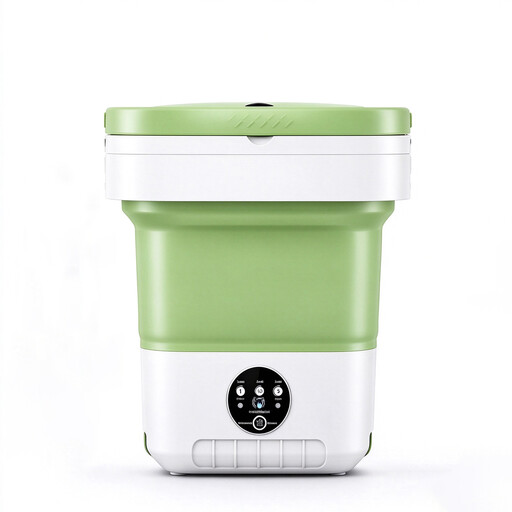
Foldable mini washing machine, 12 litres, green
For washing small loads separately. The product name states a 12-litre capacity, and the product includes a spin-drying basket. Check that the programme can wash your tea towels at the right temperature for their care label.
View at Joybuy
 No image available
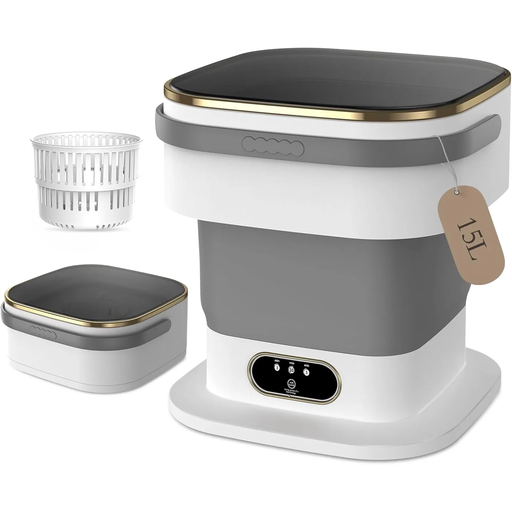
Foldable mini washing machine, 15 litres, grey and white
For washing small loads separately. The product name states a 15-litre capacity, while the product information gives a maximum load of 1.9 kg and mentions a spin-drying basket. Check that the programme settings suit the tea towels you want to wash.
View at Joybuy
 No image available
TCL FF1006WB0 washing machine, 6 kg
For spaces with limited depth: the product name states a 6 kg capacity and a depth of 45 cm. Check the exact programme and permitted load for your kitchen tea towels.
View at Joybuy
 No image available
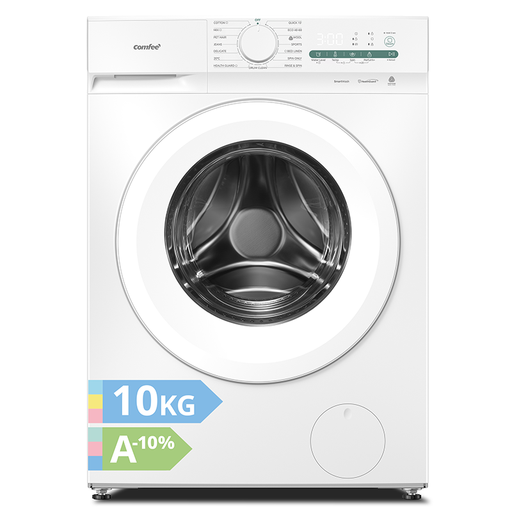
Comfee CF10EWP05W-HR washing machine, 10 kg
For households that regularly wash larger loads alongside kitchen tea towels; the product name states a 10 kg capacity. Compare this with your usual laundry routine and check the programme for your tea towels.
View at Joybuy
Frequently asked questions
Is ‘eco 40-60’ automatically the right programme for used dishcloths?
No. Don’t choose it based on the name alone. The European Commission describes eco 40-60 as a programme for normally soiled cotton that can be washed at 40 °C or 60 °C according to its care label. The Netherlands Nutrition Centre recommends washing used dishcloths at 60 °C. So check your machine’s temperature and programme instructions, as well as the care label.
How can you reduce noise disturbance when installing a machine upstairs?
Make sure the machine is correctly installed on a stable surface, and compare the stated spin noise levels of the models you’re considering. A noise rating doesn’t guarantee that your floor will be free from vibration. If your neighbours are actually being disturbed, the Dutch government recommends trying to agree on a solution together first.
What protection can help if a washing machine leaks?
Check which protection features the exact model has. A base sensor can detect water in the drip tray and switch off the machine, while a protected inlet hose is designed to deal with a different type of leak. Inspect the tap, hoses and drain too; none of these features can guarantee protection against every leak.
What can you do if the machine is faulty, and what happens to your old one?
If the product is faulty, contact the retailer. The Dutch government says the retailer must resolve the issue or ask the manufacturer to do so. When you buy a similar new appliance, the Dutch government also says that your old one must be taken back. Agree in advance how delivery upstairs and removal will be arranged.


