
People sharing a kitchen
You want to be able to wash used tea towels and kitchen cloths on a suitable programme. The Netherlands Nutrition Centre advises washing used cloths at 60 °C; also check that the care label allows this temperature.


First, choose a washing machine whose exact model has a suitable cotton programme at 60 °C; then match the drum capacity to your usual small load as well as the rest of your household laundry. The Netherlands Nutrition Centre advises washing used tea towels at 60 °C, while the Consumers’ Association points out that Eco 40–60 does not guarantee a wash at 60 °C. So a short programme or steam function is no substitute for checking.
You want to be able to wash used tea towels and kitchen cloths on a suitable programme. The Netherlands Nutrition Centre advises washing used cloths at 60 °C; also check that the care label allows this temperature.
You want to match the drum capacity to the loads you actually wash. Milieu Centraal and the Consumers’ Association highlight the importance of choosing a suitable drum size and running the machine with a full load.
You want to consider size, energy consumption and warranty terms. Don’t compare energy-label figures for Eco 40–60 directly with the consumption of a 60 °C cotton wash; the Dutch government explains that the statutory guarantee is separate from any additional manufacturer’s warranty.
| What to consider | What should you check? | Who is this most important for? |
|---|---|---|
| Washing at 60 °C | Check the manual for the exact model to confirm it has a suitable, separately adjustable programme at 60 °C. Also follow the care label. The Consumers’ Association warns that Eco 40–60 does not guarantee a 60 °C wash. | I want to be able to wash used cloths on a suitable programme. Around 36% of consumers put this hygiene need first. |
| Small loads | Weigh a typical household load and compare it with the drum capacity. Check which load-sensing functions are available on each model; a function alone does not prove that you’ll save money when washing your cloths. | I often wash only a few items at a time and want a machine suited to my usual loads. Around 29% of consumers give small loads the highest priority. |
| Purchase and running costs | Compare energy-label data for Eco 40–60 separately from the programme you use for cloths. Read any manufacturer’s warranty terms alongside the statutory guarantee. | I want to weigh up the purchase and running costs without treating Eco figures as equivalent to a 60 °C wash. Around 21% of consumers put total costs first. |
| Space and installation | Measure the available space, access routes and clearance needed for the door or lid. Compare these measurements with the specifications for the exact model and its installation instructions. | I need to fit and open the machine in a limited or shared space. Around 14% of consumers name available space as their main consideration. |
The programme name does not guarantee that the water reaches 60 °C. The Consumers’ Association describes tests showing that Eco 40–60 temperatures vary from one machine to another.
For used kitchen cloths, check the standard cotton programme and the adjustable temperature on the exact model. Follow the cloths’ care labels.
A short programme time doesn’t automatically tell you anything about the temperature. AEG describes the steam function on the LTR7STEAM as being intended to freshen up dry clothes.
Use functions for their stated purpose and check the 60 °C cloth wash separately.
A large drum isn’t automatically the right choice if you usually wash small loads. Milieu Centraal and the Consumers’ Association advise choosing a size that suits your usual laundry.
Weigh a typical household load and consider both your cloth washing and how much other laundry you usually do.
An additional warranty may cover only one component. LG states that, for model F4X1008NWH, the ten-year warranty mentioned applies only to the Direct Drive motor.
Read the exact cover and terms. If a product is faulty, the retailer is responsible for the statutory guarantee, as the Dutch government explains.
The WGE02404NL is a 7 kg front-loading washing machine. Bosch lists a function for this model that saves water when washing smaller loads.
The BM3WFU3741W is a freestanding 7 kg front-loader with cotton, quick and Hygiene+ programmes, among others.
According to AEG, the LTR7STEAM is a 7 kg top-loader, 397 mm wide, with a cotton programme and ProSense load adjustment.
The F4X1008NWH has an 8 kg load capacity, a steam function and ThinQ controls.
Miele describes SingleWash as an addition to standard programmes for loads of up to 1 kg.
This selection at Joybuy includes machines for small loads. Before washing kitchen cloths, check for each exact model that it has a suitable, adjustable programme at 60 °C and that the care label allows this temperature.
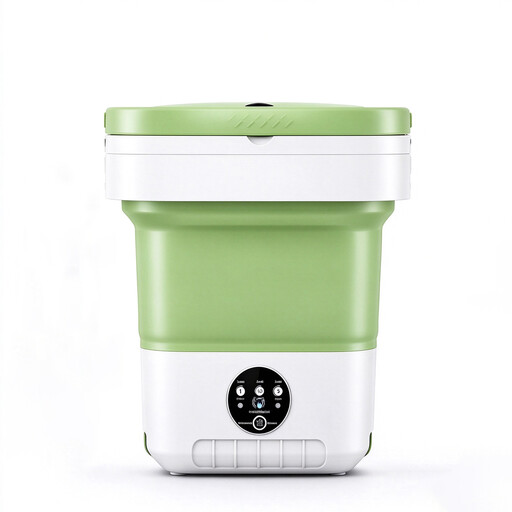 No image available
A portable option for separate small loads of textiles; before choosing it, check whether the exact model is suitable for the intended 60 °C cloth wash.
Capacity: 12 litres. The product name lists a separate spin basket.
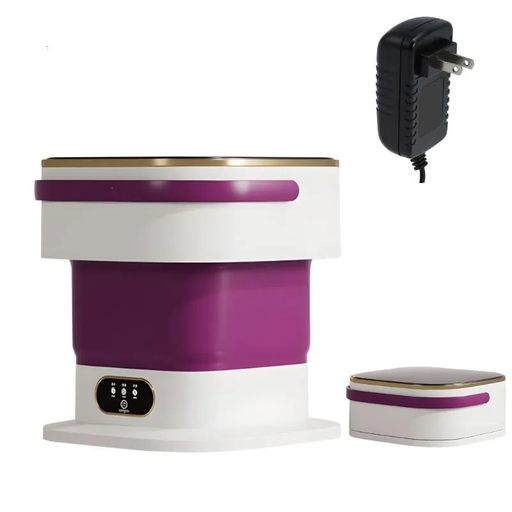 No image available
This portable mini washing machine is designed for small loads; check whether the exact model has a suitable 60 °C programme before choosing it for kitchen cloths.
Capacity: 15 litres. The product name lists a separate spin basket.
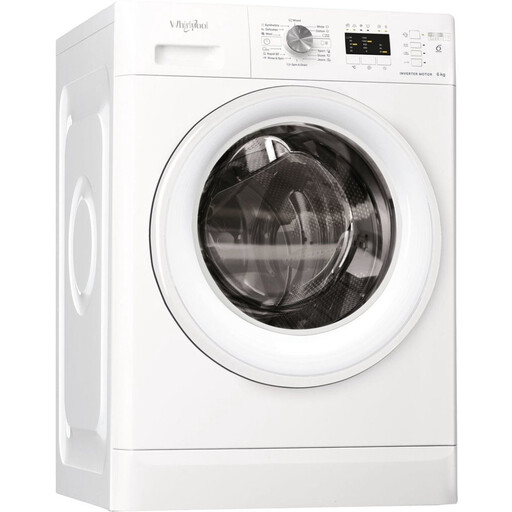 No image available
A 6 kg front-loader to compare if you do regular household laundry as well as cloth washes. Check the manual for this exact model to see whether a suitable 60 °C programme can be selected.
Load capacity: 6 kg. Spin speed: 1,200 rpm.
 No image available
The stated depth may help when comparing machines for a limited space. Check the full clearance needed and whether the exact model has a suitable 60 °C programme.
Load capacity: 6 kg. Depth according to the product name: 45 cm.
 No image available
A 7 kg front-loader to compare if you have other household laundry as well as small loads of cloths. Check which suitable 60 °C cotton programme is available on this exact model.
Load capacity: 7 kg. The product name lists 15 programmes.
Don’t rely on the programme name alone: Eco 40–60 does not guarantee a wash at 60 °C. The Consumers’ Association recommends a standard 60 °C cotton programme for tea towels; the Netherlands Nutrition Centre advises washing used cloths at this temperature. Check the care label too.
The Netherlands Nutrition Centre advises using a clean tea towel every day and hanging damp cloths up to dry. Before washing, check the care label to see whether the textile can be washed at 60 °C.
Measure the space where the machine will go, the access route and the clearance needed to open the door or lid. Compare these measurements with the dimensions and installation instructions for the exact model.
They are not a direct measure of energy consumption for a 60 °C cotton wash. The European Commission describes the energy label for household washing machines within its scope as a comparison based on Eco 40–60; so assess the programme you want to use for cloths separately.
No. LG states that, for the F4X1008NWH, the ten-year warranty mentioned applies only to the Direct Drive motor. The statutory guarantee is separate: according to the Dutch government, the retailer must provide a solution if a product is faulty. The Netherlands has no fixed statutory guarantee period.