What should you look for when choosing?
Start with the temperature and programme that suit your tea towels. Then compare drum capacity, washing and drying times, and consumption using the same energy-label basis.
| What to consider |
What to look for when buying |
Who should give this more weight? |
| Washing at 60 °C |
Check whether the model has a suitable cotton programme that you can set to 60 °C, and follow the care label on the towel. Eco 40-60 is not automatically equivalent for this purpose; Energielabel.nl explains that the programme temperature does not exceed 40 °C. |
When I wash used tea towels, I want to be able to choose a suitable cotton programme at 60 °C; around 33% of consumers rank washing at 60 °C as their top purchase priority. |
| Drum size that suits your needs |
Compare the cotton load capacity with the amount of laundry you usually wash together, and check that the appliance dimensions suit the space available. The Consumers' Association warns that consumption is not adjusted very precisely for a smaller load. |
I want a drum that suits the amount of cotton laundry I usually wash together, not just a few towels; around 27% of consumers prioritise a suitable small or mixed load. |
| Washing and drying time |
Check how long the programme takes at your preferred temperature, and allow time for the towels to dry thoroughly after washing. The Netherlands Nutrition Centre advises hanging wet towels out to dry. |
If I need the towels before the working week, I want to be able to plan both the wash cycle and drying time; around 20% of consumers make having clean, dry towels in time their top priority. |
| Energy and water consumption |
Compare energy and water figures on the same energy-label basis. The figures for Eco 40-60 do not measure consumption for cotton at 60 °C; Milieu Centraal and Energielabel.nl explain the relevant label information. |
I want to compare models on the same energy-label basis without treating those figures as consumption for cotton at 60 °C; around 20% of consumers prioritise comparable consumption. |
Brands to compare
The models listed differ in capacity, dimensions and programme features, among other things. Always check the programmes and dimensions of the exact model.
Beko
For the BM3WFU3741S, Beko Netherlands lists a 7 kg capacity, a cotton programme and an appliance depth of 49,6 cm.
- The stated capacity and depth give you specific measurements to compare with your usual laundry load and available space.
- Beko lists energy class A, but the Joybuy product listing gives class C in the title and A in the description. Check the energy label on the exact item being offered.
Bosch
Bosch lists a 7 kg capacity and dimensions of 848 × 598 × 588 mm for the Serie 2 WGE02406NL.
- Bosch lists an add-garment function, which may be useful if you want to add something during a wash.
- Check the manual to see which programme and temperature can be used together for the load you want to wash.
Miele
For the WWA120 WCS 8kg Active, Miele lists an 8 kg capacity, a cotton programme, Eco 40-60 and a delay-start function.
- The higher stated capacity may suit you if you usually wash tea towels as part of a larger cotton load.
- An 8 kg capacity may not be necessary if you regularly wash only a few towels. Choose a capacity that suits the amount of laundry you usually wash together.
Washing machines at Joybuy
This selection focuses on washing machines with a stated capacity of 7 kg, as a point of comparison for a small or mixed household load.
 No image available
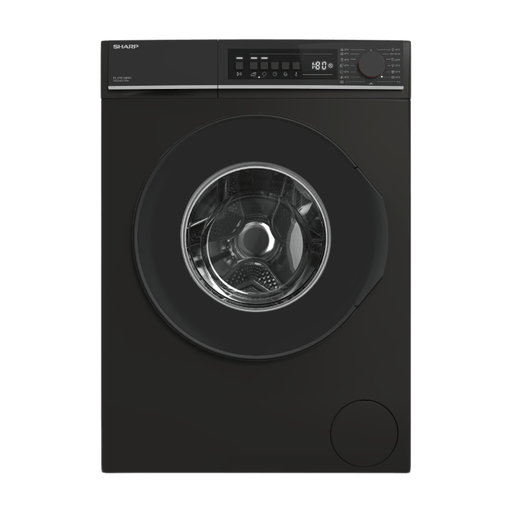
SHARP ESNFB714BBNACB, 7 kg
A 7 kg model to compare if that capacity suits your usual laundry load.
The product title lists 1400 rpm, energy class A and an inverter motor.
Joybuy
 No image available
Beko BM3WFU3741S, 7 kg
A 7 kg model with a cotton programme to compare if it suits the cotton loads you usually wash.
The product title lists 1400 rpm, 15 wash programmes and energy class C. The Joybuy product listing also gives energy class A in the description, while Beko Netherlands lists A; check the energy label on the exact item being offered.
Joybuy
 No image available
Comfee' CFP01EW70W-JD, 7 kg
A 7 kg model to compare if that capacity suits your usual small or mixed load.
The product title lists an appliance depth of 400 mm.
Joybuy
 No image available
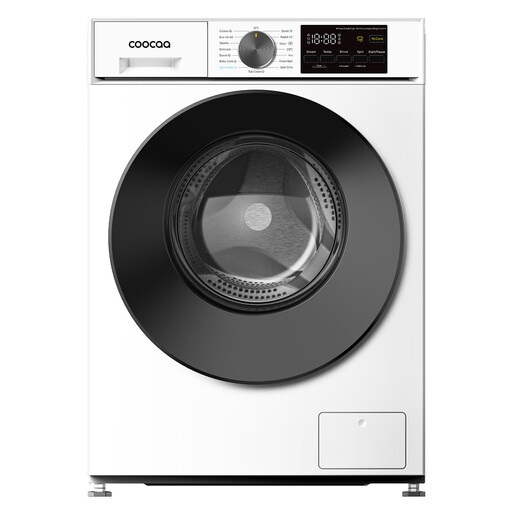
Coocaa Galaxy A3 F702A3AВC0, 7 kg
A 7 kg model to compare if that capacity suits your usual laundry load.
The product title lists 15 programmes and a Baby Care programme.
Joybuy
 No image available
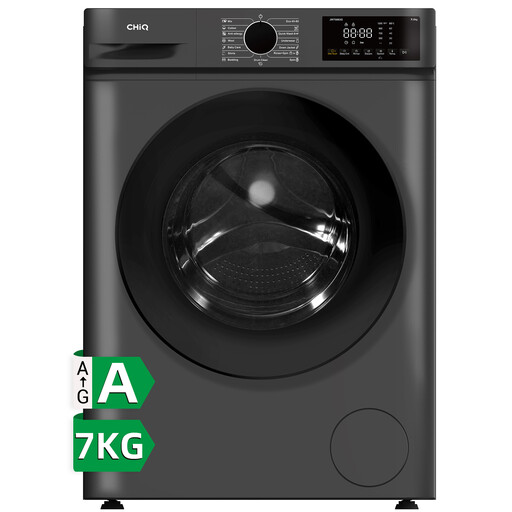
CHiQ JW75883G, 7 kg
A 7 kg model to compare if that capacity suits your usual small or mixed load.
The product title lists energy class A, 1200 rpm and 16 programmes.
Joybuy
Frequently asked questions
Can I use Eco 40-60 as if it were a cotton wash at 60 °C?
No, don’t assume that: according to Energielabel.nl, the temperature of Eco 40-60 does not exceed 40 °C. To follow the Netherlands Nutrition Centre’s advice on used tea towels, choose a suitable programme that can actually be set to 60 °C, provided the care label allows it.
How can I get my tea towels ready before the working week?
Allow time for both the suitable wash programme and for the towels to dry thoroughly. The Netherlands Nutrition Centre advises hanging wet towels out to dry.
What should I check when installing and connecting a washing machine?
Check the available space, make sure the floor is stable, and ensure that the water supply, drain and earthed socket are accessible. Before use, remove the transit bolts as instructed in the manual for your chosen model, and level the machine.
Does a new washing machine in the Netherlands need an energy label?
Yes. The Dutch Government lists washing machines among the appliances that must have an energy label. This requirement doesn’t mean that buyers have to choose a machine with a specific energy class.
Do I have statutory rights if my washing machine breaks down without an extended warranty plan?
Yes, your statutory guarantee applies even without an extended warranty plan. According to ACM ConsuWijzer, the seller may have to provide a free remedy if a product is faulty, depending on the circumstances; there is no single fixed statutory two-year period for every washing machine.


