What should you look for?
The main things to consider are the space available, the size of your tablecloth loads, consumption and practical installation requirements.
| What to consider |
What to look for |
Who should pay particular attention? |
| Space and opening |
Measure the width, depth and height, allowing for the door of a front-loader or the space above a top-loader. Also check the location of the tap and drain. |
If my laundry area is cramped, I want to be sure I can not only fit the machine in, but also open and load it. Around 36% of consumers say available space is their main priority when buying. |
| Load capacity |
Weigh a typical sorted load of tablecloths and compare it with the stated capacity. The Consumers’ Association recommends allowing around 2 kg of extra room when working out the capacity you need. |
I want enough drum space for my usual load of cotton tablecloths, without choosing a larger machine unnecessarily. Around 29% of consumers prioritise the size of their tablecloth loads. |
| Energy and water consumption |
On the EU energy label, compare energy consumption per 100 cycles and water consumption per cycle on the same eco 40–60 basis. Actual consumption also depends on your programme and load size. |
If I wash regularly, I want to compare consumption figures on a like-for-like basis and choose a machine that suits my loads. Around 21% of consumers put energy and water consumption first. |
| Connections and aftercare |
Check that the water supply and drain are accessible, what installation is included and who to contact if something goes wrong. Check whether each model has any stated water-protection features. |
I want to know in advance whether the connections will work in my laundry area and who to contact if there’s a problem. Around 14% of consumers say installation and aftercare are their main priorities when buying. |
Washing machines on Joybuy
These product picks are front-loaders with a range of stated capacities. Check the dimensions, the space needed for the door and the load capacity against your own laundry area and a weighed load of tablecloths.
 No image available
Midea MF110W80BA10/W-NL
This front-loader could be a good fit if there’s room for the machine and its open door, and its stated capacity of 8 kg suits your usual load.
Stated width and depth: 595 × 475 mm. The description lists a cotton programme; the product name states 1400 rpm and energy rating A-10%.
View on Joybuy
 No image available
Candy GD 48B9-S
The stated capacity of 8 kg could suit your tablecloth load if there’s room for the machine and the open door in your laundry area.
Stated dimensions: 595 × 601 mm. The specifications list 33 kWh per 100 eco 40–60 cycles and energy rating A; the product name states 1351 rpm.
View on Joybuy
 No image available
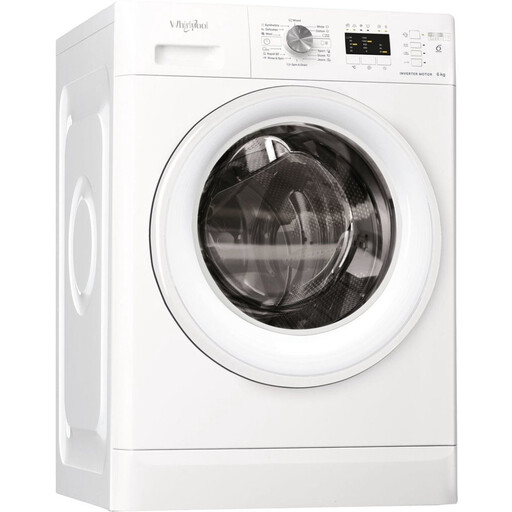
Whirlpool FFL 6238 W EE
This front-loader has a stated capacity of 6 kg. Compare it with the weight of your usual tablecloth load and check that the door can open.
Stated dimensions: 59,5 × 57,5 × 84,5 cm. The description lists cotton and eco programmes, and 14 programmes in total.
View on Joybuy
 No image available
Comfee' CFP01EW70W-JD
The product name states 7 kg, while the specifications list 8 kg. Ask the retailer to confirm the capacity before deciding whether this machine suits your usual tablecloth load.
The description lists a cabinet depth of 52 cm and a 530 mm drum. With a front-loader, remember to allow room for the door to open.
View on Joybuy
 No image available
Beko BM3WFU38412CW
The stated capacity of 8 kg could suit your usual tablecloth load; also check there’s enough room for the front-loader door.
Stated dimensions: 84,5 × 60 × 54,6 cm. The specifications list cotton and eco 40–60 programmes, energy rating A and 47 kWh per 100 cycles; the product name states 1400 rpm.
View on Joybuy
Frequently asked questions
Can I wash any cotton tablecloth on eco 40–60?
No. Check the tablecloth’s care label first. The maximum temperature and care instructions on the label determine whether machine washing and this programme are suitable.
What should I check when connecting a machine in a small laundry area?
Check that the water supply and drain are accessible, and follow the installation instructions for your chosen model. Once connected, check for leaks around the connections.
What consumption figures are shown on the European energy label?
The EU label for household washing machines includes energy consumption per 100 cycles and water consumption per cycle, among other details. Since 1 March 2021, the European Commission has used a scale from A to G; compare figures based on the same prescribed programme.
Can a retailer take away my old washing machine for free?
In the Netherlands, when you buy a new, similar appliance, the retailer must take your old appliance away free of charge if you’re buying as a private customer. This also applies to online purchases; how you hand it over may depend on the delivery arrangements.
Am I still covered by the statutory guarantee in the Netherlands after two years?
You may be: the Netherlands has no fixed statutory guarantee period. According to the Dutch Government, it depends on what you could reasonably expect from the product; if there’s a fault, the retailer is responsible for putting it right. Normal wear and tear or damage caused by you isn’t automatically covered.


