Which washing machine is right for you?

For narrow spaces

If width is the main constraint and you can keep the space above the appliance clear, compare top-loading machines and check that the lid can open. The Consumers’ Association describes top-loaders as narrower than front-loaders; AEG lists a width of 397 mm for the AEG LTR6162K.

For limited depth

If you have around 60 cm of width but are short on depth, look at shallower front-loaders. Remember to allow room for hoses and to open the door, as the Consumers’ Association advises.

For washing large tablecloths

If you want to wash cotton tablecloths without overloading the drum, weigh a typical load and check the care label. The Consumers’ Association recommends choosing a capacity for cotton that you can actually fill; GINETEX explains how the wash-tub symbols indicate the maximum washing temperature.

What should you look for when choosing?

Narrow top-loader

Choose this option: if width is the limiting measurement and there’s room above the machine for the lid.

Bear in mind: the top must remain accessible; the stated capacity of the AEG model mentioned is 6 kg.

Shallower front-loader

Choose this option: if there’s enough width but depth is limited.

Bear in mind: the stated cabinet depth doesn’t tell you how much room you’ll need for hoses and an open door.

Standard front-loader

Choose this option: if width, depth and door clearance aren’t a problem, and the drum suits your usual cotton wash.

Bear in mind: a larger drum isn’t automatically more economical if you usually wash small loads.

Washer-dryer

Choose this option: only if there’s no room for a separate tumble dryer and you need to dry laundry electrically.

Bear in mind: washing and drying capacities can differ; for the Bosch model mentioned, they are 8 kg and 5 kg respectively.

What to consider What to look for Who is this important for?
Available width Measure the alcove and check the external dimensions and access to the lid of the exact model. If my space is narrow, I want to know whether the machine will fit and whether I can open the lid. Around 31% of consumers rank limited width as their main purchase concern.
Tablecloth load Weigh a typical dry load and compare it with the maximum load for the programme you’ve chosen; follow the care label. If I wash cotton tablecloths, I want to run a suitable load without overfilling the drum. Around 31% of consumers give suitability for tablecloth loads their highest priority.
Available depth Measure the space and allow for connections and room to open the door. If the alcove is wide enough but not very deep, I’m looking for a front-loader that will fit. Around 25% of consumers cite limited depth as their main purchase concern.
Electricity and water consumption For the exact models, compare the number of kWh per 100 cycles and water consumption per cycle on the EU energy label. If the machine runs regularly, I want to factor in its consumption and choose a programme that suits my washing. Around 13% of consumers put running costs at the top of their list.

Which buying mistakes can you avoid?

  • Measuring only the width or depth of the cabinet

    A machine may appear to fit on paper but be difficult to access or connect in practice.

    Measure the entire space and allow for hoses, the door swing and, for a top-loader, the space above the lid.

  • Assuming the maximum capacity guarantees that every tablecloth will fit

    The stated weight alone doesn’t tell you how a large tablecloth will sit in the drum. The permitted load can also vary by programme.

    Weigh a typical load, check the model’s manual and follow the care label for the programme and temperature.

  • Overlooking conflicting capacity information

    The product title for the Whirlpool TW 622S FRESHCARE BE states 6.5 kg, while the product description and technical specifications state 6 kg.

    Check the EU product information sheet for this exact model before taking its capacity into account.

  • Assuming washing and drying capacities are the same

    The stated capacities for the Bosch WNA13400NL mentioned are 8 kg for washing and 5 kg for drying.

    Choose a washer-dryer only if you need to dry clothes without a second appliance, and compare the two capacities separately.

Which brands are worth considering for this choice?

AEG

The AEG LTR6162K is an example of a top-loader for a space where width is limited.

  • AEG lists a width of 397 mm and a stated capacity of 6 kg for this model.
  • The top must be kept clear so the lid can open; the stated specifications don’t prove any specific washing results for tablecloths.

Whirlpool

The TW 622S FRESHCARE BE is an example of a top-loader for a narrow space.

  • Whirlpool lists dimensions of 40 × 60 × 90 cm.
  • The title states 6.5 kg, while the product description and technical specifications state 6 kg. Check the product information sheet for the capacity of this exact model.

Haier

The HW80-BP14929A is an example of a shallower front-loader.

  • Haier lists a capacity of 8 kg and cabinet dimensions of 595 × 477 × 850 mm.
  • Measure the extra space needed for hoses and the door separately.

Beko

The BM3WFU3741W is an example of a shallow front-loader with a cotton programme.

  • Beko lists a capacity of 7 kg, a width of 60 cm, a depth of 49.6 cm and a cotton programme.
  • The EnergySpin saving quoted by Beko is based on a comparison with a specific other Beko model, not with all washing machines.

Bosch

The Bosch examples mentioned include both a standard front-loader and a washer-dryer.

  • Bosch lists a capacity of 8 kg for the WAN2809XNL and separate washing and drying capacities of 8 kg and 5 kg for the WNA13400NL.
  • The washer-dryer’s drying capacity is lower than its washing capacity; this difference alone says nothing about the brand’s overall performance.

Washing machines at Joybuy

These Joybuy products include front-loaders to consider if you’re factoring in limited depth or a typically larger laundry load. Before choosing, check the exact dimensions, connection space and capacity of the model.
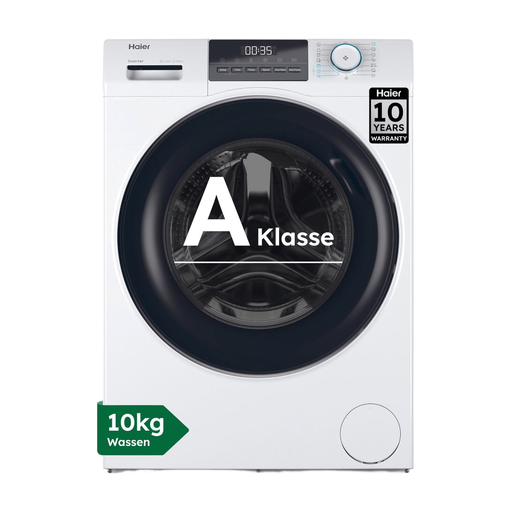
Haier HW100-BP14929A i-Pro 1 washing machine

Haier HW100-BP14929A i-Pro 1, 10 kg

A standard front-loader to consider if your usual laundry load suits the stated capacity; first check that the machine will fit in your available space.

The product name states 10 kg, 1400 rpm and an inverter motor. It doesn’t specify the space required for installation, so check the exact dimensions and allow room for hoses and the door.

View at Joybuy

Comfee CFP01EW70W-JD front-loading washing machine, 7 kg, 400 mm deep

Comfee CFP01EW70W-JD, 7 kg, 400 mm deep

A front-loader to consider if depth is limited and you need a cotton programme; remember to measure the space for connections and the door as well.

The product name states a capacity of 7 kg and a design depth of 400 mm. The product description mentions a cotton programme.

View at Joybuy

TCL FF1006WB0 front-loading washing machine, 6 kg, 45 cm deep

TCL FF1006WB0, 6 kg, 45 cm deep

A front-loader to consider if limited depth is a priority and the stated capacity suits your usual laundry load.

The product name states 6 kg and a depth of 45 cm. It also mentions a BLDC inverter motor and steam washing. Check how much extra space you’ll need for hoses and the door.

View at Joybuy
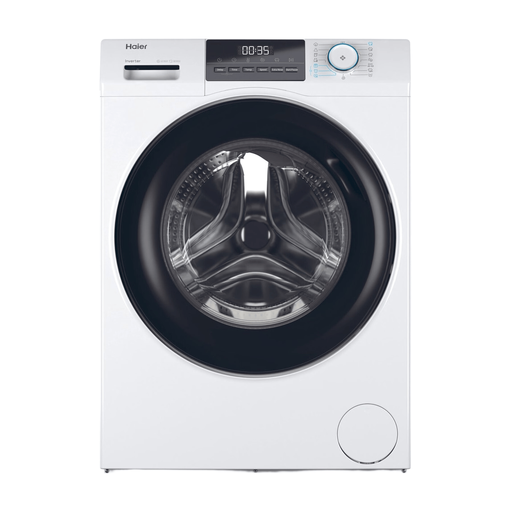
Haier HW90-BP14929A-S i-Pro 1 washing machine, 9 kg

Haier HW90-BP14929A-S i-Pro 1, 9 kg

A standard front-loader to consider if your usual load suits the stated capacity and you have enough space.

The product name states 9 kg and 1400 rpm. Check the exact external dimensions and allow room for hoses and the door.

View at Joybuy
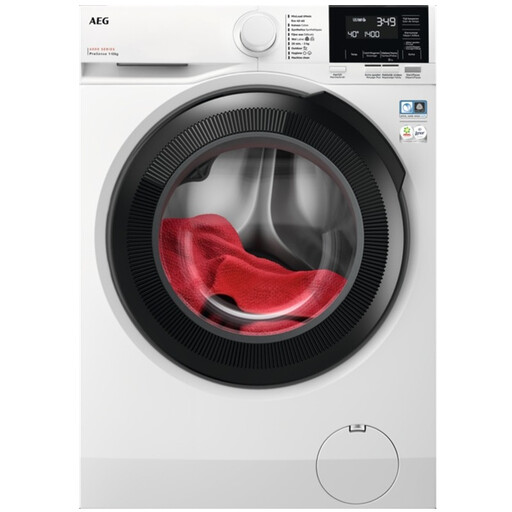
AEG LR63R144 washing machine, 10 kg, 1400 rpm

AEG LR63R144, 10 kg, 1400 rpm

A standard front-loader to consider if you have enough space and its capacity suits your usual load.

The product description lists dimensions of 847 × 597 × 660 mm and a capacity of 10 kg. Remember to allow extra room for hoses and the door.

View at Joybuy

Frequently asked questions

Can every cotton tablecloth be washed on Eco 40-60?

No. Check the care label first: it indicates, among other things, the maximum temperature and whether machine washing is allowed. Information about Eco 40-60 explains that the programme is intended for normally soiled cotton labelled as washable at 40 or 60 °C; the programme name doesn’t promise a set washing temperature.

What should you measure before installing a machine in a small space?

Measure the width, height and depth, and allow room for hoses and the door to open. Also follow the manual for your chosen model on the floor surface, water supply and drainage, earthed socket and removal of the transit bolts.

Are you always entitled to only two years’ warranty on a washing machine in the Netherlands?

No. According to ACM ConsuWijzer, your statutory guarantee depends on what you could reasonably expect from the product under normal use. If a product is faulty, the seller is responsible for providing an appropriate remedy free of charge; a shorter commercial warranty doesn’t remove that statutory right.

Can a retailer charge you to take away your old washing machine when you buy a similar new one?

There must be no charge for the statutory take-back of an old, similar household appliance from a private customer. According to the Dutch Government, this also applies to online purchases. Disconnection and installation are separate services, so check the terms and any charges for these separately.

Is a proposed new right to repair already part of Dutch consumer law?

Don’t assume so based on the Dutch Government’s news report of 20 March 2026: at that point, the bill was still awaiting parliamentary consideration. For a faulty product, the statutory guarantee as described by ACM ConsuWijzer remains the relevant starting point.
