What should you look for when choosing?
Start with the care labels and the amount of laundry you usually wash. Then compare quick cycles, stain-treatment options and consumption information.
| What to consider |
What to look for |
Who is this important for? |
| Small loads |
Check the maximum load for the quick cycle and compare the drum capacity with the amount of laundry you usually wash. |
If I have just a few lightly soiled napkins after a weekend, I want to know whether a quick cycle is suitable. Around 33% of consumers put small loads first. |
| Food stains |
Check which cotton, pre-wash or stain programmes the specific model offers, and whether they’re suitable for the care label. |
When there are visible food stains, I want to choose a suitable approach rather than rely on speed alone. Around 25% of consumers prioritise stain removal. |
| Fabric and colour |
Compare cotton, mixed-fabric and delicates programmes, and check the temperature and maximum load for each programme. |
If my napkins are made from different or delicate fabrics, I want to be able to wash them according to their care labels. Around 25% of consumers prioritise fabric care. |
| Consumption |
Compare energy labels on a like-for-like basis and choose a capacity that suits the amount of laundry you usually wash. |
For regular washes, I want to consider consumption, not just that one load of napkins. Around 17% of consumers put consumption first. |
Joybuy product picks
This selection includes compact mini washing machines for small loads and freestanding washing machines for a range of laundry needs.
 No image available
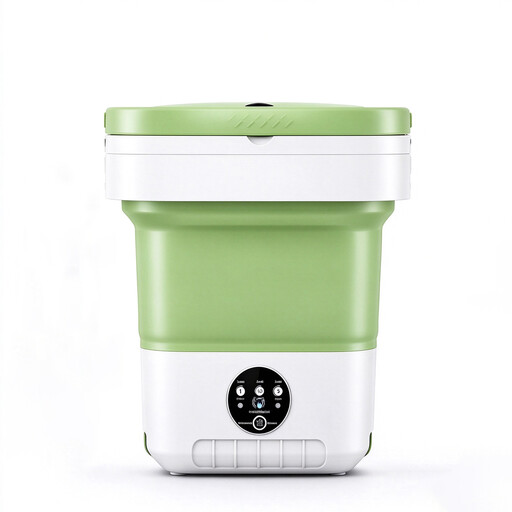
Foldable mini washing machine with spin-dryer basket, 12 litres, green
A compact option to consider if you mainly wash small loads; check that the permitted load and programme suit your napkins.
The product name specifies a capacity of 12 litres and a spin-dryer basket.
View at Joybuy
 No image available
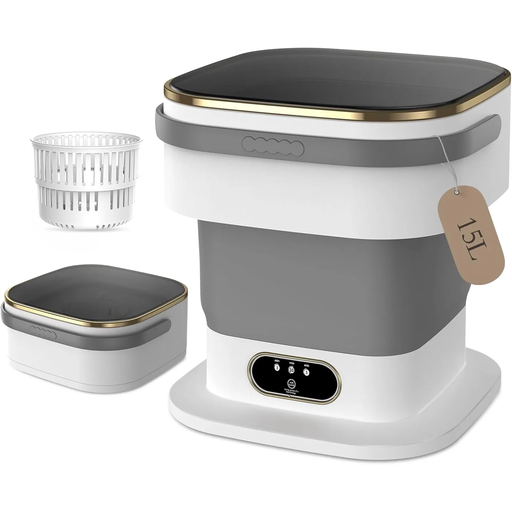
Foldable mini washing machine with spin-dryer basket, 15 litres, grey-white
A compact option if you want to wash small loads; check that the permitted load and programme are suitable for the fabric shown on your care label.
The product name specifies a capacity of 15 litres and a spin-dryer basket.
View at Joybuy
 No image available
Midea MF110W80BA10/W-NL, 8 kg, 1400 RPM
The stated capacity may be relevant if you want one machine for both napkins and your usual laundry; check the permitted fabric types and load for each programme.
The product name specifies 8 kg, 1400 RPM and Steam Sanitization.
View at Joybuy
 No image available
Candy GD 48B9-S, 8 kg, 1351 RPM, energy rating A
The capacity is a useful point of comparison if you also intend to use the machine for your usual laundry; choose a programme for your napkins that suits their care labels.
The product name specifies a steam function and energy rating A.
View at Joybuy
 No image available
Comfee CFP01EW70W-JD, 7 kg, 400 mm
The stated capacity can help you decide whether this machine suits your usual laundry. Also check the programmes and maximum load for the napkins you want to wash.
The product name specifies 7 kg, a 400 mm design and a quick-wash function.
View at Joybuy
Frequently asked questions
Can you wash all your table napkins together?
Not without checking the care labels first. Sort by colour and fabric type, and follow the recommended temperature and treatment. Cotton and linen may need a different programme from delicate fabrics.
Is a quick-wash or steam programme enough for napkins with food stains?
Not necessarily. Choose a programme that suits the care label and pre-treat suitable stains if needed. A steam function doesn’t guarantee that every stain will disappear.
What should you check when installing and maintaining the machine?
Measure the available space and check the connections; place the machine on a level, stable surface. Follow the manufacturer’s instructions for cleaning and maintenance. Consumentenbond also recommends running a suitable hot wash programme regularly to maintain the machine.
What does the energy label tell you about consumption?
The EU energy label uses a scale from A to G for washing machines, as explained by the European Commission. Compare labelled machines on a like-for-like basis, and bear in mind that your actual consumption also depends on how often you wash and which programme you use.
What statutory guarantee applies to a washing machine in the Netherlands?
If a washing machine doesn’t perform as you could reasonably expect under normal use, the retailer is responsible for providing a statutory remedy, according to ACM ConsuWijzer. There isn’t automatically one fixed two-year statutory period for every washing machine; an additional manufacturer’s warranty doesn’t replace your statutory rights.


