
People washing stained fabric napkins
You want to choose a programme that suits both food stains and the care label, without mistaking Eco 40-60 for a guaranteed 60 °C wash.


Choose a washing machine and programme to suit the napkins’ care label and how soiled they are. Then compare spin noise, dimensions, water protection and the capacity of your full load. A larger drum only makes sense if you can fill it regularly. Consumentenbond points out that Eco 40-60 is intended for normally soiled, suitable fabrics; it is not a substitute for a suitable hot wash when one is needed.
You want to choose a programme that suits both food stains and the care label, without mistaking Eco 40-60 for a guaranteed 60 °C wash.
You’re looking for a machine whose noise, vibrations, positioning and water protection are acceptable to everyone else using the room too.
You want to match the drum capacity to the amount of laundry you can actually wash at once, rather than choosing based on napkins alone.
Start by checking the care label and the programmes that suit it. Then compare the installation requirements, noise levels and the capacity of the loads you usually wash together.
| What to consider | What to check before buying | Who might prioritise this? |
|---|---|---|
| Cleaning performance and fabric care | Check which programmes and temperatures suit the care labels, and look for test results on cleaning and rinsing where available. Consumentenbond emphasises that a programme name alone does not guarantee a particular cleaning result. | If I want to wash out food stains without treating the fabric incorrectly, I start with the care label. Around 28% of consumers prioritise cleaning performance and suitability for the fabric. |
| Noise and vibrations | Compare the stated spin noise level and any test results for the exact model. Consumentenbond points out that the type of noise and a stable installation also matter. | If other people use or spend time near the utility room, I want to minimise disturbance from the spin cycle and vibrations. Around 28% of consumers give reducing disturbance their top priority. |
| Capacity and consumption | Choose a capacity that suits the loads you can regularly wash together. Compare energy and water figures on the same label basis; these do not automatically reflect the consumption of every programme. | For small or variable loads, I don’t want to choose a drum I usually can’t fill. Around 22% of consumers start by looking at suitable capacity and consumption. |
| Installation and water protection | Measure the space, access and room for connections. Check the water protection on the exact model and what delivery and installation include; Consumentenbond also recommends a stable surface. | In a shared space, I want to know in advance whether the machine will fit properly and what water protection it has. Around 22% of consumers prioritise installation and minimising damage from leaks. |
The programme name does not mean the laundry is actually washed at 60 °C. Consumentenbond says Eco 40-60 is not suitable when a hot wash is needed for hygiene.
Start with the care label. If a hot wash is needed, choose a programme that is suitable for it.
A large drum is less suitable if your usual combined load is small. The capacity is for the full load, not just the number of napkins.
First work out which items can be washed together according to their care labels, and how large that load usually is.
As well as the decibel rating, the type of noise and the machine’s position can affect how disruptive it sounds. An unstable surface can cause extra vibrations.
Where possible, compare tests of the exact model and check the floor and installation space.
Water protection can vary between machines, and installation is not necessarily offered on the same terms by every retailer.
Before ordering, check what delivery and installation include, and what water protection the exact model has.
The Serie 6 front-loading WGJ23400NL is a useful point of comparison if you’re looking for an 8 kg machine.
The BM3WFT3841B1 is an 8 kg model to compare if its stated depth and spin noise level are relevant to you.
The Dutch-market F4X5009THB is a 9 kg front-loader to compare if you regularly have larger combined loads.
The LR87BADEN is a 10 kg front-loader to consider if you regularly have larger suitable loads and have enough depth available.
The WEG895 WPS is an example of a 9 kg machine with automatic dosing, if you want to compare models with this feature.
This selection includes 8–9 kg front-loaders and small folding washing machines. Compare their capacity and features with the loads you actually have and the space available.
 No image available
For a combined load of up to the stated nominal capacity of 9 kg.
Nominal capacity: 9 kg. Spin noise level: 72 dB. Stated external dimensions: 600 × 550 × 850 mm.
Listed programmes: Cotton, Delicate/Silk, Eco 40-60 and Quick 15min. The programme name alone does not tell you whether it’s suitable for the care label.
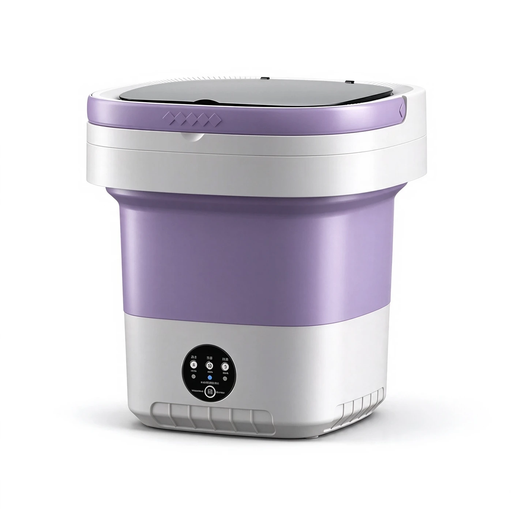 No image available
For small loads of laundry; the stated maximum load is 1,5 kg.
Capacity: 12 litres. Maximum load: 1,5 kg. The product has a separate spin-dryer basket.
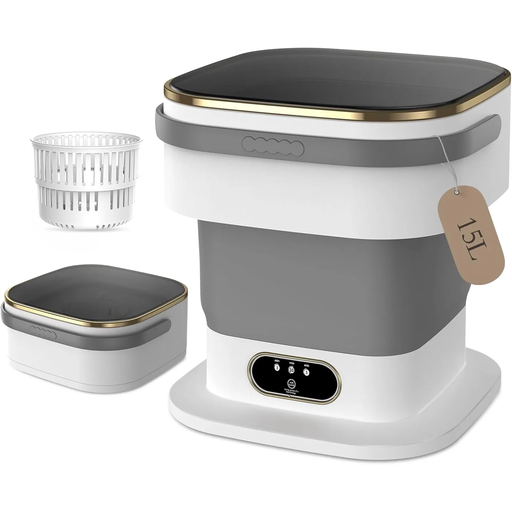 No image available
For small loads of laundry; the stated maximum load is 1,9 kg.
Capacity: 15 litres. Maximum load: 1,9 kg. The product has a separate spin-dryer basket.
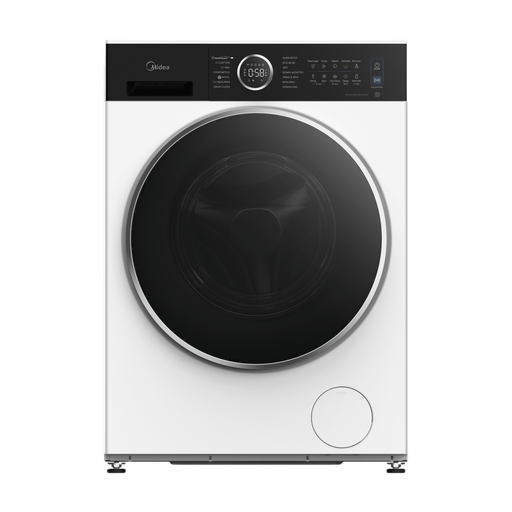 No image available
An 8 kg front-loader to compare with the loads you can regularly wash together.
The product name lists 1400 rpm, Wi-Fi, PowerMix and a steam function. These details are not independent proof of a particular cleaning result.
 No image available
For a load of up to the stated 8 kg capacity; check that the programme suits the care label.
The product information lists 1400 rpm, 16 programmes and AquaStop. Programmes listed include Cotton, Delicate, adjustable temperature and extra rinse.
No. Check the care label first. Consumentenbond describes Eco 40-60 as a programme for normally soiled laundry that can be washed at 40 or 60 °C according to its care label; the programme name does not mean the wash actually reaches 60 °C.
There isn’t enough information to say that this applies to every type of table napkin. Voedingscentrum advises washing used kitchen cloths and tea towels at 60 °C, but that isn’t automatically a rule for every table napkin. Follow the care label and take the level of soiling into account. If a hot wash is needed for hygiene, Consumentenbond says Eco 40-60 is not a substitute.
Measure the space and access, check that the machine can stand securely, and ask what delivery and installation include. Discuss with other users how the shared space and laundry times will be used too; every location and set of arrangements is different.
Check the water protection and connections on the exact model; the additional measures that may be suitable depend on where it will be installed. Milieu Centraal also recommends running a wash at 60 °C about once a month to help limit detergent and dirt residue in the machine.
When you buy as a consumer, you’re entitled to a product that meets the terms of the agreement, and the seller is your point of contact if there’s a problem. According to the Dutch government, there is no fixed statutory two-year warranty period in the Netherlands. Washing machines must have an energy label, which you can use to compare energy and water information, among other things.